
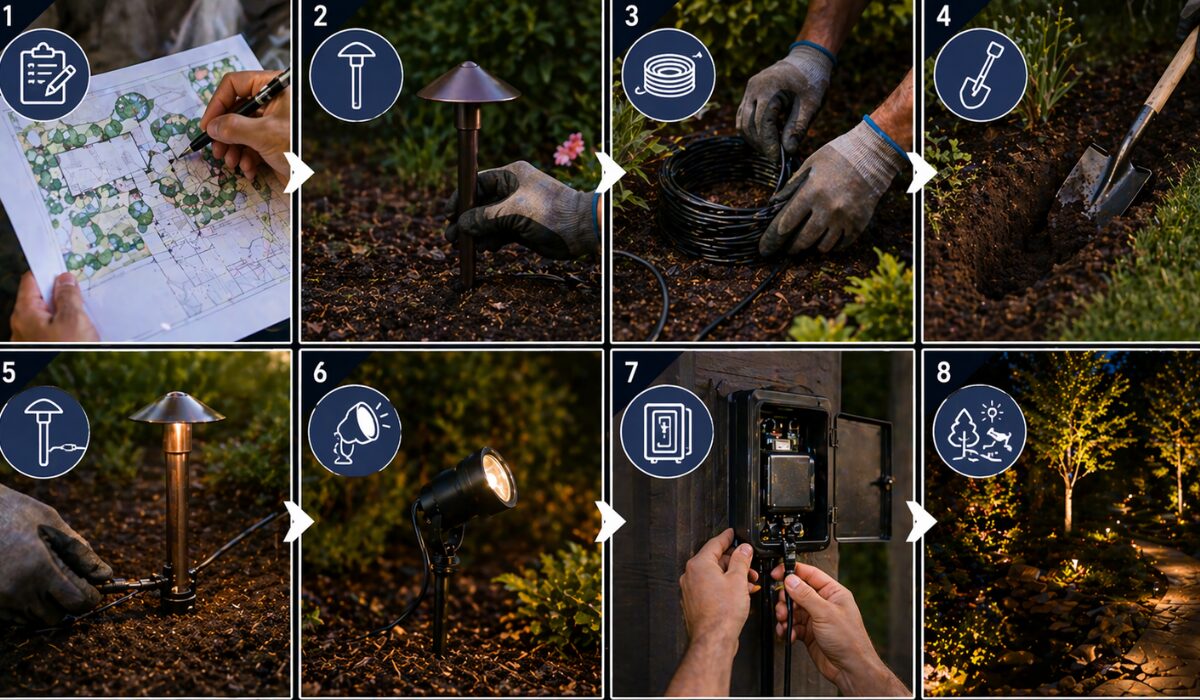
Landscape lighting installation is a structured process that combines design, planning, and precise execution to achieve both functionality and visual appeal.
For homeowners and property owners, understanding how the installation process works can help set clear expectations before starting a project.
This video breaks down each step involved in installing a professional landscape lighting system, from initial planning to final adjustments.
Introduction to Landscape Lighting Installation
Installing landscape lighting is more than placing fixtures in the ground.
It requires a thoughtful approach to ensure proper coverage, safety, and long-term performance.
A professionally installed system enhances visibility, highlights key features, and improves the overall outdoor experience.
In this video, we walk through the complete installation process to give you a clear understanding of what happens behind the scenes.
Property Assessment and Planning
The first step in any landscape lighting installation is evaluating the property.
This involves identifying key areas that need illumination, such as walkways, driveways, entry points, and landscaping features.
During this stage, lighting professionals also consider factors such as terrain, existing structures, and how the space is used.
This helps determine the most effective layout for the lighting system.
Planning is essential to avoid common issues such as uneven lighting or poor fixture placement.
A well-thought-out design ensures that the system meets both functional and aesthetic goals.
Custom Lighting Design
After the assessment, a customized lighting plan is created.
This design outlines where each fixture will be placed and how different lighting elements will work together.
The goal is to create a balanced lighting system that includes ambient lighting for general illumination, accent lighting to highlight features, and task lighting for specific areas.
This layered approach adds depth and improves the overall appearance of the property.
Design also takes into account future changes, such as landscaping growth, to ensure long-term effectiveness.
Preparing the Installation Area
Before installing fixtures, the area is prepared to ensure a smooth process.
This may include clearing debris, marking fixture locations, and planning wiring paths.
Preparation is important for maintaining a clean and organized installation.
It also helps minimize disruption to landscaping and existing structures.
Proper planning at this stage ensures that the installation proceeds efficiently and that all components are placed correctly.
Installing Fixtures and Wiring
Once the preparation is complete, the installation of fixtures begins.
Lights are carefully positioned based on the design plan to achieve the desired effect.
Wiring is then installed to connect all fixtures to the power source.
This step requires precision to ensure safety and reliability.
Professional installers secure all connections and protect wiring from environmental exposure.
The use of high-quality materials ensures that the system can withstand outdoor conditions and perform consistently over time.
System Connection and Testing
After all fixtures and wiring are in place, the system is connected to a power source.
This includes setting up transformers, timers, or smart controls if applicable.
The system is then tested to ensure that all lights are functioning properly.
This step involves checking brightness levels, coverage, and overall performance.
Any issues identified during testing are addressed immediately to ensure that the system operates as intended.
Adjustments and Final Touches
The final step in the installation process involves making adjustments to achieve the best possible results.
This may include repositioning fixtures, adjusting angles, or fine-tuning brightness levels.
These adjustments help eliminate shadows, reduce glare, and create a balanced lighting effect.
The goal is to ensure that every area is properly illuminated and that the overall design is cohesive.
Once adjustments are complete, the system is ready for use.
Benefits of Professional Landscape Lighting Installation
Professional installation ensures that your lighting system is designed and installed correctly from the start.
This reduces the risk of issues such as uneven lighting, electrical problems, or premature fixture failure.
Another benefit is improved efficiency. Proper placement and high-quality components help optimize performance while minimizing energy consumption.
Professional installation also enhances durability. Systems are built to withstand outdoor conditions, ensuring long-term reliability with minimal maintenance.
Additionally, a professionally installed system provides a more polished and visually appealing result, enhancing the overall look of your property.
 Understanding the Costs of Installation
The cost of landscape lighting installation varies depending on the size of the property, the complexity of the design, and the number of fixtures required.
Basic installations may involve fewer fixtures and simpler layouts, resulting in lower costs.
More advanced systems with custom designs and layered lighting will require a higher investment.
While the initial cost may vary, professional installation provides long-term value through improved performance, reduced maintenance, and enhanced durability.
Comparing DIY vs. Professional Installation
DIY landscape lighting may seem like a cost-effective option, but it often lacks the precision and customization of professional systems.
Improper placement, poor wiring, and limited design options can lead to suboptimal results.
Professional installation offers a more structured approach. Experts handle every aspect of the process, from design to final adjustments, ensuring that the system performs effectively.
Another advantage of professional services is access to high-quality materials and advanced technology. This results in a more reliable and long-lasting system.
For homeowners seeking a refined and efficient lighting solution, professional services such as specialty outdoor lighting installation provide a more effective outcome.
Conclusion
Understanding how landscape lighting is installed provides valuable insight into the level of planning and expertise required to achieve a high-quality result.
Each step, from assessment to final adjustments, plays a critical role in ensuring that the system is both functional and visually appealing.
Professional installation offers a structured and reliable approach, delivering better performance and long-term value compared to DIY methods.
With the right design and execution, landscape lighting can transform your outdoor space into a safe, efficient, and visually striking environment.
For homeowners looking to install or upgrade their system, NightVision Outdoor Lighting provides expert installation services designed to deliver consistent performance and a refined outdoor lighting experience.
FAQs
How long does landscape lighting installation take?
Installation timelines vary depending on the size and complexity of the project, but most systems can be completed within one to a few days. Larger projects may take additional time for detailed design and setup.
Do I need to prepare my yard before installation?
Basic preparation may be required, but professional installers typically handle most of the setup process. This ensures that the installation is efficient and minimally disruptive. It also helps ensure proper placement and long-term performance of the system.
Can landscape lighting be installed on existing properties?
Yes, lighting systems can be installed on existing properties without major modifications. Professional planning ensures seamless integration with your current layout. This makes it easy to upgrade your outdoor space without major changes.
Is landscape lighting energy-efficient?
Yes, modern systems often use LED technology, which reduces energy consumption while providing consistent illumination. This helps lower energy costs while maintaining high-quality lighting.
Will installation damage my landscaping?
Professional installation is designed to minimize disruption. Careful planning and techniques help protect existing landscaping. Installers take extra care to preserve the appearance of your outdoor space.
Do lighting systems require maintenance after installation?
Minimal maintenance is required, but regular checks help ensure long-term performance and reliability. Routine upkeep helps maintain consistent lighting quality over time.
Can I control my lighting system remotely?
Yes, many modern systems include smart controls that allow you to adjust settings and schedules remotely for added convenience. This provides greater flexibility and control over your lighting system.