
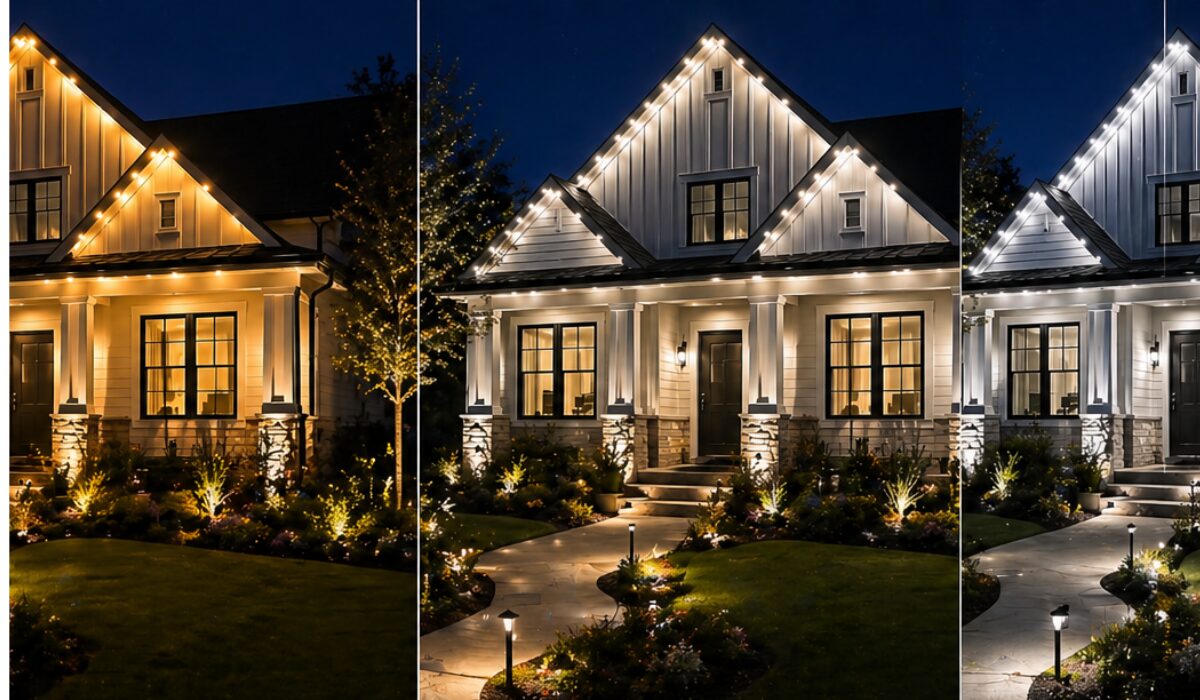
Color temperature plays a major role in how your outdoor lighting looks, feels, and functions.
It affects everything from visibility and safety to the overall atmosphere of your property.
Choosing the right color temperature ensures your lighting system not only performs well but also complements your home’s design.
For homeowners considering upgrades, understanding color temperature is essential when planning or improving an outdoor lighting system.
The right choice can enhance curb appeal, improve usability, and create a more balanced outdoor environment.
What Color Temperature Means
Color temperature refers to the appearance of light, measured in Kelvin (K). It determines whether the light looks warm, neutral, or cool.
Lower Kelvin values (around 2700K–3000K) produce a warm, yellow-toned light.
Mid-range values (around 3500K–4000K) create a neutral white light.
Higher values (5000K and above) produce a cooler, bluish-white light.
Each range creates a different effect, and choosing the right one depends on your lighting goals and outdoor layout.
Matching Color Temperature to Outdoor Spaces
Different outdoor areas require different lighting tones to achieve the best results.
Warm lighting is ideal for patios, decks, and seating areas.
It creates a comfortable and inviting atmosphere, making outdoor spaces feel more relaxing.
Neutral lighting works well for pathways and general outdoor areas. It provides balanced visibility without appearing too harsh or too soft.
Cool lighting is often used for security and larger spaces. It offers brighter illumination and improves visibility, especially in areas like driveways or commercial properties.
Selecting the right tone for each area ensures both functionality and visual appeal.
Comparing Warm vs. Cool Lighting
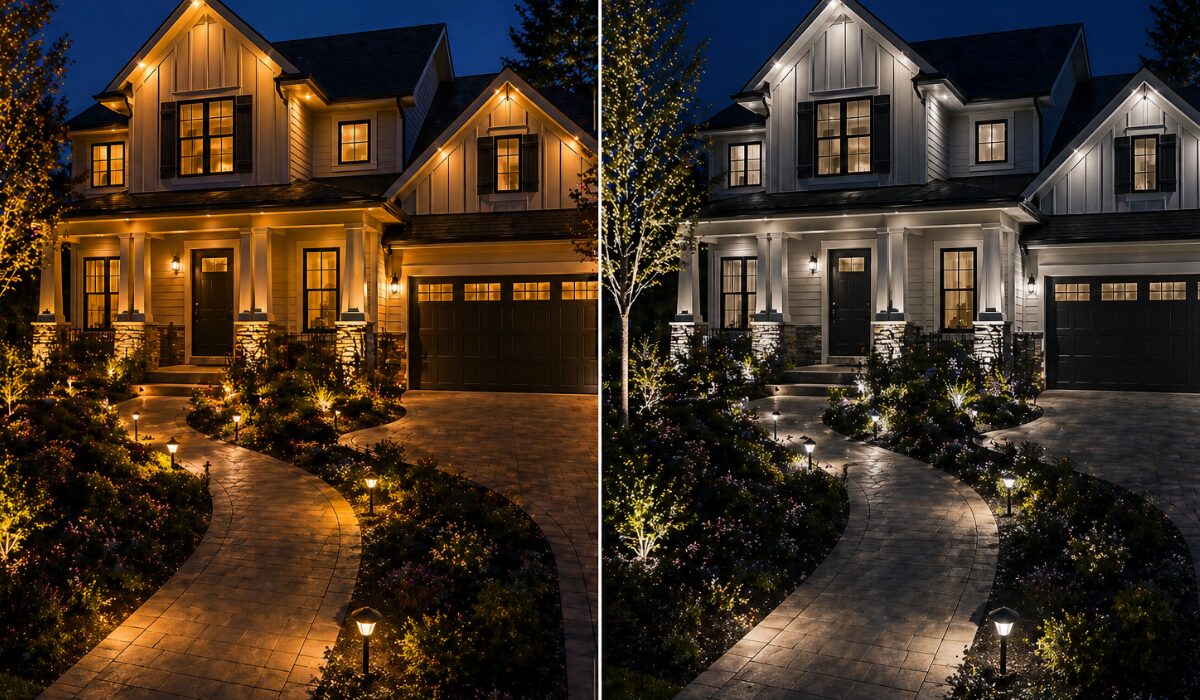
Warm lighting creates a softer, more natural look that blends well with landscaping and architectural features.
It is commonly used in residential settings to enhance curb appeal and create a welcoming environment.
Cool lighting provides a brighter and more focused appearance. It is often chosen for areas that require higher visibility, such as security zones or large outdoor spaces.
While warm lighting emphasizes comfort and design, cool lighting focuses more on performance and clarity. Choosing between the two depends on the purpose of the lighting.
 Balancing Aesthetics and Functionality
One of the key considerations when choosing color temperature is balancing appearance with performance. Lighting should not only look good but also serve a practical purpose.
For example, pathways need enough brightness for safe navigation, while outdoor living spaces benefit from softer tones.
Combining different color temperatures in a layered lighting design can achieve both goals.
A balanced approach ensures that your outdoor lighting system is both effective and visually appealing.
How Color Temperature Impacts Curb Appeal
Color temperature directly influences how your home is perceived from the outside.
Warm lighting enhances architectural details and landscaping, creating depth and a polished look. It makes the property feel more inviting and cohesive.
Cool lighting, on the other hand, can highlight certain features but may appear too harsh if overused in residential settings.
Choosing the right color temperature helps create a consistent and attractive exterior appearance.
Considering Energy Efficiency and Performance
Modern lighting systems, especially LED fixtures, offer consistent color temperature with high energy efficiency.
LED lighting maintains its color quality over time, ensuring reliable performance. It also consumes less energy, making it a cost-effective option for long-term use.
Selecting the right color temperature alongside efficient technology ensures both performance and savings.
Adjusting Color Temperature for Different Uses
Outdoor lighting needs can change depending on how the space is used. Some homeowners prefer warmer tones for everyday use and brighter lighting for specific situations.
Advanced systems allow adjustments in brightness and, in some cases, color temperature.
This flexibility makes it easier to adapt lighting to different needs, such as entertaining guests or improving visibility.
Having the ability to adjust lighting adds convenience and enhances the overall experience.
Avoiding Common Mistakes
Choosing the wrong color temperature can affect both functionality and design.
Using lighting that is too cool in residential areas can create an uninviting atmosphere.
Using lighting that is too warm in high-visibility areas may reduce clarity.
Mixing inconsistent color temperatures can result in an uneven and unbalanced appearance.
Avoiding these mistakes ensures a more cohesive and effective lighting system.
Professional Guidance for Better Results
Selecting the right color temperature can be challenging without proper guidance.
Professional lighting design helps ensure that each area is matched with the appropriate tone.
Experts consider factors such as property layout, lighting purpose, and design preferences.
This results in a system that delivers both functionality and visual consistency.
For homeowners looking to improve their lighting system, solutions like replacement lighting services can help upgrade fixtures and achieve the desired color temperature.
Enhancing Outdoor Living with the Right Lighting Tone
The right color temperature enhances how outdoor spaces are used and experienced.
It creates a comfortable environment for relaxing, entertaining, and enjoying your property after dark.
Proper lighting also highlights key features, adding depth and character to your outdoor design.
A well-balanced system ensures that every area is both functional and visually appealing.
This combination of comfort and performance improves the overall quality of your outdoor space.
Conclusion
Choosing the right color temperature for outdoor lighting is essential for achieving the perfect balance between aesthetics and functionality.
By understanding how different lighting tones affect appearance and performance, homeowners can create a more effective and visually appealing system.
From enhancing curb appeal to improving safety, the right lighting choice makes a significant difference.
Careful planning and proper design ensure long-term satisfaction and reliable performance.
For homeowners looking to upgrade their outdoor lighting, NightVision Outdoor Lighting offers expert solutions designed to deliver consistent results and a refined, well-balanced outdoor environment.
FAQs
What is the best color temperature for outdoor lighting?
The best color temperature depends on the area and purpose. Warm white (2700K–3000K) is ideal for residential spaces like patios and landscaping, while cooler tones (4000K–5000K) are better for security and high-visibility areas. Choosing the right balance improves both appearance and functionality.
Is warm or cool lighting better for outdoor use?
Both have their advantages depending on the application. Warm lighting creates a comfortable and inviting atmosphere, while cool lighting provides brighter and clearer visibility. Many homeowners use a combination of both for balanced results.
Can I mix different color temperatures in my outdoor lighting?
Yes, combining different color temperatures can enhance both design and functionality. However, it should be done carefully to maintain a consistent and cohesive look. Proper planning ensures the lighting does not appear uneven or mismatched.
Does color temperature affect energy efficiency?
Color temperature itself does not impact energy usage, but LED lighting is efficient across all temperature ranges. Choosing high-quality LED fixtures ensures lower energy consumption and consistent performance. This helps reduce long-term operating costs.
Which color temperature is best for security lighting?
Cool white lighting (4000K–5000K) is typically best for security purposes. It provides brighter illumination and improves visibility in large or dark areas. This makes it easier to monitor surroundings and enhance safety.
Does color temperature impact curb appeal?
Yes, color temperature plays a major role in how your home looks at night. Warm lighting enhances architectural features and creates a welcoming feel. The right choice improves overall visual appeal and property presentation.
Can I change the color temperature after installation?
In some systems, adjustable fixtures or smart controls allow you to modify lighting settings. However, many fixtures have a fixed color temperature. Planning ahead ensures you choose the right option from the start.
What happens if I choose the wrong color temperature?
Using the wrong color temperature can affect both appearance and usability. Lighting may feel too harsh or too dim for the space. Correcting it may require replacing fixtures or adjusting the system design.