
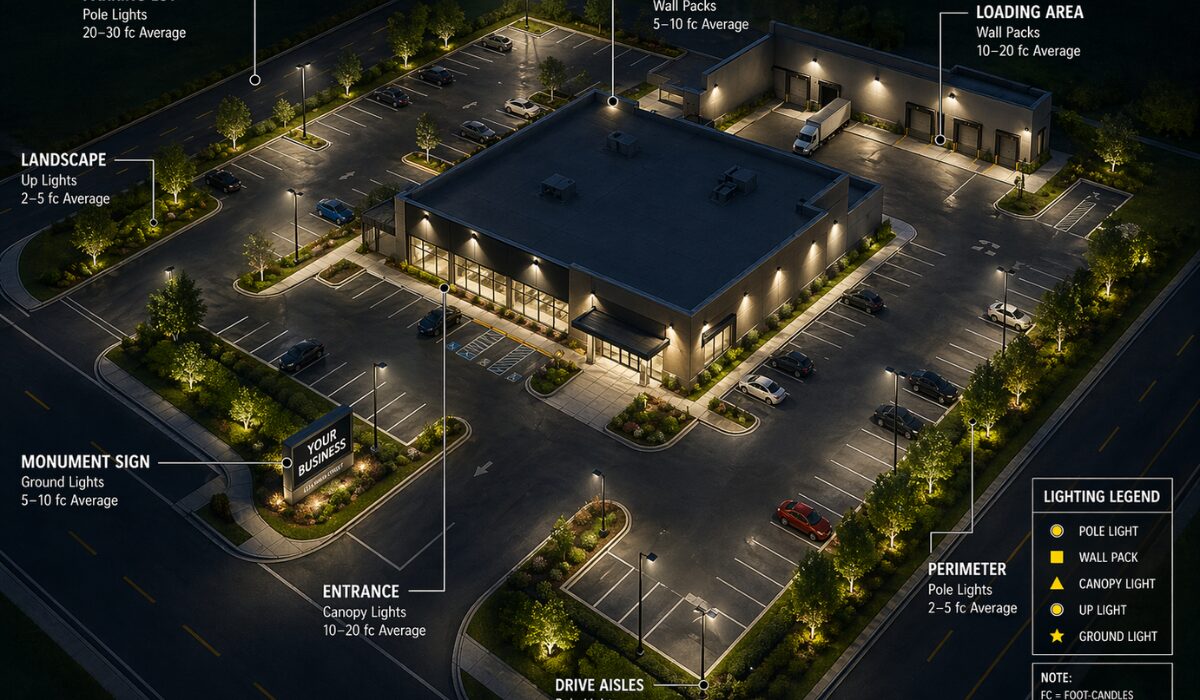
Planning a commercial lighting layout requires more than simply placing fixtures around a property.
A well-structured lighting plan improves safety, enhances visibility, supports business operations, and creates a professional appearance.
For business owners and property managers, having a clear framework ensures that lighting is both functional and efficient from the start.
Whether you’re lighting pathways, decks, entry points, or large outdoor areas, a strategic approach is essential.
Understanding the key steps involved in planning a commercial lighting layout can help you avoid common mistakes and achieve a system that delivers long-term performance.
Step-by-Step Framework for Commercial Lighting Layout
Assess the Property and Identify Key Areas
The first step in planning a lighting layout is evaluating the property.
This includes identifying high-traffic zones such as walkways, entry points, decks, and pathways.
Areas like parking spaces, loading zones, and building perimeters should also be prioritized.
Understanding how people move through the space helps determine where lighting is most needed. This ensures that the layout supports both safety and functionality.
Define Lighting Goals and Requirements
Every commercial property has different lighting needs.
Some businesses prioritize security, while others focus on aesthetics or extended operating hours. Defining your primary goals helps guide the overall design.
For example, pathway lighting may focus on safety and navigation, while deck lighting in commercial spaces may enhance usability and customer experience.
Establishing these goals early ensures a more targeted approach.
Choose the Right Types of Lighting
A successful layout uses a combination of lighting types.
This typically includes ambient lighting for general illumination, task lighting for specific areas, and accent lighting for visual appeal.
For deck and path lighting, fixtures should be selected based on their purpose. Step lights, post lights, and pathway fixtures each serve different roles and should be used accordingly.
 Plan Fixture Placement and Spacing
Proper placement is critical for achieving even coverage. Fixtures should be spaced to avoid dark spots while preventing excessive brightness or glare.
Pathways should have consistent lighting along their length, while decks should have lighting that highlights edges, steps, and seating areas.
Strategic placement ensures that the layout feels balanced and functional.
Incorporate Energy Efficiency
Energy efficiency is an important consideration in commercial lighting.
LED fixtures are widely used due to their low energy consumption and long lifespan.
Planning an efficient layout reduces operational costs while maintaining high-quality illumination. It also minimizes the need for frequent maintenance and replacements.
Ensure Compliance and Safety Standards
Commercial lighting systems must meet specific safety and electrical standards.
Proper wiring, secure installation, and adherence to local regulations are essential for avoiding potential issues.
Working with professionals helps ensure that all aspects of the system are installed correctly and safely.
Test and Adjust the Layout
After installation, the system should be tested to ensure optimal performance.
This includes checking brightness levels, coverage, and fixture alignment.
Adjustments may be needed to eliminate shadows, reduce glare, or improve overall balance.
Fine-tuning the system ensures that it meets both functional and aesthetic goals.
Benefits of a Well-Planned Commercial Lighting Layout
A structured lighting framework provides several key benefits.
One of the most important is improved safety. Properly lit walkways, decks, and pathways reduce the risk of accidents and create a more secure environment.
Enhanced visibility is another advantage. Clear illumination allows employees, customers, and visitors to navigate the property confidently, especially at night.
A well-designed layout also improves the overall appearance of the property.
Balanced lighting highlights architectural features and creates a professional, welcoming atmosphere.
Energy efficiency is another major benefit. By using the right fixtures and optimizing placement, businesses can reduce energy consumption and lower operating costs.
Finally, a well-planned system increases reliability. Proper design and installation minimize the risk of issues such as uneven lighting or electrical problems.
Understanding the Costs of Commercial Lighting Layouts
The cost of planning and installing a commercial lighting layout depends on several factors.
These include the size of the property, the number of fixtures required, and the complexity of the design.
Basic layouts may involve fewer fixtures and simpler designs, resulting in lower costs.
More advanced systems with customized designs, layered lighting, and smart controls will require a higher investment.
The type of fixtures used also impacts cost. High-quality, durable materials may have a higher upfront price but offer better long-term performance and reduced maintenance.
Professional design and installation costs should also be considered.
This adds to the initial investment; it ensures that the system is properly planned and installed for optimal results.
Installation Considerations
The installation process plays a critical role in the success of a commercial lighting layout.
Proper installation ensures that fixtures are securely placed, wiring is correctly handled, and the system operates efficiently.
Professional installers follow a structured approach, from initial setup to final adjustments.
This includes positioning fixtures, connecting power sources, and testing the system.
Installation timelines vary depending on the size and complexity of the project. Smaller layouts may be completed within a few days, while larger or more detailed systems may take longer.
Ongoing maintenance is also important. Regular inspections and adjustments help maintain performance and extend the lifespan of the system.
Comparing DIY vs. Professional Lighting Layout Planning
Some property owners may consider planning and installing lighting systems themselves.
Although DIY options can work for small projects, commercial lighting requires a more advanced approach.
DIY layouts often lack the precision needed for large or complex spaces. This can result in uneven lighting, poor coverage, and reduced efficiency.
Professional planning offers a more structured and reliable solution. Experts analyze the property, create customized designs, and ensure proper installation.
This leads to better performance and a more polished result.
Another advantage of professional services is access to high-quality materials and advanced technology. These components provide greater durability and long-term value.
For businesses seeking a dependable solution, professional services such as deck and path lighting systems can help achieve a well-designed and effective lighting layout.
Conclusion
A structured framework for planning a commercial lighting layout ensures that your system is efficient, reliable, and visually balanced.
By focusing on proper assessment, fixture selection, and strategic placement, businesses can create a lighting system that supports both safety and functionality.
Investing in professional planning and installation helps avoid common mistakes and ensures long-term performance.
A well-designed layout not only improves visibility but also enhances the overall appearance of your property.
For businesses looking to implement a high-quality lighting system, NightVision Outdoor Lighting offers expert solutions tailored to your property’s needs, helping you achieve a well-planned and effective commercial lighting layout.
FAQs
What is the first step in planning a commercial lighting layout?
The first step is assessing the property and identifying key areas that require lighting, such as pathways, decks, and entry points.
How do I choose the right lighting fixtures?
Fixtures should be selected based on their purpose, location, and desired lighting effect to ensure proper functionality and design.
How long does it take to plan and install a lighting layout?
The timeline varies depending on the size and complexity of the project, but most installations can be completed within a few days to a couple of weeks.
Is LED lighting recommended for commercial properties?
Yes, LED lighting is energy-efficient, long-lasting, and cost-effective, making it a popular choice for commercial applications.
Does a professional layout improve safety?
Yes, a well-planned layout ensures proper illumination of key areas, reducing risks and improving overall safety.
Can lighting layouts be adjusted after installation?
Yes, systems can be adjusted and fine-tuned to improve coverage, brightness, and overall performance.