
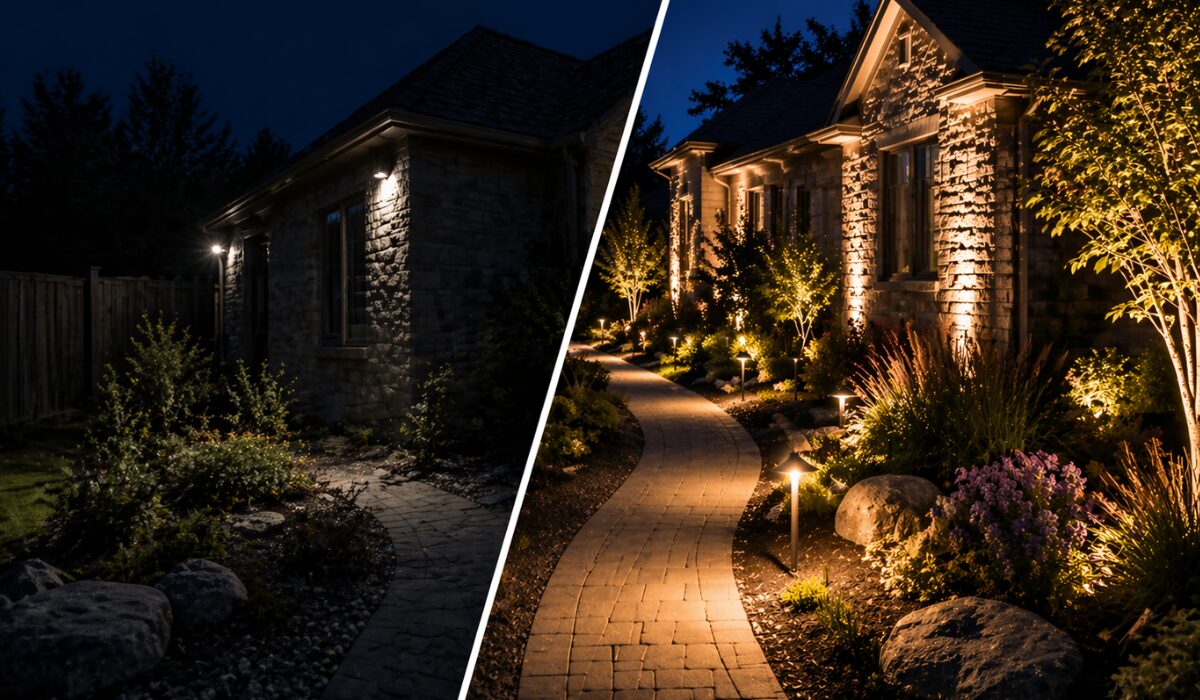
Landscape lighting can completely transform the look, safety, and functionality of your outdoor space, but only when it’s designed correctly.
Poor lighting design can lead to uneven illumination, wasted energy, and a cluttered or unbalanced appearance.
For homeowners in North Atlanta, understanding the most common landscape lighting mistakes can help you avoid costly issues and ensure a more effective and visually appealing result.
Whether you’re planning a new installation or upgrading an existing system, avoiding these common design mistakes is essential to achieving a professional and long-lasting outcome.
If you’re considering a system upgrade, working with experts in landscape lighting design and installation can help ensure every detail is executed correctly.
Common Landscape Lighting Design Mistakes
Overlighting the Property
One of the most common mistakes is using too much light.
Excessive brightness can wash out architectural details and create harsh glare, making your outdoor space feel unnatural.
Instead of improving visibility, overlighting can reduce visual comfort and detract from the overall design.
Poor Fixture Placement
Incorrect placement of fixtures can lead to uneven lighting and unwanted shadows.
Lights that are too close together or too far apart can create inconsistent coverage.
Strategic placement is essential to highlight key features while maintaining balance throughout the space.
Ignoring Layered Lighting
A well-designed lighting system uses multiple layers, including ambient, task, and accent lighting.
Relying on a single type of lighting often results in a flat and uninteresting appearance.
Layering different lighting types adds depth and dimension to your outdoor space.
Using Low-Quality Fixtures
Choosing low-quality fixtures may reduce upfront costs, but it often leads to long-term issues such as corrosion, fading, and frequent replacements.
High-quality, weather-resistant materials are essential for durability and consistent performance.
Neglecting Pathway and Safety Lighting
Focusing only on aesthetics while ignoring safety is a common oversight.
Walkways, steps, and entry points should always be properly illuminated to prevent accidents and ensure safe navigation at night.
Inconsistent Lighting Color and Temperature
Mixing different color temperatures can create a disjointed and unbalanced look.
Consistency in lighting color is important for maintaining a cohesive design and enhancing the overall appearance of your property.
Lack of Planning for Growth and Changes
Landscaping evolves over time, and lighting should be designed with future growth in mind.
Failing to account for plant growth or layout changes can result in blocked light or reduced effectiveness over time.
Benefits of Proper Landscape Lighting Design
Avoiding these mistakes leads to a more effective and visually appealing lighting system.
Proper design enhances curb appeal by highlighting architectural features and landscaping elements in a balanced way.
Safety is significantly improved when walkways, driveways, and entry points are properly illuminated.
This reduces the risk of accidents and creates a more secure environment for homeowners and guests.
Energy efficiency is another benefit of thoughtful design.
Using the right number of fixtures and choosing energy-efficient options such as LED lighting helps reduce energy consumption and operating costs. A well-designed system also increases property value.
Homes with professionally designed outdoor lighting are often perceived as more attractive and well-maintained, making them more appealing to potential buyers.
Understanding the Costs of Fixing Design Mistakes
Correcting landscape lighting mistakes can involve additional costs, especially if the original system was poorly planned.
Minor adjustments, such as repositioning fixtures or replacing bulbs, may be relatively inexpensive.
However, more significant issues, such as improper wiring, outdated fixtures, or inadequate coverage may require a full system redesign.
This can involve replacing fixtures, updating wiring, and reconfiguring the layout to achieve better results.
Investing in proper design from the beginning can help avoid these additional expenses.
Professional planning ensures that the system is installed correctly and performs efficiently over time.
While redesigning a lighting system may require an upfront investment, it often results in long-term savings by reducing maintenance and improving overall performance.
The Role of Professional Installation
Professional installation plays a critical role in avoiding common lighting mistakes.
Lighting experts assess your property, identify key features, and create a customized design that balances aesthetics and functionality.
During the installation process, professionals ensure that fixtures are placed correctly, wiring is properly handled, and the system is configured for optimal performance.
This reduces the risk of issues such as uneven lighting or electrical problems.
Professionals also consider factors such as beam angles, light intensity, and spacing to create a cohesive and visually appealing result.
Their expertise ensures that the lighting system enhances your property without overwhelming it.
After installation, adjustments and fine-tuning help achieve the desired effect.
This level of precision is difficult to achieve with DIY approaches, making professional installation a valuable investment.
 Comparing DIY vs. Professional Lighting Design
DIY landscape lighting may seem like a cost-effective option, but it often leads to the mistakes mentioned earlier.
Limited design knowledge and pre-packaged kits can result in poor placement, uneven lighting, and reduced durability.
Professional lighting design offers a more tailored approach.
Experts create customized solutions based on your property’s layout and your specific goals. This ensures that lighting is both functional and visually balanced.
Another advantage of professional services is access to high-quality materials and advanced technology.
These components provide better performance and longer lifespan compared to standard DIY options.
Safety is also a key factor. Professional installation ensures that all electrical components are properly handled and meet safety standards, reducing the risk of potential hazards.
For homeowners seeking a polished and long-lasting result, professional services such as custom landscape lighting solutions provide a more reliable and effective outcome.
Conclusion
Avoiding common landscape lighting design mistakes is essential for creating an outdoor space that is both functional and visually appealing.
From proper fixture placement to balanced lighting layers, thoughtful design makes a significant difference in the overall result.
By investing in quality materials and professional planning, homeowners can achieve a lighting system that enhances safety, improves curb appeal, and delivers long-term performance.
Poor design choices may lead to unnecessary costs and ongoing issues, making it important to get it right from the start.
For homeowners looking to refine or upgrade their outdoor lighting, NightVision Outdoor Lighting offers expert design and installation services that help eliminate common mistakes and deliver a clean, well-balanced lighting system tailored to your property.
FAQs
What is the most common landscape lighting mistake?
Overlighting is one of the most common mistakes, as it can create glare and reduce the overall visual appeal of your outdoor space.
How can I improve my existing landscape lighting?
You can improve your system by adjusting fixture placement, upgrading to LED lights, and incorporating layered lighting for better balance.
Is professional lighting design necessary?
While not required, professional design helps avoid common mistakes and ensures a more effective and visually appealing result.
How long does it take to fix lighting design issues?
The timeline depends on the complexity of the changes, but most adjustments or redesigns can be completed within a few days. Larger or more detailed projects may take additional time to ensure proper results.
Does better lighting design improve safety?
Yes, proper lighting design ensures that key areas are well-lit, reducing the risk of accidents and improving overall security. It also enhances visibility for pathways, steps, and entry points at night.
Can poor lighting design increase energy costs?
Yes, inefficient design and overuse of fixtures can lead to higher energy consumption and increased operating costs. Optimized lighting layouts help reduce unnecessary energy usage.