
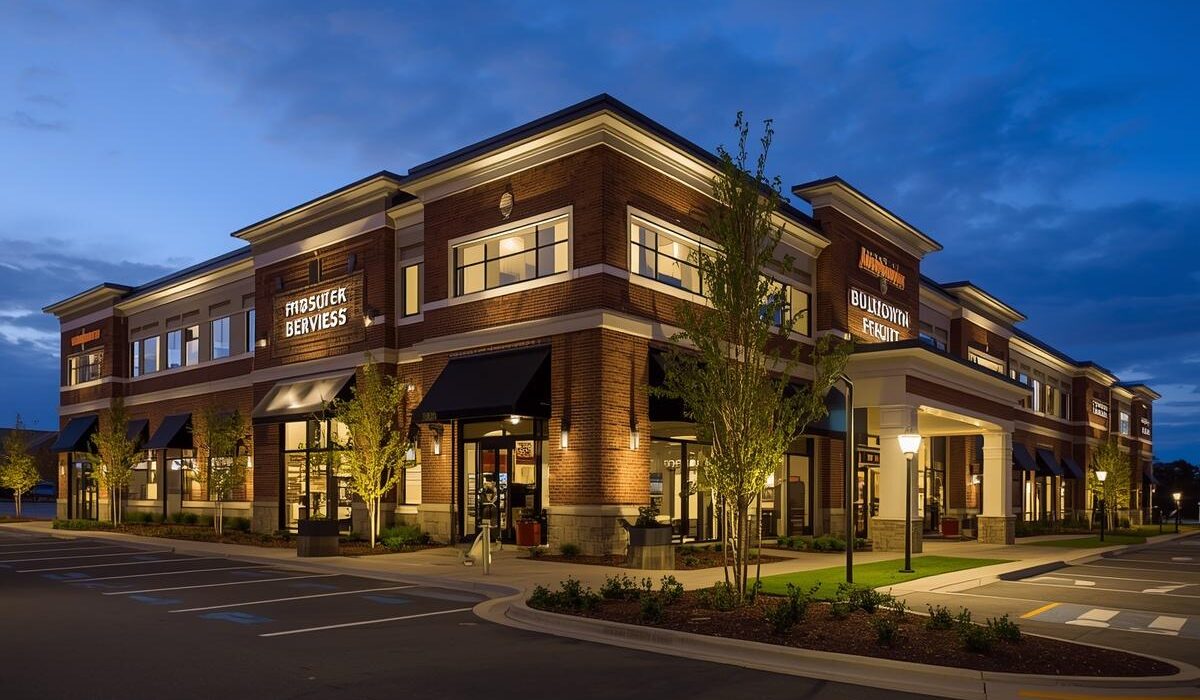
Commercial outdoor lighting is one of the most effective ways to strengthen security for businesses, properties, and public spaces.
For business owners in North Atlanta, proper lighting is not just about visibility, it’s a critical component of risk prevention, safety, and operational efficiency.
Whether it’s a retail storefront, office complex, warehouse, or multi-unit property, a well-designed lighting system helps deter unwanted activity, improves surveillance, and creates a safer environment for employees and customers.
Understanding how commercial lighting works and what to expect before installation can help you make a more informed investment.
Benefits of Commercial Outdoor Lighting for Security
 One of the primary benefits of commercial outdoor lighting is crime deterrence.
Well-lit properties reduce dark areas where unauthorized individuals could hide, making it more difficult for criminal activity to go unnoticed.
Bright, strategically placed lighting sends a clear message that the property is monitored and maintained, which can discourage trespassing, theft, and vandalism.
Another important advantage is improved visibility for surveillance systems. Security cameras rely heavily on lighting conditions to capture clear footage.
Poor lighting can result in grainy or unusable video, while proper illumination ensures that cameras can accurately record activity around the property.
This is especially important for entry points, parking lots, and building perimeters.
Commercial lighting also enhances safety for employees and customers. Illuminated walkways, entrances, and parking areas reduce the risk of accidents such as slips, trips, and falls.
This is particularly important for businesses that operate during evening hours or have high foot traffic after dark.
In addition to safety and security, outdoor lighting contributes to a more professional and welcoming appearance.
A well-lit property reflects positively on a business, making it more inviting for customers and clients.
It also reinforces a sense of trust and reliability, which can influence how people perceive your brand.
Another key benefit is extended operational functionality. With proper lighting, businesses can safely operate beyond daylight hours.
This is essential for industries such as retail, hospitality, and logistics, where evening or nighttime activity is common.
Understanding the Costs of Commercial Outdoor Lighting
Cost is a major consideration when planning a commercial lighting project.
The total investment depends on several factors, including the size of the property, the level of illumination required, and the complexity of the lighting design.
Basic lighting setups, such as perimeter lights or parking lot fixtures, may be more affordable but still provide significant improvements in security. However, more advanced systems that include layered lighting, motion sensors, and integrated controls will require a higher investment.
The type of lighting technology used also affects cost. LED lighting is widely used in commercial applications due to its energy efficiency and durability.
While LEDs may have a higher upfront cost, they consume less energy and require less maintenance, making them a cost-effective option in the long run.
Installation costs should also be considered. Professional installation ensures that lighting is properly positioned, wired, and configured for optimal performance.
This reduces the risk of issues such as uneven coverage, electrical problems, or system inefficiencies.
Maintenance is another factor that impacts overall cost. Regular upkeep, including cleaning fixtures and replacing components when needed, helps maintain performance and extend the lifespan of the system.
Many businesses choose ongoing maintenance plans to ensure consistent reliability.
When evaluating cost, it’s important to consider the long-term benefits.
Improved security, reduced liability, and enhanced property value make commercial outdoor lighting a worthwhile investment for many businesses.
The Commercial Lighting Installation Process
The installation of commercial external lighting typically begins with a detailed assessment of the property.
During this phase, lighting professionals evaluate the layout, identify high-risk areas, and determine the best approach to achieving both security and functionality.
The design phase follows, where a customized lighting plan is created.
This plan outlines the placement of fixtures, the type of lighting to be used, and how different areas of the property will be illuminated.
Key areas often include entrances, exits, parking lots, walkways, and building perimeters.
Once the design is approved, installation begins. This involves placing fixtures, running wiring, and connecting the system to power sources.
Professional installers ensure that all components are securely installed and capable of withstanding outdoor conditions.
After installation, the system is tested and adjusted to ensure proper performance.
This may include fine-tuning brightness levels, adjustment of angles, and ensuring that all areas are adequately covered.
The goal is to create a balanced lighting system that maximizes security without causing glare or excessive brightness.
Ongoing maintenance is essential for maintaining the effectiveness of the system.
Over time, adjustments may be needed due to environmental changes, wear and tear, or evolving security needs.
Regular inspections help ensure that the lighting continues to perform as intended.
Comparing DIY vs. Professional Commercial Lighting
Some business owners may consider DIY lighting solutions as a way to reduce costs.
However, commercial outdoor lighting systems are typically more complex than residential setups and require a higher level of expertise.
DIY systems often lack the customization needed for effective security coverage.
They may not provide adequate illumination for large areas or properly address high-risk zones.
Additionally, improper installation can lead to electrical issues, safety hazards, and reduced system performance.
Professional commercial lighting offers a more comprehensive approach.
Experts design systems based on the specific needs of the property, ensuring that lighting is strategically placed for maximum effectiveness.
They also use high-quality materials that are built to withstand outdoor conditions and heavy use.
Another advantage of professional installation is compliance with safety standards and local regulations.
Commercial properties must adhere to specific requirements, and experienced installers ensure that all aspects of the system meet these standards.
For businesses seeking reliable, long-term results, professional solutions such as commercial outdoor lighting systems provide a more effective and secure outcome.
Conclusion
Commercial outdoor lighting is a critical investment for businesses looking to improve security, safety, and overall property functionality.
By illuminating key areas, it helps deter criminal activity, enhances visibility for surveillance, and creates a safer environment for employees and customers.
Understanding the benefits, costs, and installation process allows business owners to make informed decisions when planning a lighting upgrade.
While DIY options may seem appealing, professional installation provides better design, durability, and long-term value.
If you’re ready to enhance your property’s security, NightVision Outdoor Lighting offers customized commercial lighting solutions tailored to your business needs.
Schedule a consultation to create a lighting system that improves safety, visibility, and peace of mind.
FAQs
How does commercial outdoor lighting deter crime?
Commercial lighting deters crime by eliminating dark areas and increasing visibility, making it more difficult for unauthorized individuals to operate unnoticed. Well-lit properties are less likely to be targeted because they appear actively monitored and maintained.
What areas should be prioritized for commercial lighting?
Key areas include entrances, exits, parking lots, walkways, and building perimeters, as these are the most vulnerable and frequently used spaces. Proper illumination in these areas improves both safety and security.
Is commercial outdoor lighting energy-efficient?
Yes, most modern systems use LED technology, which reduces energy consumption and operating costs. LEDs also have a longer lifespan, minimizing the need for frequent replacements.
How long does commercial lighting installation take?
Installation timelines vary depending on property size and system complexity, but most projects can be completed within a few days to a couple of weeks. Larger properties or more advanced systems may require additional time.
Does commercial lighting require maintenance?
Yes, regular maintenance is essential to ensure consistent performance and reliability. This includes cleaning fixtures, checking connections, and making adjustments as needed.