
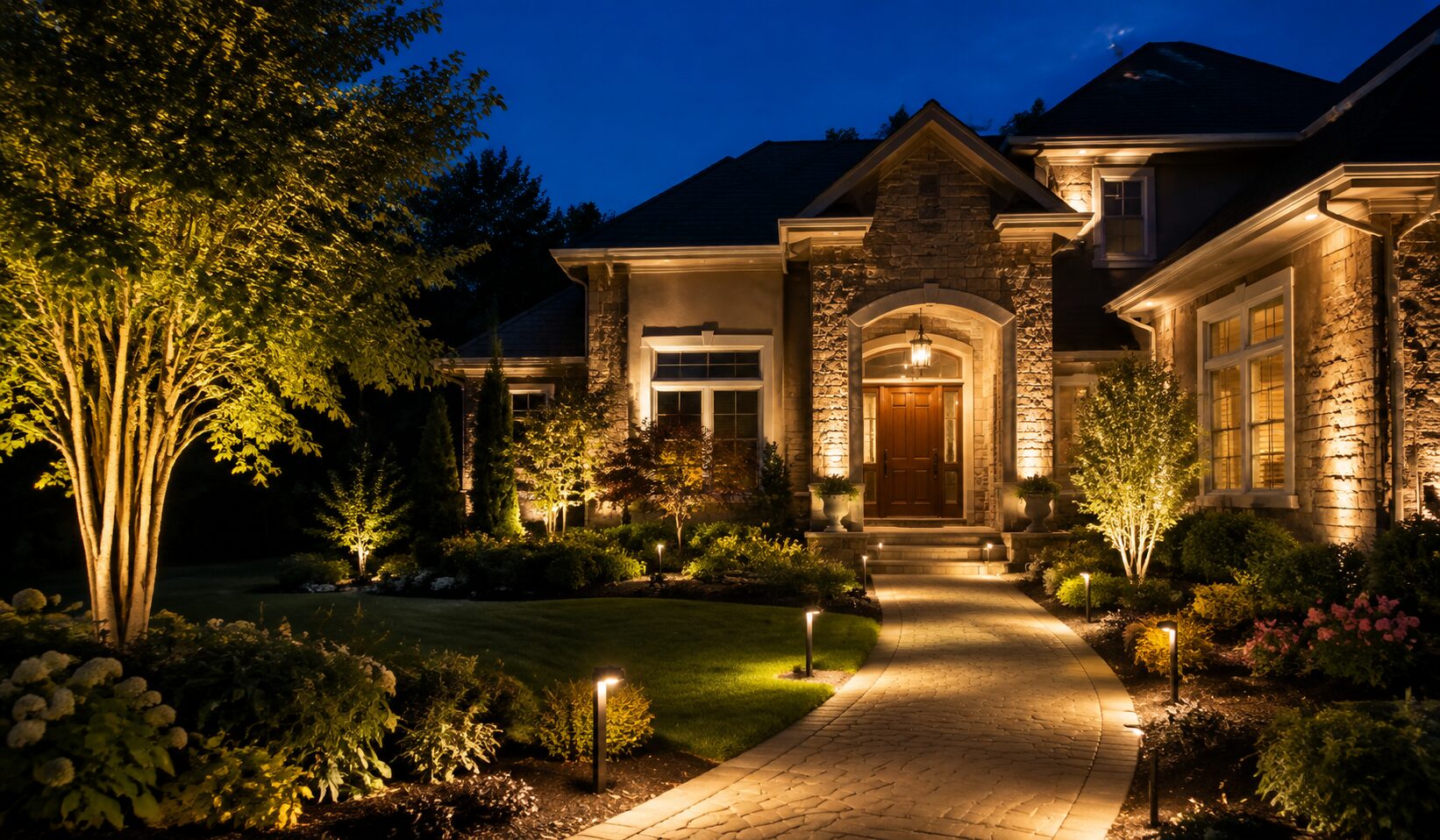
LED outdoor lighting has become a popular choice for homeowners who want better visibility, lower energy use, and more control over how their property looks after dark.
Unlike traditional incandescent and compact fluorescent bulbs, LEDs use less electricity to produce the desired amount of light.
They are suitable for many outdoor applications, including pathways, patios, entryways, gardens, pools, architectural features, and entertainment areas.
LED technology also gives lighting professionals greater flexibility when designing a system.
Fixtures are available in different brightness levels, beam angles, color temperatures, and styles, allowing the lighting to be tailored to the property rather than using the same fixture everywhere.
Long-Term Cost Benefits of LED Lighting
LED fixtures may cost more initially than some incandescent, halogen, or compact fluorescent alternatives. However, their lower energy consumption and longer operating life can make them more economical over the life of an outdoor lighting system.
Lower Electricity Consumption
LED fixtures typically use less electricity to produce comparable levels of illumination than many older lighting technologies.
This can help reduce the amount of energy required to operate pathway lights, accent fixtures, security lighting, and other outdoor applications.
The overall savings depend on the number of fixtures, operating schedule, fixture wattage, and local electricity rates.
Using timers, photocells, or smart controls can further reduce energy consumption by preventing lights from operating when they are not needed.
Fewer Bulb Replacements
A quality LED light may provide tens of thousands of hours of operation under appropriate conditions.
The actual service life depends on factors such as fixture quality, operating temperature, voltage stability, moisture protection, installation quality, and maintenance.
Because LEDs generally require less frequent replacement, homeowners may spend less time maintaining fixtures in difficult-to-access locations.
This can be particularly useful for lights installed in trees, around architectural features, along long pathways, or throughout larger landscapes.
Reduced Maintenance Requirements
Outdoor lighting systems can require more than occasional bulb replacement.
Fixtures may collect dirt, connections can become loose, and landscaping can eventually block or alter the intended light pattern.
A properly designed LED system can reduce some routine maintenance associated with frequent lamp replacement.
However, regular inspections and cleaning are still important for keeping outdoor lighting performing properly.
Smarter Control of Operating Costs
Lighting controls can help homeowners manage when and how long outdoor fixtures operate.
Timers can follow a scheduled lighting routine, while photocells can respond to changing daylight conditions.
Motion sensors may be useful for selected security or entry areas where continuous illumination is unnecessary.
Smart controls can provide additional scheduling and automation options when integrated into a compatible lighting system.
Strong Illumination With Lower Energy Use
LED fixtures can provide effective outdoor illumination without requiring the same amount of electricity as many older lighting technologies.
However, choosing outdoor lighting is not simply a matter of selecting the fixture with the highest brightness.
Matching Brightness to the Application
Different areas of a property have different lighting requirements. A pathway may need relatively soft illumination for visibility, while a driveway, entrance, or outdoor work area may require stronger light.
Using excessive brightness can create glare and harsh contrasts. A professional lighting plan considers the purpose of each area before determining fixture output.
Choosing the Right Beam Spread
Beam angle affects how light is distributed across the property. Narrow beams can concentrate illumination on columns, trees, signs, or architectural details, while wider beams can cover larger areas.
Selecting the appropriate beam spread can help reduce dark spots and prevent unnecessary light from spilling into areas that do not need illumination.
Using Layered Outdoor Lighting
A balanced landscape lighting system may combine several fixture types rather than relying on one type throughout the property.
Path lights can improve visibility along sidewalks and garden routes. Downlights may illuminate patios, driveways, and gathering areas, while accent lights can highlight trees, stonework, columns, and other architectural details.
Combining these applications can create depth while providing practical illumination where it is needed.
Managing Heat and Fixture Performance
Although LEDs produce less radiant heat than incandescent or halogen bulbs, the electronic components still generate heat. Quality LED fixtures are designed to manage this heat through appropriate housing and heat-dissipation features.
Proper fixture selection and installation can help maintain performance over time, particularly in outdoor environments exposed to high temperatures.
Improved Visibility Around Outdoor Areas
Outdoor LED lighting can make steps, elevation changes, pathways, driveways, entrances, and other frequently used areas easier to see after dark.
Lighting Steps and Changes in Elevation
Steps and uneven surfaces can become difficult to identify in low-light conditions. Strategically positioned fixtures can help define changes in elevation without producing excessive glare.
Lights can be installed near stairs, retaining walls, transitions between hardscaped areas, and other locations where changes in height may be difficult to see.
Improving Pathway and Driveway Visibility
Pathway lighting can help establish a clear visual route through gardens, walkways, and entrances. Driveway lighting can also help define property edges and improve visibility when vehicles enter or leave the property.
The objective is consistent illumination rather than simply maximizing brightness.
Reducing Glare and Harsh Shadows
Excessive brightness can create glare, deep shadows, and visual discomfort. Fixtures should therefore be positioned so the light reaches the intended surface without shining directly into people’s eyes or unnecessarily toward neighboring properties.
Shielding, fixture height, beam angle, and placement all influence the final lighting effect.
Selecting Fixtures for Wet Locations
Areas near pools, fountains, ponds, and other water features require appropriate fixture ratings and installation methods. Only fixtures approved for the intended wet or submerged location should be used.
Ordinary landscape lights are not automatically suitable for every application near water. Proper product selection, wiring, connections, and installation practices are essential for these environments.
More Design Options for Landscapes and Architecture
LED lighting provides flexibility for both functional and decorative outdoor applications. Fixtures are available in different sizes, beam angles, color temperatures, finishes, and configurations.
Highlighting Trees and Plantings
Accent lighting can draw attention to mature trees, ornamental plants, garden beds, and other landscape features. Uplighting can emphasize trunks and canopies, while carefully positioned directional fixtures can highlight specific planting areas.
The goal should be to complement the landscape rather than make every feature equally prominent.
Enhancing Architectural Features
Outdoor LED fixtures can highlight columns, stone walls, textured surfaces, entryways, pergolas, and other architectural elements.
A narrow beam may emphasize a vertical feature, while a wider distribution can create a softer wash across a wall or larger surface.
Creating Comfortable Outdoor Spaces
Warm white lighting can create a comfortable and welcoming atmosphere around patios, decks, entrances, and outdoor seating areas.
Color temperature should be selected according to the desired appearance of the property. Consistency between fixtures can also help prevent an uneven or mismatched appearance.
Adding Color for Decorative Effects
Colored LEDs may be used selectively around pools, water features, entertainment spaces, or seasonal displays. They can add visual interest when incorporated thoughtfully into the overall design.
However, decorative colors should support the landscape and architecture rather than overwhelm the property.
Creating Reflections Around Water Features
LED fixtures can create attractive reflections across ponds, fountains, pools, and other water features. Carefully positioned lighting can emphasize moving water, surface texture, and surrounding landscaping.
The fixture itself does not always need to be highly visible. Concealed or discreet placement can allow the illuminated feature to remain the primary focus.
Professional LED Lighting Design and Installation
The benefits of LED technology depend partly on how the overall system is designed and installed. Even high-quality fixtures may perform poorly if they are incorrectly positioned, improperly connected, or selected without considering the surrounding environment.
Planning Fixture Placement
A lighting plan should consider property layout, existing landscaping, walkways, architectural features, viewing angles, and areas where illumination is needed most.
Thoughtful placement can reduce dark areas while limiting unnecessary light spill.
Choosing Outdoor-Rated Components
Outdoor lighting is exposed to rain, humidity, temperature changes, soil, irrigation, and other environmental conditions. Fixtures, connections, transformers, and other components should therefore be selected for their intended outdoor application.
Using appropriate components can help improve reliability and reduce premature system problems.
Maintaining Consistent Lighting Performance
Over time, plants grow, landscaping changes, fixtures can shift, and dirt can accumulate on lenses. Periodic adjustments and maintenance can keep the original lighting design working as intended.
Professional installation can also help ensure that fixtures, wiring, controls, and power requirements are properly coordinated from the beginning.
Why Choose a Top LED Landscape Lighting in Roswell, GA
Installing outdoor LED fixtures involves more than selecting bulbs and placing lights around the yard.
The system must account for the property’s layout, existing electrical components, transformer capacity, cable length, voltage, drainage, plant growth, and the intended use of each outdoor space.
Working with a top landscape lighting company in Roswell, GA, can help ensure that the fixtures, transformer, wiring, and controls operate as a coordinated system.
A customized design can provide useful illumination while avoiding common problems such as glare, uneven coverage, dark gaps, and unnecessary brightness.
The outdoor lighting professionals at NightVision Outdoor Lighting use LED technology to create systems based on the unique characteristics of each property.
Whether the goal is to highlight architecture, illuminate a pathway, improve visibility around a patio, or create a welcoming setting for outdoor gatherings, the system can be designed around the property’s practical and aesthetic needs.
For help planning your next outdoor lighting project, you can contact our expert team to discuss professional LED landscape lighting options.
Frequently Asked Questions
Can existing landscape lights be converted to LED?
Many existing landscape lighting systems can be upgraded with compatible LED bulbs or fixtures. However, the transformer, wiring, sockets, and controls should be inspected before conversion to ensure the new components work correctly together.
What color temperature is best for outdoor LED lighting?
Warm white LEDs between 2700K and 3000K generally work well for homes, patios, gardens, and architectural features. They create a comfortable appearance without making the property look overly bright, blue, or harsh.
Are outdoor LED lights waterproof?
Outdoor LED fixtures are available with different levels of protection against moisture, dirt, and weather. Check the fixture’s IP rating and wet-location approval to ensure it is suitable for the specific installation area, especially near pools or irrigation systems.
Can outdoor LED lights be dimmed or automated?
Compatible LED systems can be connected to dimmers, timers, photocells, motion sensors, and smart controls. All fixtures, drivers, transformers, and controls must be designed to work together to prevent flickering or inconsistent performance.
Do outdoor LED lights attract bugs?
LEDs can still attract insects, but warmer or amber-colored lights may attract fewer bugs than cool white or bluish lights. Using lower-intensity lighting and directing it only where needed may also reduce insect activity around patios and entrances.