
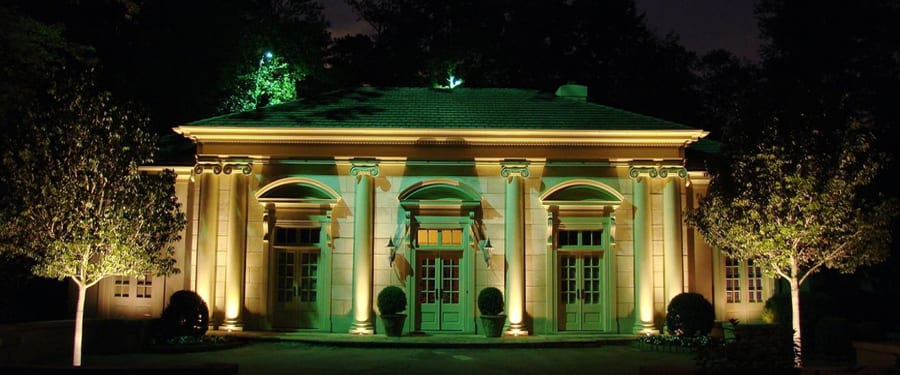
It’s been said before, and it likely will be said again, but at NightVision Outdoor Lighting, we believe exterior lighting is all about the effect, as opposed to the fixtures.
When we create an exterior lighting design for our Atlanta homeowners, we look to illuminate all the key aspects of their property, sometimes without using many light fixtures.
After all, it only takes a few of the right fixtures (when they are installed properly) to make a world of difference for your home’s outdoor appeal. Here are some examples:
Enhancing A Brick Home With Outdoor Accent Lighting
If you requested outdoor lighting for your brick home, we would design a lighting system to ensure your home’s best features were beautifully up-lit , in order to enhance the texture and color of the bricks.
Additionally, we would make sure a nearby tree in your front yard was illuminated as well for an even better effect.
Surprisingly, this would only take approximately 5 LED lights to make a home such as this shine at night. The reason it would only require so few fixtures is because we would use the right fixtures; thus, giving you the right effect.
LED lights would be our choice for a brick home, as it would provide the best look and make the brick appear warm and inviting.
The usual misconception about LED is that it can look bluish-white, however this is simply just a myth. The best part of LED lighting though, is it is very cost-effective in the long run and requires little to no maintenance.
Enhancing Safety And Visual Appeal With Pathway Lighting
Path lights are, by far, the most over-used fixtures seen today. We’ve all seen the walkways that look similar to airport runways with long rows of lights on either side of them. That is bad exterior lighting.
For good pathway lighting that is well designed you will see that the entire path is well-lit in order to ensure safe footing. And, while you can easily see the path, your eyes will not bounce to to all of the fixtures that are doing the lighting, as there won’t be an over abundance of fixtures.
At NightVision Outdoor Lighting, we’re firm believers in using the most subtle path lights. Not only does this provide the best look, but fixtures like these have a wide light spread, meaning not very many are needed.
Quality Exterior Lighting Systems in Atlanta
When looking at an exterior lighting system, if your eyes go to the fixture before the effect, this is a sign that there is a flaw somewhere in the design.
If you would like to talk to a trained Atlanta outdoor lighting professional about enhancing your home or property at night, be sure to contact NightVison Outdoor Lighting on our website or give us a call today at 678-828-2999 for your free estimate on your next outdoor lighting project!
Why Small Exterior Lighting Systems Are Worth Considering
A small exterior lighting system can make a noticeable difference without requiring a large number of fixtures. With strategic placement, even a few lights can highlight important landscape features, improve visibility, and create a more welcoming atmosphere after dark.
Instead of trying to illuminate every part of your property, a focused lighting plan can draw attention to the areas that matter most. This approach can be especially effective for smaller yards, entryways, patios, and homes where subtle lighting is preferred.
Best Places to Add Small Outdoor Lights
When working with a smaller lighting system, fixture placement becomes especially important. Consider focusing on areas such as:
- Front walkways and steps
- Entry doors and porches
- Trees and shrubs
- Garden beds
- Architectural features
- Driveways
- Patios and seating areas
- Fences and retaining walls
- Water features
Strategically illuminating just a few key areas can create a balanced appearance without making the property look overly bright.
Small Outdoor Lighting Ideas for Maximum Impact
You don’t need dozens of fixtures to create an attractive nighttime landscape. Consider using a few carefully selected techniques to maximize the impact of a smaller system.
Highlight a Statement Tree
A single mature tree can become a dramatic focal point when illuminated from below. Uplighting can emphasize the trunk, branches, and natural shape of the tree.
Illuminate the Front Entry
Lighting around your front entrance can create a warm first impression while making the doorway easier to see after dark.
Add Pathway Lighting
A few strategically positioned pathway lights can help guide visitors along walkways and steps while adding visual interest to the landscape.
Highlight Architectural Features
Use accent lighting to draw attention to brickwork, columns, stone walls, or other architectural details that may otherwise disappear at night.
Create a Cozy Patio
A small number of carefully positioned lights around a patio or seating area can make the space more inviting for evening relaxation and entertaining.
How to Design a Small Outdoor Lighting System
The key to a successful small lighting system is thoughtful planning. Start by identifying the most important features you want to highlight and the areas where additional visibility is needed.
Next, consider the appropriate lighting technique for each location. For example, uplighting may work well for trees, while pathway lighting can guide visitors along walkways.
The goal should be to create layers of light rather than illuminate everything at the same intensity. Combining subtle accent, pathway, and architectural lighting can create depth while keeping the overall design balanced.
How Many Outdoor Lights Does a Small Property Need?
There is no standard number of fixtures required for every property. The number depends on the size and layout of the yard, the features being highlighted, the type of fixtures selected, and the desired lighting effect.
A professional lighting designer can evaluate the property and determine where fixtures will have the greatest impact. In many cases, strategic placement is more important than simply installing a large number of lights.
Choosing the Right Color Temperature for Exterior Lighting
Color temperature can influence how your home and landscape appear at night. Warmer light is often used for residential landscapes because it creates a soft and welcoming atmosphere.
The ideal color temperature can vary depending on the home’s exterior materials, landscaping, and the specific features being illuminated. A professional lighting designer can help select a suitable option for creating a cohesive appearance.
LED Lighting for Small Exterior Lighting Systems
LED fixtures are a popular choice for outdoor lighting because they offer energy efficiency, long operating life, and a variety of fixture styles and light outputs.
For a smaller lighting system, LED technology can provide flexibility while helping homeowners manage energy consumption. The right fixture should still be selected based on the specific application, desired brightness, beam spread, and overall lighting design.
Professional vs. DIY Exterior Lighting
Some simple outdoor lighting projects may be suitable for DIY installation. However, professional design can be valuable when the goal is to create a cohesive lighting system rather than simply adding individual lights.
A professional can assess your property’s layout, recommend appropriate fixtures, determine strategic placement, and create a balanced lighting design. This can help avoid common issues such as excessive glare, uneven illumination, or unnecessary fixtures.
How to Avoid Overlighting Your Property
More light does not always create a better outdoor lighting design. Excessive lighting can produce glare, wash out landscape features, and reduce the visual impact of focal points.
A better approach is to use light selectively. Focus on important features, vary the intensity where appropriate, and position fixtures carefully to illuminate the subject rather than directing bright light toward windows or neighboring properties.
Conclusion
A small exterior lighting system can have a significant impact when it is thoughtfully designed. By focusing on key landscape and architectural features, homeowners can improve curb appeal, enhance nighttime visibility, and create a more inviting outdoor environment without installing a large number of fixtures.
The most effective lighting designs are not necessarily the ones with the most lights. Strategic fixture placement, appropriate lighting techniques, and professional planning can help even a modest system transform the appearance and functionality of your property after dark.
FAQs
How many lights do I need to illuminate a small yard?
The number of lights needed depends on the size and layout of your property, the features you want to highlight, and the type of lighting effect you want to create. A well-planned system may require fewer fixtures than expected when each light is strategically positioned.
Can a small outdoor lighting system make a big difference?
Yes, even a small number of strategically placed fixtures can significantly improve the appearance and functionality of an outdoor space. The right placement can highlight architectural details, trees, landscaping, and pathways without overwhelming the property.
What is the best lighting for a brick house?
Uplighting is often an effective option for brick homes because it can emphasize the texture, color, and architectural details of the brickwork. The fixture type, beam angle, and color temperature should be selected based on the home’s design and the desired visual effect.
Are LED lights good for exterior lighting?
LED lights are a popular choice for exterior lighting because they are energy-efficient, durable, and available in a range of color temperatures. They can be used for applications such as landscape accents, pathway lighting, and architectural illumination.
How can I light my walkway without using too many fixtures?
A professional lighting design can illuminate a walkway with fewer, strategically positioned fixtures rather than placing lights in a continuous row. Fixtures with an appropriate light spread can provide useful illumination while creating a more natural appearance.
Should outdoor lights be placed on both sides of a pathway?
The ideal placement depends on the width and layout of the pathway, the surrounding landscape, and the type of fixtures being used. Alternating or strategically spaced fixtures may provide sufficient illumination without making the walkway look overly bright or cluttered.
How do I prevent outdoor lighting from looking too bright?
Avoid using excessive fixtures or overly powerful lights. Instead, focus on strategic placement, appropriate beam angles, lower light levels, and proper shielding. The goal is to illuminate important areas and features without creating glare or making the fixtures themselves the main focus.
What outdoor lighting is best for highlighting trees?
Uplights and spotlights are commonly used to highlight trees. The best option depends on the tree’s size, shape, trunk structure, and canopy. Proper fixture placement can emphasize the tree’s natural form while creating depth in the surrounding landscape.
Does a small outdoor lighting system require professional installation?
Professional installation can be beneficial even for smaller projects because proper fixture placement and lighting design have a significant impact on the final result. An experienced lighting professional can help determine where lights are needed and avoid unnecessary fixtures.
How can I make my outdoor lighting look more natural?
Use lighting selectively rather than illuminating every part of the property equally. Highlight focal points, vary fixture placement, avoid excessive brightness, and position lights so the source of the light is less noticeable than the effect it creates.