
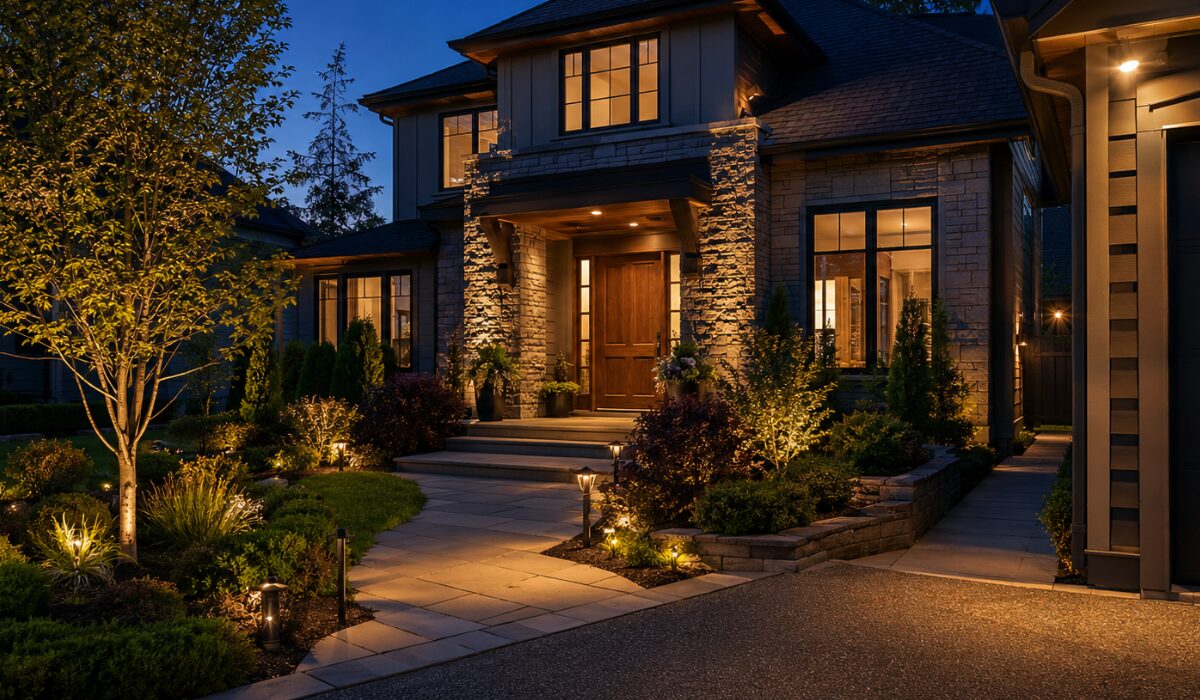
There are many reasons homeowners in Atlanta choose to invest in professional outdoor lighting.
A well-designed lighting system can do more than illuminate your property after sunset. It can enhance curb appeal, improve visibility, support home security, and make outdoor spaces more comfortable for evening activities and entertaining.
If you’ve invested time and money into maintaining your home’s landscaping and exterior, professional outdoor lighting can help you enjoy those features long after daylight fades.
From highlighting trees and architectural details to illuminating pathways and patios, the right lighting design can transform your property at night.
Here are some of the top reasons outdoor lighting continues to be a worthwhile investment in 2026.
Outdoor Lighting Enhances Curb Appeal
Professional outdoor lighting can transform the appearance of your home after dark.
Strategically positioned fixtures can highlight trees, gardens, architectural details, walkways, and other landscape features while creating a warm and welcoming atmosphere.
A thoughtfully designed lighting system can also make your home more inviting when you arrive after dark and create an attractive setting for guests.
Instead of illuminating every area equally, professional lighting designers can use techniques such as uplighting, downlighting, spotlighting, and pathway lighting to create depth and visual interest.
The result is an outdoor space that looks polished and inviting while allowing you to appreciate your property’s landscaping throughout the evening.
Outdoor Lighting Can Support Home Security
Outdoor lighting can play a role in a broader home security strategy by improving visibility around your property after dark.
Well-placed fixtures can illuminate entryways, walkways, driveways, and other exterior areas while reducing excessively dark spaces.
Motion-activated lights, timers, and automated lighting controls can also help create the appearance of activity around the property.
However, outdoor lighting should be considered one part of a comprehensive security plan rather than a standalone solution.
The goal is to provide appropriate illumination where it is needed without creating excessive glare or unnecessary light pollution.
Outdoor Lighting Can Improve Visibility and Safety
Adequate outdoor lighting can make it easier for homeowners and guests to navigate a property after dark.
Illuminating walkways, steps, driveways, entrances, and other areas with limited visibility can help people see where they are walking.
Pathway lighting can be particularly useful around frequently used walkways and steps.
When planning a lighting system, fixtures should be positioned to provide useful illumination without creating harsh glare or distracting bright spots.
For properties where family and guests frequently gather outdoors, thoughtful lighting can help create a more comfortable and accessible environment throughout the evening.
Outdoor Lighting Makes Outdoor Living More Enjoyable
One of the biggest advantages of outdoor lighting is that it allows you to enjoy your outdoor spaces after sunset.
A well-designed system can extend the usable hours of patios, decks, outdoor kitchens, pool areas, seating areas, and other entertainment spaces.
Soft ambient lighting can create a comfortable atmosphere for relaxing or entertaining, while functional lighting can improve visibility around dining and seating areas.
With the right design, your outdoor space doesn’t have to become unusable when the sun goes down.
A combination of ambient, accent, and task lighting can help create an inviting environment for evening gatherings.
Can Outdoor Lighting Increase Home Value?
Outdoor lighting may contribute to a home’s overall appeal by improving curb appeal, highlighting landscaping, and making outdoor living areas more functional after dark.
These improvements can help create a positive first impression for potential buyers.
However, the direct impact on resale value can vary depending on factors such as the property’s location, the quality of the lighting system, the overall condition of the home, and buyer preferences.
Rather than viewing outdoor lighting as a guaranteed way to increase a home’s selling price, homeowners can consider it as one part of maintaining an attractive and functional property.
A professionally designed lighting system can add to the overall experience of a home by making its exterior more attractive and usable throughout the evening.
How Much Does Outdoor Lighting Cost?
The cost of outdoor lighting varies from one property to another. Factors such as the size of the property, number of fixtures, type of lighting, installation complexity, wiring requirements, controls, and quality of materials can all affect the total project cost.
A small project focusing on a walkway or a few landscape features will have different requirements from a comprehensive lighting system covering an entire property.
When comparing outdoor lighting options, homeowners should consider more than the initial price. Fixture quality, professional design, installation expertise, energy efficiency, warranty coverage, and long-term maintenance can all influence the overall value of the investment.
Types of Outdoor Lighting to Consider
Outdoor lighting comes in many forms, and each type serves a different purpose. Combining multiple lighting techniques can create a balanced design that highlights your property’s best features.
Pathway Lighting
Pathway lights can illuminate walkways, garden paths, and steps while adding an attractive design element to your landscape. Properly positioned pathway lighting can improve nighttime visibility and help guide guests around your property.
Uplighting
Uplighting directs light upward from the ground to highlight trees, plants, walls, columns, and architectural features. This technique can add depth to your landscape and create dramatic shadows and textures after dark.
Downlighting
Downlighting places fixtures in elevated locations and directs light downward. When properly positioned, this technique can create a natural-looking effect while illuminating pathways, patios, gardens, and outdoor living areas.
Spotlighting
Spotlights provide a focused beam of light that can draw attention to specific landscape or architectural features. They can be used to highlight trees, sculptures, fountains, walls, or other focal points.
Accent Lighting
Accent lighting is designed to highlight individual features within your landscape. It can help draw attention to decorative elements, plants, water features, and other areas you want to showcase at night.
Patio and Deck Lighting
Lighting around patios and decks can improve visibility and create a welcoming atmosphere for outdoor entertaining. Fixtures can be positioned around seating areas, stairs, railings, and other features to make outdoor spaces more comfortable after sunset.
How to Get the Most From Your Outdoor Lighting Investment
The long-term value of an outdoor lighting system depends largely on the quality of its design, installation, and maintenance. To get the most from your investment, consider the following:
- Start with a professional lighting plan.
- Highlight the most important landscape and architectural features.
- Use different lighting techniques to create depth and contrast.
- Choose durable fixtures designed for outdoor conditions.
- Consider energy-efficient LED lighting.
- Use timers, photocells, or smart controls to manage operating hours.
- Avoid excessive brightness and glare.
- Maintain and reposition fixtures as your landscape changes.
A well-planned system should complement your home and landscaping rather than overwhelm them.
Should You Install Outdoor Lighting Yourself?
Simple outdoor lighting projects may be suitable for homeowners who enjoy DIY projects. However, larger or more complex installations can require careful planning and technical expertise.
A professional outdoor lighting company can evaluate your property, identify the best locations for fixtures, and create a cohesive design that balances aesthetics, visibility, and functionality.
Professional installation can be particularly helpful for projects involving multiple lighting zones, extensive wiring, transformers, automated controls, or complex landscape features.
The right choice ultimately depends on the size and complexity of your project and the results you want to achieve.
Conclusion
Outdoor lighting can be a valuable addition to your property in 2026.
From enhancing curb appeal and highlighting landscape features to improving nighttime visibility and extending the use of outdoor living spaces, a well-designed lighting system can provide both aesthetic and practical benefits.
The best investment is not necessarily the system with the most fixtures or the lowest installation price.
Choosing durable products, energy-efficient lighting technology, strategic fixture placement, and proper installation can help you get greater long-term value from your outdoor lighting.
If you’re looking to transform your Atlanta property after dark, professional outdoor lighting can help you create a welcoming, functional, and visually appealing outdoor environment.
FAQs
What is the best type of outdoor lighting for a home?
The best outdoor lighting depends on your property’s layout and your goals. Pathway lights are useful for walkways, while spotlights can highlight landscape features and uplighting can showcase trees and architecture. A combination of lighting techniques often creates the most balanced results.
How many outdoor lights do I need?
The number of fixtures you need depends on the size of your property, the areas you want to illuminate, and the type of lighting effect you want to achieve. A professional lighting design can help determine the appropriate number and placement of fixtures without creating excessive brightness.
Can outdoor lighting be installed on an existing landscape?
Yes, Outdoor lighting can typically be designed and installed around an existing landscape. A professional lighting designer can work with established trees, gardens, pathways, patios, and architectural features to create a system that complements the property’s current layout.
Does outdoor lighting require regular maintenance?
Yes, Outdoor lighting systems benefit from occasional maintenance to keep fixtures clean, properly positioned, and working efficiently. Maintenance may include cleaning lenses, trimming vegetation around fixtures, checking connections, and replacing damaged or failed components.
Can outdoor lighting be automated?
Many modern outdoor lighting systems can be controlled with timers, photocells, or smart controls. Automation can allow lights to turn on and off according to a schedule or changing light conditions, making the system more convenient and efficient.
What color temperature is best for outdoor lighting?
The ideal color temperature depends on the desired appearance and the area being illuminated. Warmer light is often preferred for residential landscapes because it can create a soft and welcoming atmosphere, while cooler light may be appropriate for specific functional applications.
Can outdoor lighting be used year-round?
Yes, a professionally installed outdoor lighting system can typically be used throughout the year. Seasonal changes in landscaping may require occasional fixture adjustments to ensure that trees, plants, and architectural features remain properly illuminated.
How long does it take to install outdoor lighting?
Installation time varies depending on the size and complexity of the project. A small system may be completed relatively quickly, while larger properties with multiple lighting zones and extensive wiring may require more time for proper installation and testing.
Can outdoor lighting highlight trees and landscaping?
Yes, outdoor lighting is an effective way to showcase trees, shrubs, flower beds, water features, and other landscape elements after dark. Techniques such as uplighting, spotlighting, and accent lighting can draw attention to specific features and add depth to the overall landscape design.