
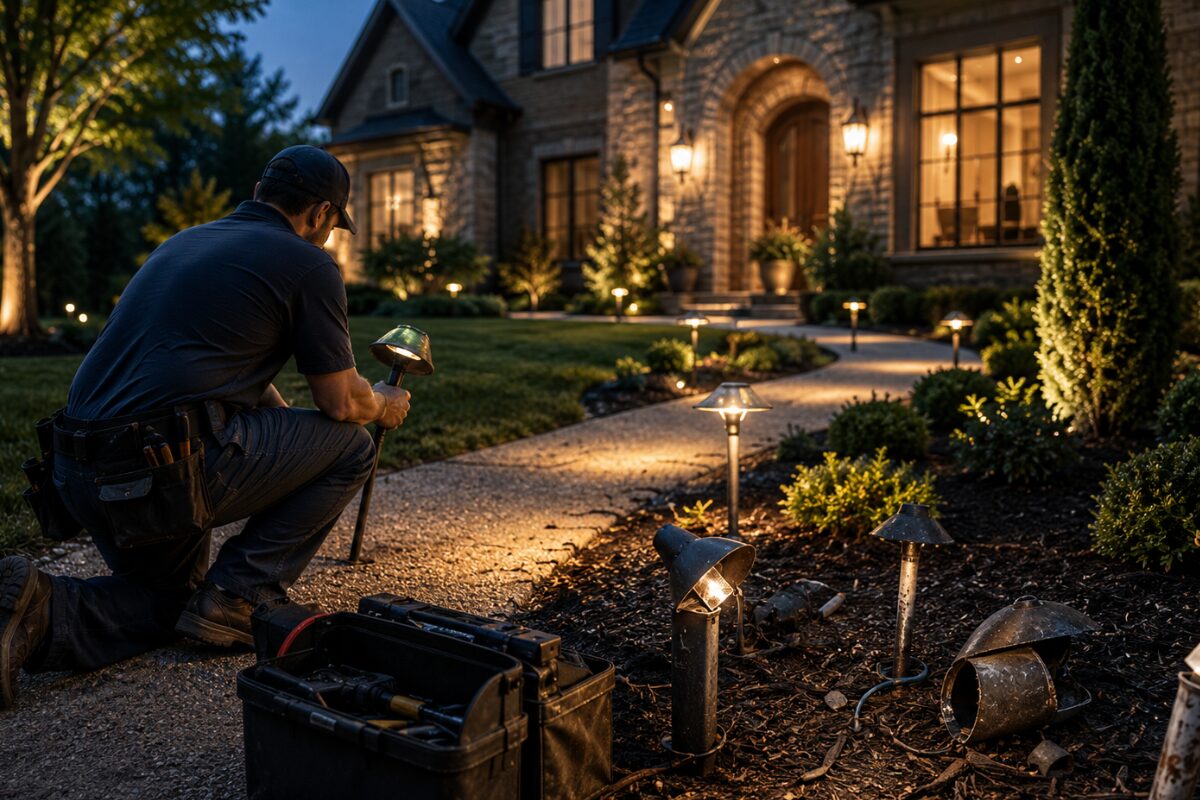
Outdoor lighting services are often requested when one light stops working, a pathway becomes too dark, or an older landscape lighting system starts failing again and again.
At first, a simple repair may seem like the easiest answer. One fixture is replaced, one bulb is changed, one wire is fixed, or one timer is adjusted.
The system works again for a while, and the problem feels solved. But sometimes repairs are only delaying a bigger issue.
When an outdoor lighting system is aging, damaged, poorly designed, or built with outdated components, repeated repairs can become frustrating and expensive.
Homeowners may find themselves calling for service every few months, dealing with flickering lights, dim fixtures, tripped transformers, exposed wiring, water intrusion, uneven brightness, or areas that never look right no matter how many small fixes are made.
That is when the real question becomes clear: should you keep repairing the system, or is it time to replace and upgrade it?
For Atlanta homeowners, outdoor lighting is more than decoration. It supports curb appeal, safety, comfort, outdoor living, and the way a home looks after sunset.
A lighting system should make walkways easier to use, highlight the right architectural details, improve visibility around the property, and make patios, decks, gardens, and entryways feel more inviting.
When repairs no longer restore those benefits, replacement may be the better long-term solution.
Why Outdoor Lighting Systems Start Failing
Outdoor lighting systems live in harsh conditions. They are exposed to heat, humidity, storms, rain, irrigation, soil movement, mulch, insects, lawn equipment, plant growth, and everyday wear. Even a well-installed system can need service over time.
One common reason outdoor lights stop working is moisture.
Water can enter fixtures, damage seals, corrode connections, and affect wiring.
In Atlanta’s humid climate, moisture-related issues can become more noticeable when systems are older or when fixtures were not designed for long-term outdoor exposure.
Wiring problems are another common cause. Wires can be damaged by landscaping work, digging, pets, rodents, soil shifting, or improper installation.
When wires are loose, cut, corroded, or poorly connected, lights may flicker, dim, or stop working completely.
A failing transformer can also create problems across the entire system. If the transformer is overloaded, outdated, or damaged, it may not deliver consistent power.
This can cause multiple lights to fail at once or create uneven brightness across the property.
Fixtures themselves can also wear out. Older fixtures may crack, rust, fade, leak, or lose their finish.
Lenses can become cloudy. Internal parts can corrode. Bulbs may fail more often.
If the system uses older technology, replacement parts may be harder to match or may not provide the performance homeowners expect today.
Sometimes the issue is not just age. The system may have been designed poorly from the beginning.
Lights may be placed too close together, aimed incorrectly, installed with weak connections, or added without considering the full property.
In that case, repairs may restore power, but they will not fix the poor lighting design.
When a Simple Outdoor Lighting Repair Makes Sense
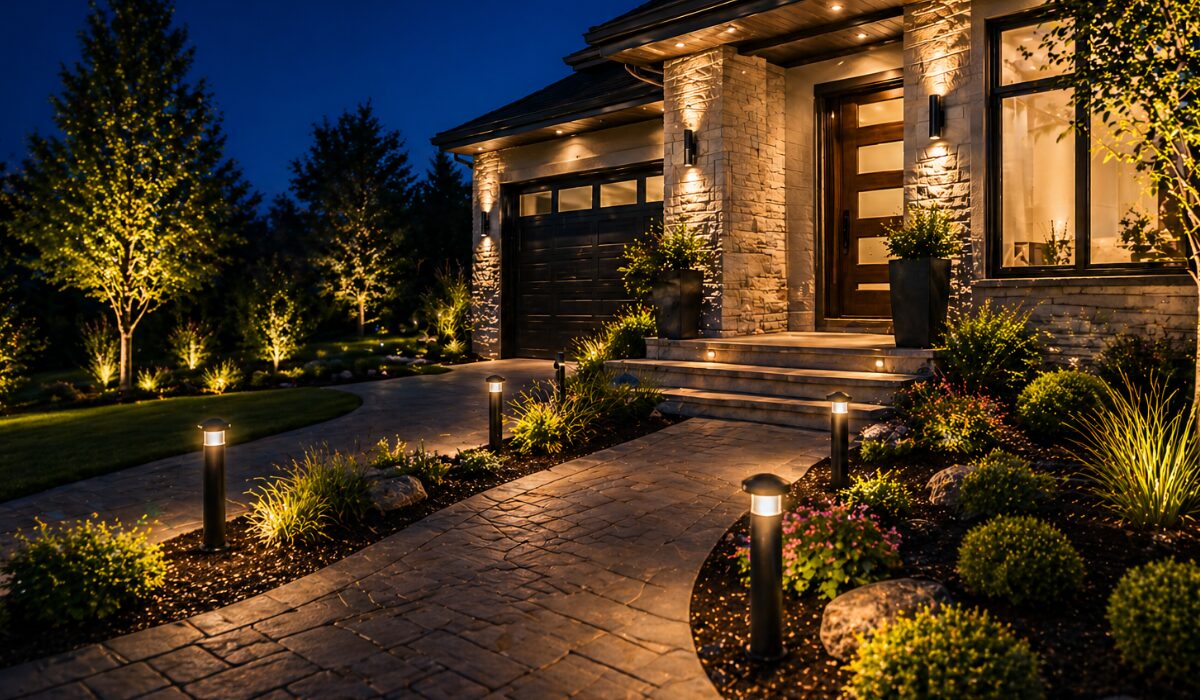 Repair is often the right choice when the system is still in good overall condition.
If one fixture has been hit by lawn equipment, one connection has loosened, or one area needs adjustment, a targeted repair can restore performance without replacing the entire system.
A repair may also make sense when the lighting design still works well.
If the system highlights the home beautifully, supports safe movement, and fits the homeowner’s current needs, there may be no reason to start over.
The right outdoor lighting services can inspect the issue, repair the damaged part, clean fixtures, adjust angles, replace worn components, and keep the system performing.
Repairs are also useful for newer systems that have isolated issues.
A single damaged wire or fixture does not always mean the entire setup is failing. With professional troubleshooting, the problem can often be identified and corrected.
The key is knowing whether the issue is isolated or part of a larger pattern. One repair is normal.
Repeated repairs in different parts of the system may be a sign that the system is reaching the end of its useful life.
Signs Repairs Are No Longer Enough
There are several signs that outdoor lighting repairs may no longer be the best solution.
One of the clearest signs is frequent failure. If lights keep going out after repeated service, the system may have deeper problems with wiring, fixtures, connections, transformer capacity, or overall design.
Another sign is uneven performance. Some fixtures may be bright while others are dim. Some areas may look harsh while others remain dark.
This can happen when the system has been patched over time with mismatched fixtures, different bulbs, or inconsistent components.
Visible wear is also important. Rusted fixtures, cracked housings, exposed wires, cloudy lenses, damaged stakes, and loose connections can all reduce performance.
If several parts of the system look worn, replacing one fixture at a time may only create a temporary fix.
Outdated lighting technology is another reason to consider an upgrade. Older outdoor lighting systems may use less efficient bulbs, dated fixtures, or limited controls.
Modern LED outdoor lighting can offer better performance, lower energy use, longer lifespan, and more design flexibility when installed correctly.
A major landscape change can also make the old system ineffective. If the homeowner has added a patio, pool area, deck, garden, outdoor kitchen, new walkway, or updated landscaping, the original lighting plan may no longer match the property.
Repairs may keep the lights on, but they will not address the new layout.
Repair vs. Replacement: How to Decide
The best decision depends on the condition of the system, the age of the components, the quality of the original installation, and the homeowner’s goals.
Repair may be the right option when the system is newer, the design still works, and the issue is limited to one or two components.
In this case, professional service can restore performance and help extend the life of the system.
Replacement may be the better choice when the system is old, unreliable, poorly designed, or no longer fits the home.
If the homeowner is spending money on repeated repairs but still unhappy with the appearance or performance, it may be time for a full upgrade.
A professional assessment can help make the decision clearer. NightVision Outdoor Lighting can evaluate the fixtures, wiring, transformer, placement, brightness, color consistency, safety, and overall design.
This helps homeowners understand whether the system needs a repair, a partial upgrade, or a complete replacement.
The goal is not to replace a system that can reasonably be repaired. The goal is to avoid pouring money into a system that will continue causing problems.
What Is the Rule of Thumb for Outdoor Lighting?
The rule of thumb for outdoor lighting is simple: light with purpose, not excess. Every fixture should have a reason.
It should improve safety, highlight a feature, guide movement, support security, or make an outdoor space more comfortable.
Good outdoor lighting should not overpower the home. It should create balance between light and shadow.
Too much brightness can make a property look flat, harsh, or commercial. Too little light can leave walkways, steps, entries, and outdoor living areas uncomfortable or unsafe.
Another important rule is to avoid glare. The light source should not shine directly into the eyes. Instead, lighting should be aimed toward surfaces, plants, walls, paths, steps, trees, or architectural details.
Consistency also matters. Fixture style, brightness, color temperature, and placement should feel connected across the property.
A strong lighting system does not look like a group of separate lights. It looks like one thoughtful design.
Do You Need an Electrician to Replace an Outdoor Light?
Whether you need an electrician depends on the type of outdoor light and the electrical work involved.
Many landscape lighting systems are low-voltage systems, which are commonly handled by professional outdoor lighting companies.
These systems still require proper installation, safe connections, quality materials, and correct transformer setup.
For line-voltage fixtures, major electrical changes, new power sources, or work connected directly to a home’s electrical system, a licensed electrical professional may be needed.
This is especially important when safety, code compliance, or complex wiring is involved.
Homeowners should avoid guessing when electrical issues are present.
Flickering lights, tripped breakers, exposed wiring, burning smells, water inside fixtures, or repeated system failure should be handled by a qualified professional.
NightVision Outdoor Lighting focuses on professional outdoor lighting services, including design, installation, repair, replacement, upgrades, and maintenance.
If a project requires electrical coordination beyond the lighting system, the right professional approach can help protect the home and the homeowner.
How Long Should an Outside LED Light Last?
Outdoor LED lights are designed to last much longer than older lighting options, but actual lifespan depends on product quality, installation, exposure, maintenance, and system design.
A high-quality LED fixture in a properly installed system can perform for many years, but it is not completely maintenance-free.
Heat, water, poor seals, weak wiring, cheap fixtures, and overloaded transformers can all shorten the life of outdoor LED lighting.
Even when the LED itself lasts, the fixture housing, lens, wiring connection, or control system may need service over time.
This is why quality matters. A low-cost LED fixture may not provide the same long-term value as a professional-grade system.
If the fixture allows moisture inside, has poor heat management, or uses weak materials, the system may fail earlier than expected.
A professional installation helps protect the lifespan of the system. Proper voltage, sealed connections, good placement, durable fixtures, and routine maintenance all help outdoor LED lights perform better over time.
How Much Does Outdoor Lighting Cost?
The cost of outdoor lighting depends on the size of the property, the number of fixtures, fixture quality, wiring needs, transformer requirements, design complexity, control options, and whether the project is a repair, upgrade, or full installation.
A small repair will usually cost less than a full replacement. A simple lighting system for a walkway or front entry will usually cost less than a complete property design with architectural lighting, garden lighting, deck lighting, patio lighting, pathway lighting, and smart controls.
The better question is not only how much outdoor lighting costs, but what the homeowner is getting for the investment.
A low-cost repair may be fine if it solves the problem. But if the system keeps failing, repeated service calls can become more expensive over time than a planned upgrade.
Professional outdoor lighting services should help homeowners understand the difference between a short-term fix and a long-term solution.
NightVision Outdoor Lighting can inspect the existing system and recommend a practical path based on condition, performance, and goals.
Are Permanent Outdoor Lights Worth the Cost?
Permanent outdoor lights can be worth the investment when they are professionally designed, properly installed, and matched to the way the homeowner uses the property.
They can improve curb appeal, make outdoor spaces easier to enjoy, support safety, and reduce the need for temporary lighting solutions.
The value depends on quality and design. A permanent system should not look harsh, random, or disconnected. It should feel like part of the home.
The fixtures should be durable, the wiring should be protected, and the layout should support both everyday use and long-term performance.
Permanent outdoor lighting is especially valuable for homeowners who regularly use patios, decks, gardens, walkways, pools, outdoor kitchens, or front porches after sunset.
It can also help homes look more polished from the street.
However, permanent lighting is only worth it if it is done correctly.
Poor design, cheap fixtures, weak installation, or lack of maintenance can reduce the value of the system. That is why working with an experienced outdoor lighting company matters.
Do Landscape Lights Increase the Possibility of Home Theft?
Well-designed landscape lighting usually helps reduce dark hiding spots and makes the exterior feel more visible.
It does not guarantee security, but it can support a safer and more comfortable property when used correctly.
The concern usually comes from poorly planned lighting. If lights are too bright in one area and leave deep shadows in another, they may create blind spots.
If fixtures are aimed incorrectly, they can cause glare that makes it harder to see clearly.
Good outdoor lighting should improve visibility around entry points, walkways, driveways, side yards, and outdoor living areas.
It should also create balance so the property feels open and easy to navigate without becoming harsh or overexposed.
Landscape lighting should be viewed as one part of a larger approach to home safety, comfort, and curb appeal. A thoughtful design is much more useful than simply adding brighter lights.
Common Outdoor Lighting Mistakes to Avoid
One common mistake is using too much brightness. Many homeowners think brighter means better, but overlighting can make a home look harsh and uncomfortable.
Good lighting should feel balanced, not overwhelming. Another mistake is poor fixture placement. Lights that shine into windows, eyes, seating areas, or neighboring properties can create frustration.
Fixtures should be aimed carefully so the glow improves the space instead of causing glare.
Using mismatched color temperatures is another issue. If one area has warm lighting and another has cool lighting, the system can look patched together.
A consistent color tone helps the property feel more polished. Homeowners also make the mistake of ignoring maintenance.
Outdoor lighting systems need cleaning, adjustment, inspections, and repairs over time. Without service, even a good system can lose its effect.
The biggest mistake is continuing to repair a system that no longer supports the property.
When outdoor lighting is outdated, unreliable, or poorly designed, replacement may offer better long-term value.
Why Choose NightVision Outdoor Lighting for Outdoor Lighting Services?
NightVision Outdoor Lighting provides outdoor lighting services for homeowners who want their properties to look better, feel safer, and function more comfortably after dark.
Our team understands that lighting is not just about fixing a broken fixture. It is about creating a system that works for the home.
We help with outdoor lighting repair, replacement, upgrades, maintenance, and new installations.
If your current system has flickering lights, damaged fixtures, poor brightness, outdated components, wiring issues, or a design that no longer fits your landscape, we can help you determine the right next step.
As an Atlanta-area outdoor lighting company, NightVision Outdoor Lighting understands local homes, outdoor living spaces, landscape growth, and the importance of reliable nighttime curb appeal.
Our goal is to provide lighting that is attractive, practical, and built for long-term performance.
Whether your system needs a simple repair or a complete upgrade, we focus on honest recommendations and quality work.
Conclusion
Outdoor lighting repairs are sometimes the right answer. A damaged fixture, loose connection, or minor adjustment does not always require a full replacement.
But when repairs become frequent, the system looks outdated, the design no longer works, or the same problems keep returning, repairs may no longer be enough.
A better lighting system can improve curb appeal, visibility, safety, comfort, and the way your outdoor spaces feel after sunset.
Instead of continuing to patch an unreliable system, homeowners may benefit from a professional assessment and a smarter long-term solution.
The right outdoor lighting services should help you understand what can be repaired, what should be replaced, and how to create a lighting system that truly fits your home.
Book Outdoor Lighting Services With NightVision Outdoor Lighting
If your outdoor lighting system keeps failing, looks uneven, or no longer fits your home, NightVision Outdoor Lighting can help.
Our team provides professional outdoor lighting services, including repair, replacement, upgrades, maintenance, and new lighting design for Atlanta-area homes.
Contact NightVision Outdoor Lighting today to schedule your consultation and find out whether your system needs repair, replacement, or a complete lighting upgrade.
FAQs
What causes outdoor lights to stop working?
Outdoor lights can stop working because of damaged wiring, moisture inside fixtures, failing bulbs, loose connections, transformer issues, or weather-related wear. Lawn equipment, soil movement, and plant growth can also affect the system. A professional inspection can identify whether the issue is isolated or part of a larger problem.
What is the rule of thumb for outdoor lighting?
The main rule is to light with purpose instead of using too much brightness. Every fixture should improve safety, highlight a feature, guide movement, or support outdoor comfort. Good outdoor lighting balances light and shadow so the property looks warm, useful, and natural.
Do I need an electrician to replace an outdoor light?
It depends on the type of light and the wiring involved. Low-voltage landscape lighting is often handled by professional outdoor lighting companies. For line-voltage fixtures, major wiring changes, or electrical safety concerns, a licensed electrical professional may be needed.
How long should an outside LED light last?
A quality outdoor LED light can last for many years, but lifespan depends on fixture quality, installation, weather exposure, and maintenance. Poor seals, water intrusion, overloaded transformers, and weak wiring can shorten performance. Professional installation helps protect the life of the system.
How much does it cost to install outdoor landscape lighting?
The cost depends on property size, fixture count, design complexity, wiring needs, transformer requirements, and fixture quality. A small front walkway system will cost less than a full-property lighting design. NightVision Outdoor Lighting can evaluate your home and recommend the right solution based on your goals.
Are permanent outdoor lights worth the cost?
Permanent outdoor lights can be worth it when they are professionally designed and installed. They improve curb appeal, support safety, and make outdoor spaces more usable after sunset. The value is strongest when the system uses quality fixtures, proper wiring, and a layout designed for long-term performance.
Do landscape lights increase the possibility of home theft?
Well-designed landscape lighting generally helps reduce dark hiding spots and improves visibility around the property. Poorly placed lights can create glare or shadows, which is why design matters. A balanced lighting plan supports comfort, visibility, and curb appeal without making the home feel overexposed.
What are common outdoor lighting mistakes to avoid?
Common mistakes include using lights that are too bright, placing fixtures where they create glare, mixing color temperatures, ignoring maintenance, and installing lights without a full design plan. These issues can make a home look harsh or uneven. Professional outdoor lighting services help avoid these problems.
When should I replace outdoor lighting instead of repairing it?
Replacement may be better when repairs are frequent, fixtures are outdated, wiring is failing, or the system no longer fits your landscape. If the lighting still looks poor after several repairs, the design may be the real issue. A professional assessment can help determine the best option.