
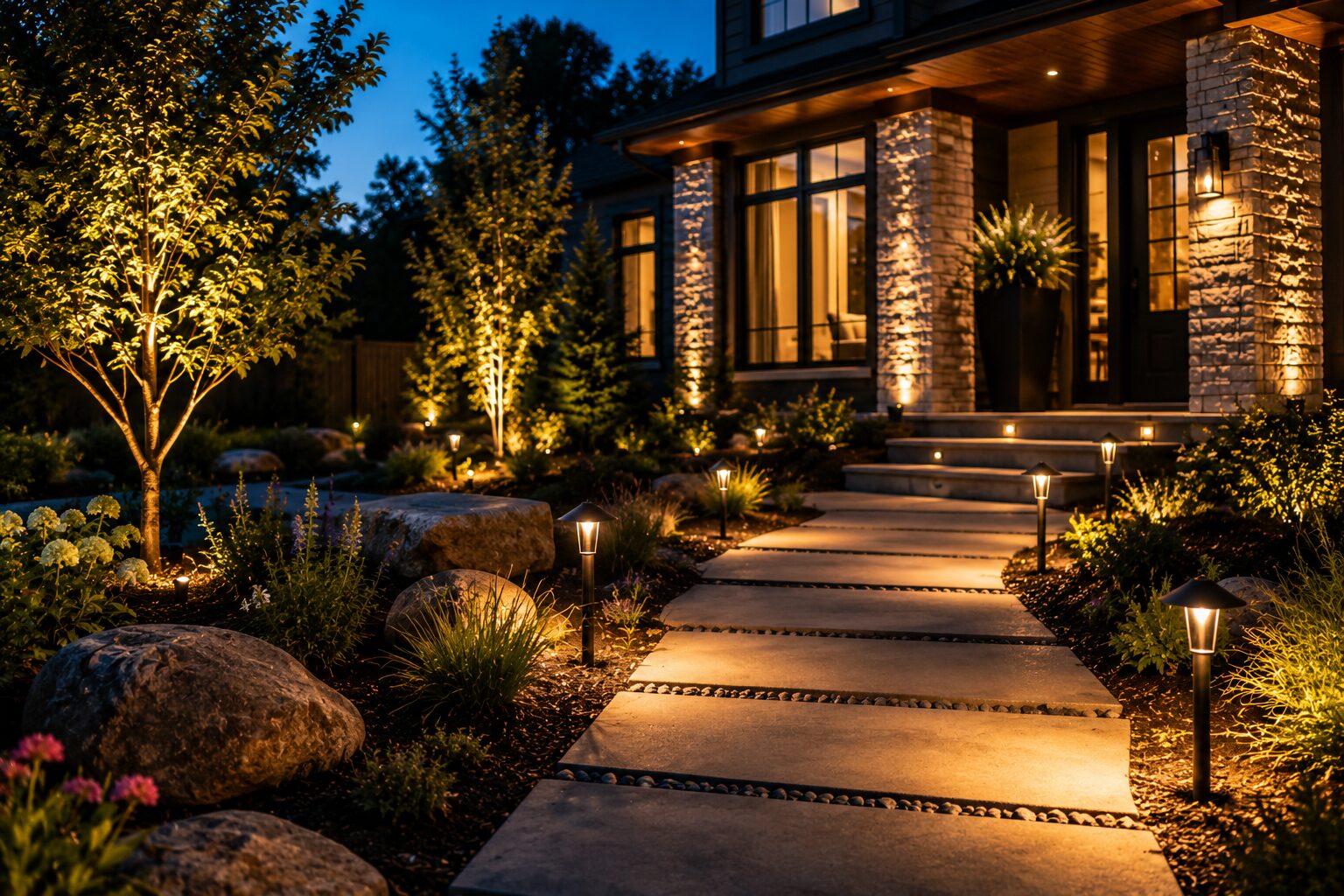
A professional outdoor lighting installation service is offered by a trusted outdoor lighting contractor in Atlanta, with a focus on improving the security and aesthetics of your home.
It is customized according to the customer’s needs to enhance nighttime visibility.
This guide will walk you through the process after you hire an outdoor lighting company, so you do not feel surprised later if the service fails to provide peace of mind or meet your expectations.
Why Is Professional Planning Important Before Installation?
Outdoor lighting should not begin with the random placement of fixtures.
A contractor first considers your property’s layout, architecture, landscaping, walkways, and outdoor living areas. They also ask what you want the new system to accomplish.
Careful planning helps prevent glare, excessive brightness, dark gaps, and incorrectly placed fixtures.
What Happens During the Property Evaluation?
The contractor needs to understand the property before recommending fixtures or preparing a design.
Discussing Your Lighting Goals
You may want to highlight the front of your home, illuminate a long driveway, make steps easier to see, or use your patio after sunset.
The contractor will listen to these goals and identify which areas require attention.
Inspecting the Property
The inspection may cover existing lights, power sources, transformers, cable routes, irrigation lines, roots, and hardscaped surfaces.
A nighttime evaluation may reveal shadows, poorly illuminated corners, and uneven surfaces that are less noticeable during the day.
If an evening visit is unavailable, the completed system should still be reviewed after dark.
How Is a Custom Lighting Design Created?
The contractor uses the property evaluation to decide which features need illumination and what each fixture should do.
Uplighting can emphasize trees or architecture. Downlighting provides light from above, while pathway fixtures define walking routes.
Grazing highlights textured walls, and moonlighting creates a soft effect through tree branches.
Fixture output, spacing, beam direction, and mounting height influence brightness. Adding more light can create glare and remove the contrast that gives a property depth.
The plan should also account for plant growth that may eventually block light.
What Should You Receive Before Approving the Work?
You should understand the proposed system before agreeing to the project.
The contractor should explain the intended effects and recommended products. The proposal may include:
- Fixture types, materials, finishes, and quantities
- LED specifications
- Transformer capacity
- Cables and outdoor-rated connectors
- Timers, photocells, or smart controls
- Installation work and expected schedule
- Warranty information
- Exclusions or possible additional charges
How Should You Prepare for Installation?
The company should provide instructions based on your property and project. You may be asked to move patio furniture, unlock gates, identify known irrigation lines, and keep pets away from active work areas.
Mention recently planted beds, drainage systems, underground features, or locations requiring special care.
What Happens During the Installation?
Installation involves placing and connecting the components needed to produce the approved lighting effect.
Transformer and Control Setup
In a low-voltage system, the transformer changes household electricity to a lower voltage. Its capacity should support the planned fixtures, and its location should remain accessible.
The installer may add a timer, photocell, or smart controller.
Cable and Fixture Placement
Cables are routed through lawns or planting beds and concealed where appropriate. Hardscapes, irrigation equipment, and mature roots may require another method.
Each fixture is positioned according to its purpose, whether illuminating a path, tree, or patio.
Outdoor-rated components and protected connections help the system handle moisture and changing weather. Some temporary landscape disturbance may be necessary.
How Long Does the Installation Take?
There is no single timeline for every outdoor lighting project.
A small system with only a few fixtures may be completed within several hours.
A larger, customized design with multiple lighting zones, extensive wiring, smart controls, or hardscape features may require one or more working days.
The installation duration depends on several factors, including:
- Property size
- Number and type of fixtures
- Length of the required cable routes
- Transformer and electrical requirements
- Soil conditions and landscape density
- Slopes, tree roots, patios, and retaining walls
- Accessibility around the property
- Existing wiring that needs repair or replacement
- Timer, zone, or smart-control programming
- Weather conditions
Running cables is often one of the most time-consuming parts of the project. Installers may need additional time to work around irrigation lines, established plants, rocky ground, walkways, driveways, and other existing features without causing unnecessary disturbance.
After installing the fixtures and connecting the system, the contractor must test each light, check its direction and brightness, and program the controls.
A nighttime review may also be needed to identify glare, dark areas, or uneven illumination and make final adjustments.
The contractor should provide a reasonable timeframe after inspecting the property and confirming the project scope.
However, homeowners should allow some flexibility because unexpected wiring problems, difficult ground conditions, or unsuitable weather can affect the original schedule
What Happens After the Fixtures Are Installed?
The work is not complete as soon as the lights turn on. The installer should test each fixture, check the system’s operation, and review the overall effect after dark.
At night, they may adjust beam angles, reposition fixtures, soften bright areas, or redirect light entering a window. Controls can also be programmed to your preferred schedule.
The final walkthrough should show you how to operate the system and change basic settings. You can also request reasonable adjustments if an area looks too bright, dark, or unbalanced.
What Maintenance May Be Required?
Exterior fixtures remain exposed to rain, dirt, falling leaves, lawn equipment, and plant growth. Over time, they may shift or become covered.
Maintenance can include cleaning lenses, trimming plants, correcting fixture angles, checking connections, changing timer settings, and replacing failed parts.
What Should the Warranty Cover?
Product and workmanship warranties may protect different parts of the project. Product coverage generally relates to eligible fixtures or components, while workmanship coverage concerns the installation itself.
Ask how long each warranty lasts, whether labor is included, who manages claims, and what is excluded. Request the terms in writing.
What Affects the Cost of Outdoor Lighting Installation?
The cost of outdoor lighting installation varies because every property has different features, access conditions, and lighting goals.
Several factors can influence the final price, including:
Number of fixtures
A larger system requires more fixtures, wiring, connectors, and installation labor.
Fixture type and quality
Path lights, uplights, wall lights, step lights, and specialty fixtures have different prices. Durable materials and weather-resistant finishes may cost more initially but can provide better long-term performance.
Transformer capacity
The transformer must be sized according to the system’s total power requirements. A larger transformer may be required for numerous fixtures or future additions.
Cable length
Large properties and fixtures positioned far from the transformer require more cable and installation time.
Lighting controls
Timers, photocells, separate zones, dimmers, and smart controls can increase the initial cost while making the system easier to manage.
Property accessibility
Slopes, dense landscaping, tree roots, narrow spaces, and difficult soil conditions can make installation more complex.
Hardscape installation
Placing lights or running cables around patios, driveways, retaining walls, decks, and other hard surfaces may require specialized tools and additional labor.
Design complexity
A simple pathway-lighting project may cost less than a layered design that includes architectural lighting, landscape accents, and several independently controlled zones.
Existing-system repairs
Damaged wiring, corroded connectors, undersized transformers, and outdated fixtures may need to be repaired or replaced before new components can be added.
Ongoing maintenance
Cleaning, fixture repositioning, plant trimming, and component replacement may contribute to the system’s long-term ownership cost.
A professional estimate should explain the fixtures, components, labor, controls, warranties, and other services included in the proposed price.
Homeowners should compare the complete scope of each estimate instead of choosing an outdoor lighting installation service based only on the lowest total.
What Should You Not Expect From a Professional Service?
A professional installation should not involve fixtures placed without a reason, unexplained product changes, hidden charges, exposed connections, or a system left without final testing.
You should also not expect excessive brightness or a design copied from another property. Each home has different features and needs.
Outdoor lighting improves visibility, but it cannot guarantee crime prevention. No exterior system is completely maintenance-free.
Conclusion
A professional outdoor lighting installation service includes much more than placing lights around a yard. You can expect a property evaluation, custom design, clear proposal, careful installation, nighttime testing, final adjustments, and operating guidance.
Proper maintenance and written warranty details can also support the system after completion. If you are planning a new installation, NightVision Outdoor Lighting can help you create a design based on your Canton home and nighttime lighting goals.
Why Hire an Outdoor Lighting Contractor in Canton?
An experienced contractor can coordinate the lighting around your home’s architecture, landscaping, driveway, walkways, deck, and patio.
NightVision Outdoor Lighting provides outdoor lighting installation services in Canton, GA, including custom design, architectural lighting, landscape illumination, pathway fixtures, low-voltage installation, upgrades, repairs, and maintenance.
When planning exterior lighting in Canton, GA, the team considers how you use the property and how it should appear after sunset. This approach helps create a system suited to the home instead of relying on a standard fixture package.
Frequently Asked Questions
Can outdoor lighting be installed around established landscaping?
Yes, cable routes and fixture locations can often be planned around existing plants, tree roots, irrigation lines, and flower beds. An experienced installer will assess the landscape and select suitable placement methods to limit unnecessary damage. However, certain areas may require minor temporary disturbance to bury cables or position fixtures correctly.
Will I need to be home during installation?
You may not need to remain home throughout the entire installation. It depends on property access, company policies, and the complexity of the project. However, your presence may be helpful if the installer needs approval for a placement change or wants you to review and approve the final lighting effect.
Can I make changes after seeing the lights at night?
Yes, many fixture angles, positions, brightness levels, beam directions, and control settings can be adjusted during the nighttime review. These small changes help reduce glare and create a more balanced result. Larger changes, such as adding fixtures or illuminating new areas, may affect the project cost and completion time.
Can my existing outdoor lights be reused?
The contractor will inspect the existing fixtures, transformer, wiring, connectors, and controls to determine whether they are in good condition and compatible with the new design. Suitable components can be reused, while outdated, damaged, or incompatible parts should be replaced to support dependable system performance.
Can the system be expanded later?
Many outdoor lighting systems can support future additions when the transformer, wiring, controls, and original layout have enough capacity. For example, you may decide to add lighting around a new patio, pathway, garden, or pool area later. Discuss possible expansion before installation so the contractor can plan the system with future improvements in mind.