
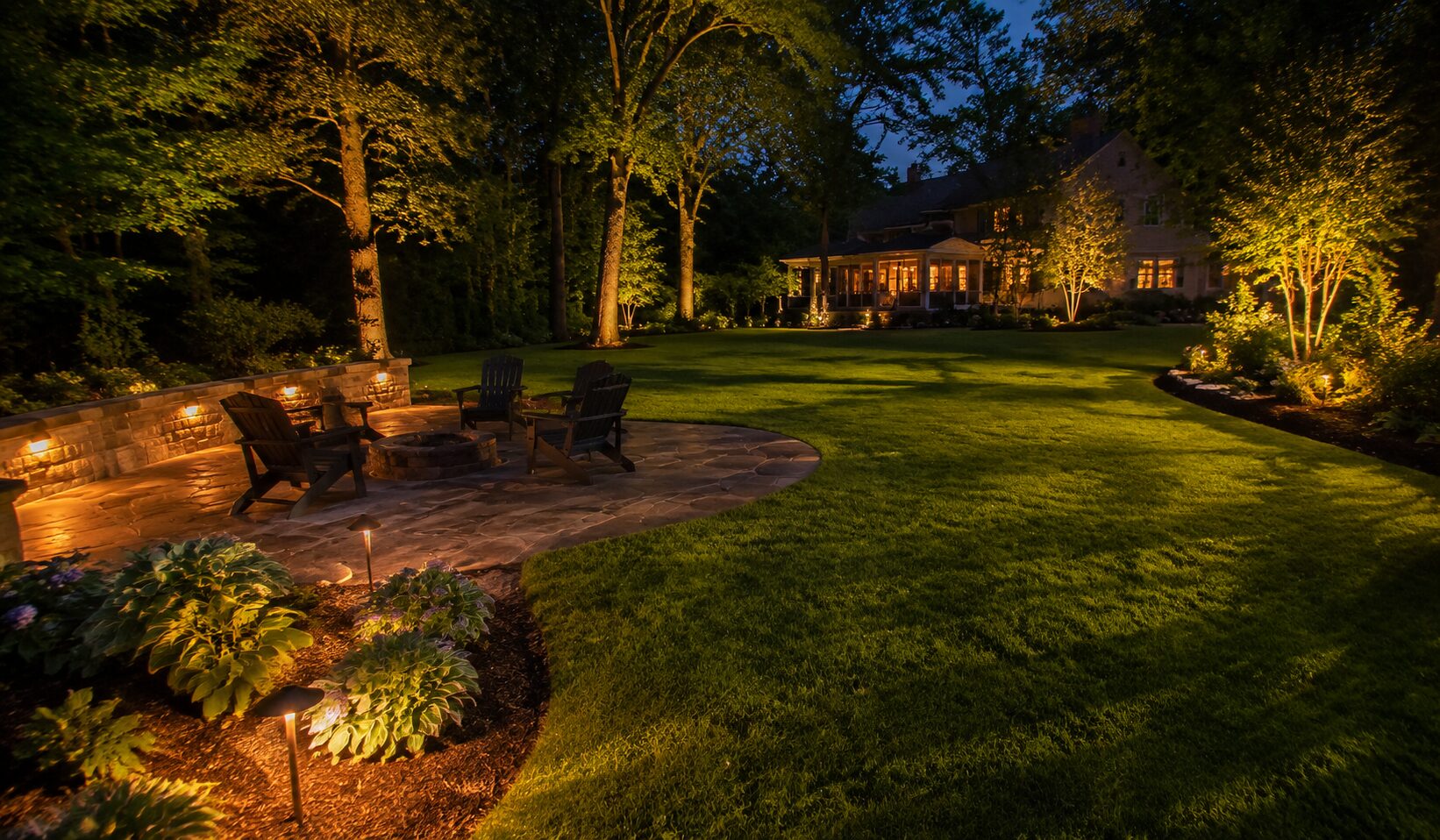
A lawn can look attractive and well maintained throughout the day but lose much of its character after sunset.
Trees, flower beds, walkways, stonework, and architectural details may disappear into the darkness when there is no planned lighting.
Outdoor lighting can change how the property looks and functions at night.
A professionally designed system can highlight selected features, improve visibility around frequently used areas, and connect different parts of the yard.
You do not need an expansive lawn or an elaborate landscape to benefit from outdoor lighting.
A smaller property with one mature tree, a garden bed, or a front walkway can still be illuminated in a way that makes a noticeable difference.
The result depends on fixture placement, brightness, beam direction, and how well the lighting works with the home and landscape.
Enhance the Appearance of Your Lawn
One of the main reasons homeowners install outdoor lighting is to showcase the work they have already put into their property.
Landscaping requires time and attention, but much of that effort becomes difficult to appreciate after dark.
Outdoor lighting can reveal the shape, color, and texture of selected landscape features.
These may include:
- Mature trees and ornamental plants
- Flower beds and garden borders
- Natural stone and rock formations
- Retaining walls
- Fountains and water features
- Columns and exterior walls
- Entryways and architectural details
The goal is not to illuminate everything at the same brightness.
A lawn often looks more attractive when the lighting creates contrast between illuminated features and natural areas of shadow.
For example, uplighting can reveal the trunk and canopy of a mature tree.
A narrow beam can emphasize a column, while a broader beam may bring out the texture of a stone wall.
These layers of light add depth and prevent the property from appearing flat after sunset.
Complement Your Home’s Architecture
Outdoor lighting is not limited to plants and garden features.
It can also draw attention to the architectural details that give a home its character.
Brickwork, stone surfaces, columns, gables, arches, and textured walls may look completely different when illuminated from the appropriate angle.
The lighting style should match the home rather than compete with it.
A traditional property may benefit from warm, subtle illumination, while a modern home may suit cleaner beams and simpler fixture designs.
The color temperature should also coordinate with existing porch lights and other exterior fixtures.
Using several unrelated colors can make the property appear disconnected.
A consistent lighting plan allows the house and lawn to feel like parts of the same design.
Improve Visibility Along Walkways
Walkways that are easy to follow during the day can become difficult to identify at night.
Curves, uneven pavers, loose gravel, steps, slopes, and changes in elevation may not be obvious in low-light conditions.
Pathway lighting can direct illumination toward the surfaces people use to move around the property.
It can help define routes between:
- The driveway and front entrance
- The house and backyard
- Patios and garden areas
- Pools and outdoor seating spaces
- Side yards and gates
- Detached garages or outdoor structures
Proper fixture placement is essential.
Too many lights may create a rigid runway effect, while insufficient coverage may leave confusing dark gaps.
The brightness should make the route easier to recognize without shining directly into people’s eyes.
Step lights, wall-mounted fixtures, hardscape lights, and downlighting may also be used where traditional path lights are not suitable.
A professional design selects the technique based on the walkway, nearby landscaping, and available mounting locations.
Make Entrances Easier to Identify
Guests should be able to recognize where to enter the property after dark.
A single bright porch light may illuminate the door, but it may not show the route leading toward it.
Outdoor lighting can create a visual connection between the driveway, walkway, steps, and entrance.
This makes the arrival experience feel more organized and welcoming.
Entry lighting may also highlight columns, planters, house numbers, and other details around the doorway.
The fixtures should be aimed carefully so that they do not create glare for people approaching the house.
A balanced entrance combines enough illumination for visibility with softer light around the surrounding architecture and landscape.
Use More of Your Yard After Sunset
Without outdoor lighting, patios, gardens, pools, fire pits, and other outdoor areas may become less practical once the sun goes down.
A customized lighting system can help these spaces remain connected and usable during the evening.
Different areas require different lighting effects.
A pathway needs clear and controlled illumination, while a patio may need softer ambient light.
An outdoor kitchen may require more focused lighting around food preparation and cooking surfaces.
A garden or water feature may need only a few accent fixtures to remain visible from nearby seating areas.
Treating each space according to its purpose creates a more comfortable environment.
It also allows homeowners to use the yard without making every area equally bright.
Add Depth Around Patios and Entertainment Areas
Patio lighting should do more than illuminate furniture.
It should help define the edges of the space and connect it with nearby walkways and landscape features.
Lighting may be incorporated into pergolas, seat walls, steps, trees, and planting beds around the patio.
This layered approach creates depth and makes the outdoor area feel less isolated.
Soft lighting around surrounding trees or gardens can also improve the view from the patio.
Instead of looking into a completely dark yard, homeowners and guests can see selected parts of the landscape.
Dimmers and separate lighting zones may provide additional control.
They allow the pathway, patio, and landscape lights to operate at different brightness levels based on how the space is being used.
Improve Visibility Around Pools and Water Features
Pools, ponds, fountains, and other water features can become strong nighttime focal points.
Appropriate lighting can reveal the movement and reflection of water while making surrounding decks, walkways, and steps easier to identify.
Fixtures installed in or near water must be selected for the specific location.
An ordinary landscape fixture is not automatically suitable for use around a pool or for underwater installation.
Professional planning should account for moisture exposure, electrical components, fixture ratings, wiring, and access for maintenance.
Lighting should also be positioned to limit glare across the water.
Excessive brightness can make the pool area uncomfortable and obscure surrounding details.
Reduce Unnecessary Dark Areas
Exterior lighting can improve visibility around side yards, gates, entrances, garages, and other locations that may otherwise remain dark.
Motion-activated fixtures may be useful in selected areas where continuous illumination is unnecessary.
However, brighter is not always better.
An extremely bright fixture may produce glare and deep shadows that make nearby areas harder to see.
The light should be directed toward the intended surface rather than into windows, neighboring properties, or the night sky.
Outdoor lighting can support the overall visibility of a property, but it should not be described as a replacement for locks, cameras, alarms, or other security measures.
A complete property plan may use several systems together.
Strengthen Nighttime Curb Appeal
Curb appeal does not have to end when daylight fades.
Outdoor lighting can define the shape of the lawn, highlight the front walkway, and draw attention to architectural and landscape features.
This can create a stronger first impression for guests and anyone viewing the property from the street.
Nighttime curb appeal may also matter when a home is being shown to potential buyers during evening hours.
Lighting can help them recognize features that would otherwise be hidden.
However, outdoor lighting should not be presented as guaranteeing a higher selling price or faster sale.
Its value lies in presenting the property in a more complete and visually organized way.
The design should remain appropriate for the neighborhood.
Fixtures should illuminate the property without creating excessive brightness or unwanted light on nearby homes.
Benefit From Modern LED Lighting
LED technology provides several options for residential outdoor lighting.
Fixtures are available in different sizes, brightness levels, beam angles, finishes, and color temperatures.
LEDs also require less energy than many older lighting technologies.
The actual energy use depends on the number of fixtures, their wattage, daily operating hours, and control settings.
Warm white LED lighting is commonly used around homes because it works well with brick, stone, wood, and natural landscaping.
It can create a comfortable appearance without making the property look overly blue or harsh.
LED fixtures should still be chosen according to their intended outdoor location.
Quality construction, moisture protection, heat management, and correct installation all affect long-term performance.
Control When the Lighting Operates
An outdoor lighting system does not need to remain on throughout the day or all night.
Timers, photocells, and compatible smart controls can manage when the fixtures operate.
A photocell can activate the system when surrounding daylight decreases.
A timer can turn the lights off according to a chosen schedule.
Some control systems allow different lighting zones to operate independently.
For example, entrance and pathway lights may follow a different schedule from patio or garden accent lighting.
The fixtures, transformer, and controls must be compatible for the system to operate correctly.
Professional setup helps prevent flickering, inconsistent operation, and other control-related problems.
Customize the Design to Your Property
Every lawn has different features, elevations, plants, walkways, and viewing angles.
A standard fixture package may not address the actual needs of the property.
The lighting design should be based on how the home and yard look after dark.
Homeowners searching for outdoor lighting in Milton, GA, can choose a customized system developed around the size, architecture, landscaping, and use of their property.
A professional review may consider:
- Areas used most frequently after sunset
- Walkways, steps, and changes in elevation
- Existing porch and exterior lights
- Trees and plants that should be highlighted
- Patios, pools, gardens, and entertainment areas
- Drainage and irrigation
- Transformer capacity and cable routes
- Views from the street and inside the home
- Neighboring windows and properties
- Future plant growth and maintenance access
These factors help determine the appropriate fixtures, brightness, beam direction, and controls.
Maintain the Lighting as the Lawn Changes
A landscape does not remain exactly as it was on the day the lighting system was installed.
Shrubs grow, tree branches expand, mulch shifts, and soil may settle around fixtures.
Lawn equipment and regular yard work can also move lights out of position.
Routine maintenance helps preserve the original lighting effect.
Service may include cleaning lenses, adjusting fixture positions, checking wiring and connections, testing transformers and controls, and replacing damaged components.
Vegetation may need to be trimmed when it begins blocking the light.
The system should also be reviewed after major pruning, new landscaping, walkway changes, or outdoor renovations.
A fixture that once highlighted a small tree may need to be adjusted as the canopy becomes larger.
Bring Your Lawn to Life After Dark
Outdoor lighting can highlight landscaping, improve visibility, connect outdoor living areas, and give your home a stronger nighttime presence.
The most effective systems are designed around the property rather than based only on the number of fixtures.
Balanced brightness, appropriate placement, suitable outdoor-rated components, and ongoing maintenance all contribute to a better result. To learn more about professional outdoor lighting for your lawn, contact NightVision Outdoor Lighting.
You can also read about customer experiences on the NightVision Outdoor Lighting Testimonials page.