
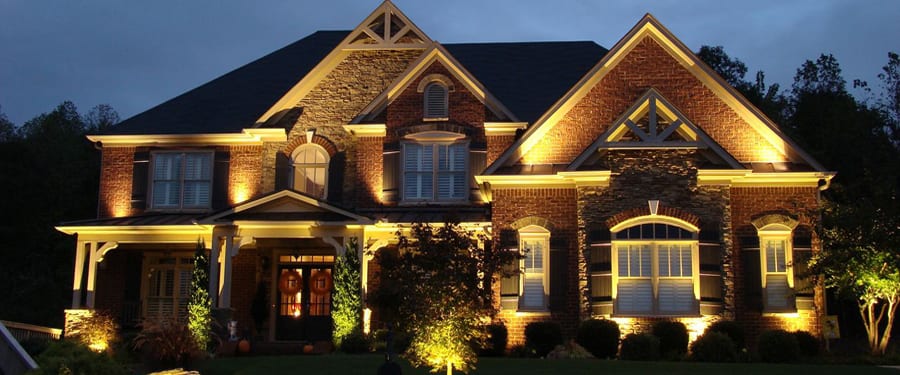
Proper outdoor lighting for your yard is an excellent way to show off the absolute best parts of your home while amplifying holiday spirit. But, how do you know where to place this outdoor lighting in order to achieve the best effect?
Here are a few easy and effective outdoor lighting methods from the outdoor lighting experts that will help you transform your outdoor living spaces:
Outdoor Lighting Methods That Enhance Your Home’s Best Features
Each lighting method creates a different effect, so choosing the right technique helps highlight key features, improve visibility, and create a more inviting outdoor space.
Highlighting
Highlighting is known as one of the most common outdoor lighting techniques, which involves placing a spotlight at the base of any outdoor feature, such as a garden statue or tree.
You can experiment with a wide range of distances and angles for your outdoor lighting fixture, in order to find the best design to suit your unique landscape.
Silhouetting
You have the ability to create an illuminated backdrop by placing light fixtures aimed toward an adjacent wall behind outdoor features.
This lighting will then create an outline (or “silhouette”) of whatever object is in front of it.
The silhouetting technique, itself, is ideal for showcasing dense plants, and has an especially striking appearance when the sun sets.
Shadowing
Similar to silhouetting, shadowing involves positioning fixtures in a way to allow light to reflect off a wall.
However, unlike silhouettes, this particular lighting technique creates softer shadows.
This is particularly useful for use with objects that move or delicate foliage, such as a tree in the wind. The lighting will make the shadows appear as if they are dancing on the walls of your home.
Wall-washing
For a more smoothing and evenly distributed glow you can use a wall-washing technique.
This consists of placing lighting fixtures typically wide-angle flood lights with a sideways angle a few feet away from whatever feature you want to showcase.
Shining your lighting along the side of a wall will maintain a consistent look and invoke a more subtle, ambient effect for your home.
Moonlighting and Downlighting
A moonlight technique consists of placing a fixture with a full glare guard at a downwards angle, from within a tree.
The moonlight effect emphasizes the features you have on the ground, and is perfect for showing off natural beauty and patterns in your landscaping.
Similar to moonlighting, downlighting involves placing a fixture high up while casting it downwards over a large area in order to create a brighter and less subtle effect.
Contrasting, Accenting, and Path-lighting
You can place spotlight fixtures closer to a structure or feature in order to create a bolder effect with greater contrast.
Any lighting that has the ability to draw attention to a part of your landscaping is called accent lighting can be accomplished through the use of a narrow light, which will be angled downward to reveal a particular plant, feature or design.
Path lighting consists of lighting driveways, patios and walkways.
You should always position path lights carefully to ensure they provide adequate illumination while not being in the way of walking at the same time.
Good path lighting significantly helps determine the pacing of a pathway.
Why Outdoor Lighting Techniques Matter for Your Home
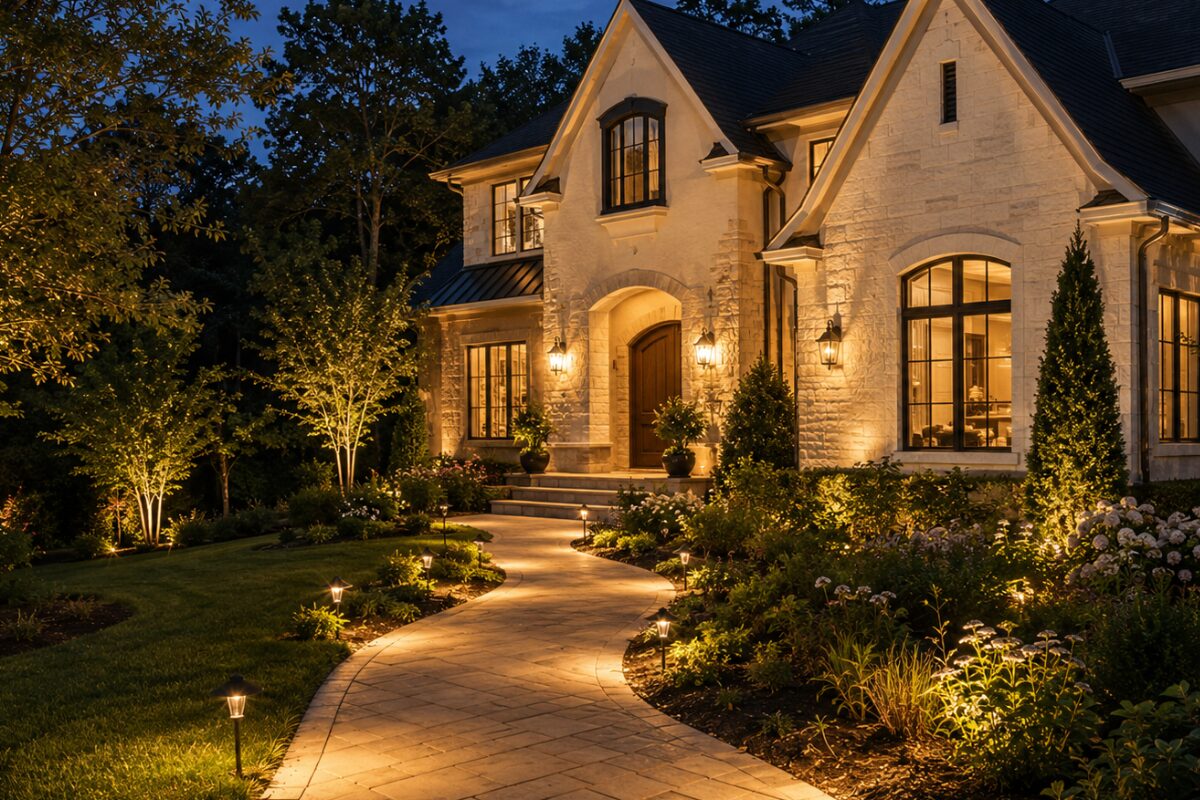 Outdoor lighting techniques help create a more attractive, safer, and more useful home exterior after dark.
A good lighting plan is not just about adding fixtures around the yard. It is about choosing the right lighting method for each part of your property.
For example, a tree may need uplighting, a walkway may need soft path lighting, and a patio may need comfortable lighting for evening use.
A front entrance may benefit from home accent lighting, while a garden wall may look better with a smooth wash of light.
The best exterior lighting solutions for homes use layers of light to create balance.
This helps avoid dark spots, glare, harsh brightness, and uneven coverage.
With the right design, outdoor lighting residential projects can improve curb appeal, support safety, and make your property feel more welcoming after sunset.
Why Each Outdoor Area Needs the Right Lighting Technique
Every part of your property may need a different lighting technique.
The front entrance may benefit from accent lighting. A large tree may look best with highlighting or moonlighting.
A garden wall may need wall washing. A walkway may need path lighting. A patio may need a mix of downlighting and softer ambient lighting.
This is why custom outdoor lighting solutions are often better than a standard fixture layout.
A custom design considers your home’s architecture, landscaping, outdoor living areas, darker spaces, and the way your family uses the property.
For example, a home with mature trees may benefit from artificial moonlight and soft shadowing.
A home with stonework or columns may need home accent lighting.
A home with a long walkway or garden path may need pathway and garden lighting installation.
A backyard designed for entertaining may need layered lighting around seating areas, steps, and patios.
The right technique depends on the feature, the desired effect, and the practical need for visibility.
Why LED Outdoor Lighting Is a Smart Choice
LED lighting is a strong option for modern outdoor lighting systems.
LED fixtures are energy-efficient, long-lasting, and available in different brightness levels and beam angles.
They are also useful for creating a range of effects, from soft accent lighting to brighter pathway and patio lighting.
For homeowners, led accent lights for outdoors can help reduce maintenance while creating a cleaner and more controlled lighting effect.
LED fixtures can be used for highlighting, wall washing, moonlighting, path lighting, and home accent lighting.
LED lighting also works well for exterior lighting solutions for homes because it can provide dependable performance in outdoor conditions.
When paired with high-quality fixtures and professional installation, LED lighting can improve the appearance and function of your exterior for years.
Common Outdoor Lighting Mistakes to Avoid
One common mistake is using too many fixtures. More lights do not always create a better result.
Too much lighting can make a property look harsh, flat, or overly bright. A good design uses the right amount of light in the right places.
Another mistake is placing fixtures where they create glare.
Outdoor lighting should guide the eye, not shine directly into someone’s face or windows. Fixture angles, brightness levels, and placement all matter.
Poor spacing is another issue. Path lights placed too close together can look crowded, while lights placed too far apart may leave dark gaps.
The same applies to accent lights and wall-washing fixtures.
Using the wrong fixture for the wrong purpose can also affect the final result.
A floodlight may be too wide for a small garden feature, while a narrow spotlight may not provide enough coverage for a walkway. A professional outdoor lighting design helps avoid these problems.
Professional Outdoor Lighting Design from NightVision Outdoor Lighting
Outdoor lighting techniques can make a major difference in the way your home looks after dark, but the best results come from a thoughtful plan.
NightVision Outdoor Lighting designs custom residential outdoor lighting systems for homeowners who want better curb appeal, improved visibility, and a more enjoyable outdoor space.
Our team can help you choose the right lighting methods for your property, including highlighting, silhouetting, shadowing, wall washing, moonlighting, downlighting, accent lighting, and path lighting.
We also provide outdoor home accent lighting services, pathway and garden lighting installation, and custom outdoor lighting solutions for patios, landscapes, walkways, and exterior features.
Instead of using the same layout for every property, we create lighting designs based on your home, your landscape, and the way you use your outdoor spaces.
This helps create a system that looks natural, works reliably, and supports long-term outdoor enjoyment.
Conclusion
The right outdoor lighting techniques can bring out the best parts of your home while making your exterior spaces safer, more comfortable, and more attractive after dark.
Highlighting, silhouetting, shadowing, wall washing, moonlighting, downlighting, accent lighting, and path lighting each serve a different purpose.
When these methods are used together in a custom lighting plan, they can create a balanced and beautiful outdoor environment.
Your home can feel more welcoming, your walkways can become easier to use, and your landscaping can stand out in a natural and polished way.
Bring Your Outdoor Lighting Vision to Life
Your outdoor spaces should feel beautiful, comfortable, and easy to enjoy after sunset.
NightVision Outdoor Lighting can create a custom lighting design that highlights your home’s best features, improves visibility, and adds the right atmosphere for your landscape, patio, pathways, and exterior spaces.
Connect with our talented professionals to plan a lighting system designed around your home and outdoor lifestyle.
FAQs
What are the best outdoor lighting techniques for a home?
The best outdoor lighting techniques include highlighting, uplighting, downlighting, pathway lighting, accent lighting, and artificial moonlight. Each method creates a different visual effect for the home, landscape, or outdoor living area. A professional design combines these techniques to improve curb appeal, safety, and nighttime comfort.
How does home accent lighting improve curb appeal?
Home accent lighting improves curb appeal by highlighting architecture, trees, garden beds, entryways, and outdoor features after sunset. It adds depth, warmth, and visual interest to areas that may otherwise look flat or dark. When planned correctly, it makes the home feel more polished, welcoming, and complete.
What is highlighting in outdoor lighting?
Highlighting is one of the most common outdoor lighting techniques used to draw attention to a specific feature. A fixture is placed near the base of a tree, statue, column, fountain, or architectural detail and aimed upward. This creates a strong focal point and adds depth to the overall exterior lighting design.
How do custom outdoor lighting solutions improve a landscape?
Custom outdoor lighting solutions are designed around the property’s layout, landscaping, architecture, and outdoor living spaces. This allows each fixture to serve a clear purpose, whether it is guiding movement, highlighting a feature, or creating ambiance. A custom plan helps the entire exterior feel balanced and intentional.
What are the best exterior lighting solutions for homes?
The best exterior lighting solutions for homes often include pathway lights, uplights, deck lights, step lights, garden lighting, and LED accent lights for outdoors. These options can improve safety while enhancing the home’s nighttime appearance. The right combination depends on the home’s style, landscape features, and how the outdoor spaces are used.
Why is pathway and garden lighting installation important?
Pathway and garden lighting installation helps improve visibility around walkways, steps, entry routes, and landscape areas. It makes outdoor movement safer while also adding structure and beauty to the yard. Professionally installed lighting can prevent dark gaps, glare, and uneven brightness.
Are LED accent lights outdoors a good choice for residential properties?
Yes, LED accent lights for outdoors are a strong choice because they are energy-efficient, long-lasting, and available in different brightness levels. They work well for trees, walls, gardens, patios, and architectural details. High-quality LED fixtures can create a warm, elegant effect while reducing maintenance needs.
What is artificial moonlight in outdoor lighting design?
Artificial moonlight is a lighting technique that places fixtures high in trees or elevated areas to cast a soft, natural glow downward. It creates the effect of moonlight passing through branches and leaves. This technique is often used in custom residential outdoor lighting to create a peaceful and natural nighttime setting.
Why should homeowners choose custom residential outdoor lighting?
Custom residential outdoor lighting helps ensure the system fits the home’s architecture, landscape, safety needs, and outdoor lifestyle. Professionals consider fixture placement, beam angles, brightness, color temperature, and long-term performance. This creates outdoor lighting residential spaces that look beautiful, feel safe, and function well after dark.