
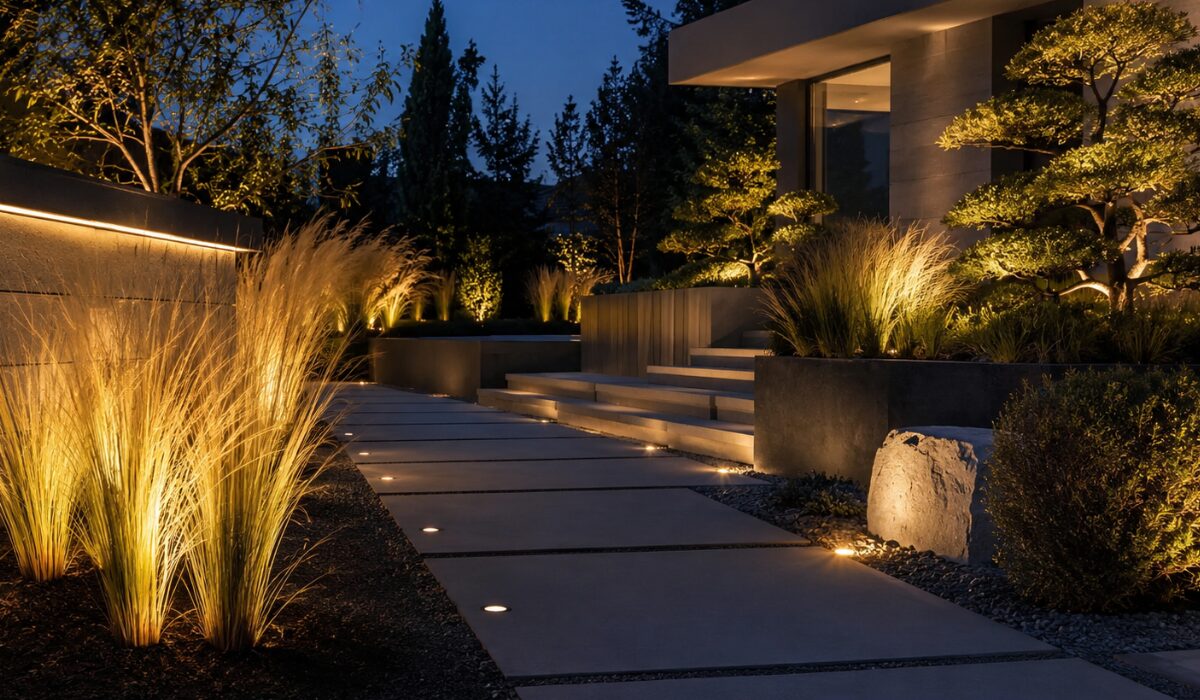
In-ground outdoor lighting has become increasingly popular in modern landscape design as homeowners look for ways to illuminate their properties without adding visible fixtures.
Its low-profile design works well with contemporary homes, minimalist gardens, and carefully planned outdoor spaces.
These lights can highlight mature trees, stone walls, architectural details, and selected garden features while keeping the fixture itself discreet.
However, achieving the right effect requires careful consideration of fixture type, beam angle, brightness, placement, drainage, and wiring.
An experienced in-ground lighting contractor can assess your property, understand your goals, and create a lighting plan that complements your home’s architecture and landscape.
What Is In-Ground Outdoor Lighting?
In-ground outdoor lighting refers to fixtures installed within the ground, landscape beds, or suitable hardscape surfaces to provide discreet illumination.
Depending on the fixture, light can be directed upward toward trees or architectural features or across surfaces to highlight texture.
Unlike conventional fixtures, these lights sit flush with or close to the ground, creating a clean, uncluttered appearance. They can be used for:
- Highlighting mature trees and plants
- Emphasizing architectural details
- Accentuating stone and brick surfaces
- Drawing attention to walls and hardscapes
- Enhancing garden features
- Creating subtle focal points
The purpose is to direct attention, create depth, and enhance specific features without letting the fixtures dominate the design.
This low-profile approach is especially effective for modern homes and landscapes.
Why Is In-Ground Lighting Becoming Popular in Modern Landscape Design?
Modern homeowners increasingly want their landscaping, architecture, hardscaping, and lighting to work together as one cohesive design.
However, visible fixtures and excessive brightness can disrupt the clean, minimalist look of contemporary properties. In-ground lighting offers a discreet alternative that blends into the landscape.
It Maintains a Clean, Minimalist Appearance
Low-profile fixtures remain less noticeable, allowing modern patios, gardens, and architectural features to retain their clean appearance.
It Highlights Features Instead of Fixtures
Carefully positioned lights can draw attention to mature trees, stone walls, and architectural details without making the fixtures themselves the focal point.
It Creates More Depth
Strategic lighting can use shadows, textures, and contrast to add dimension to materials such as stone, concrete, brick, and textured walls.
It Extends the Visual Appeal of Your Landscape
In-ground landscape lighting can help homeowners continue enjoying the beauty of their gardens, mature trees, hardscaping, and architectural features when natural light fades.
What Makes In-Ground Outdoor Lighting Different?
 The key difference is how the fixtures interact with the property.
Traditional landscape lighting fixtures may remain visible and become part of the landscape’s appearance.
In-ground fixtures are designed to have a much lower visual profile, which can be beneficial when maintaining a clean aesthetic is important.
They can also provide highly targeted lighting effects. Rather than illuminating a large area, a fixture can be positioned to direct light toward a particular feature.
However, in-ground lighting is not necessarily a replacement for every other type of outdoor lighting.
A complete landscape lighting design may use several fixture styles depending on the property’s needs. The goal is to create a balanced system in which each light has a purpose.
Where Can In-Ground Lighting Make the Biggest Difference?
The right application depends on your property and the features you want to emphasize. In-ground outdoor lighting can be particularly effective for:
Highlighting Mature Trees
In-ground uplighting can emphasize the height, structure, and natural form of large trees, turning them into striking focal points.
Emphasizing Architectural Features
Lighting can draw attention to stonework, brick, columns, textured walls, and other architectural details while creating a stronger connection between the home and landscape.
Accentuating Hardscaping
Carefully positioned fixtures can highlight retaining walls, patios, stone features, and other hardscaping while adding depth and dimension.
Enhancing Garden Features
Selected trees, shrubs, sculptures, and other garden elements can be illuminated to create visual focal points without making the entire landscape overly bright.
Creating a More Refined Outdoor Environment
Low-profile fixtures provide discreet illumination that complements the property’s design without adding unnecessary visual elements.
How an In-Ground Lighting Contractor Designs the Right System
A professional lighting project typically begins with an assessment rather than a shopping list of fixtures.
Assessing the Property
The contractor evaluates the home’s architecture, landscaping, hardscaping, soil conditions, drainage, and existing electrical infrastructure.
This helps identify suitable locations for fixtures and potential installation challenges.
Understanding Your Goals
Every homeowner has different priorities. You may want to highlight architecture, showcase landscaping, create a more sophisticated appearance, or improve visibility in selected areas.
A professional can use these goals to develop a lighting design that reflects your preferences.
Identifying Focal Points
Not every feature needs to receive equal attention.
A contractor can help determine which elements deserve to become focal points and which areas should remain more subtle. This can create a stronger visual hierarchy throughout the property.
Selecting the Right Fixtures
Fixture selection depends on several factors, including brightness, beam angle, color temperature, durability, and installation location.
For example, a fixture intended to illuminate a tall tree may need different characteristics from one used to highlight a nearby wall.
Planning Placement and Direction
The position of a fixture can be just as important as the fixture itself.
Professionals consider viewing angles, light direction, spacing, and surrounding features to reduce glare and unwanted light spill while achieving the intended effect.
Testing and Fine-Tuning
Once the system has been installed, the lights can be tested from different viewing positions.
Fixtures may need to be adjusted to achieve the right balance between brightness, contrast, and coverage.
These final adjustments can make the difference between a basic installation and a thoughtfully designed system.
Why Professional Installation Matters for In-Ground Lighting
In-ground lighting may appear simple from the outside, but installation involves several considerations that are easy to overlook.
Because fixtures are installed close to the ground, the system needs to account for moisture, soil, drainage, roots, irrigation systems, and existing underground utilities.
A professional can identify these conditions before installation and plan accordingly. This can reduce the risk of avoidable problems and help protect the long-term performance of the system.
Professional installation also helps ensure that wiring, transformers, fixtures, and controls work together properly.
Most importantly, an experienced contractor understands how individual fixtures interact with the surrounding landscape. The goal is to create a complete lighting system rather than simply install a collection of lights.
When you hire a professional, you are investing not only in the fixtures but also in design expertise, proper installation, and long-term functionality.
What Should You Consider Before Installing In-Ground Landscape Lighting?
Before installation, several factors can affect the performance and appearance of your lighting system:
- Drainage and Moisture: Proper drainage and outdoor-rated components can help protect fixtures from moisture-related issues.
- Ground Conditions: Roots, rocks, irrigation lines, and underground utilities may affect fixture and wiring placement.
- Light Direction: Fixtures should be positioned carefully to create the desired effect while minimizing glare.
- Brightness and Color: Light intensity and color temperature should complement your home’s architecture and landscape.
- Future Growth: Growing trees and plants may change how light reaches your selected features, so fixture placement should account for future adjustments.
A professional lighting plan can help address these factors before installation and create a system suited to your property’s conditions.
Is In-Ground Outdoor Lighting Worth the Investment?
In-ground outdoor lighting can be a worthwhile investment if you want a clean, refined landscape without prominent fixtures.
It can help highlight landscaping and architectural details, add depth, and create a more cohesive design.
LED landscape lighting can also offer energy efficiency and long operating life, while compatible controls can help manage system operation.
Since every property has different needs, a professional assessment can help determine the right fixtures, placement, and design for your home.
Conclusion
In-ground outdoor lighting offers a subtle way to bring more depth and character to a modern landscape without allowing visible fixtures to dominate the design.
With thoughtful planning and professional installation, the right system can highlight key features, complement your home’s style, and create a more cohesive outdoor environment.
Ready to Transform Your Modern Landscape With In-Ground Lighting?
At NightVision Outdoor Lighting, we can help you create a low-profile lighting system that complements your home’s architecture and landscape.
Our team can assess your property, understand your goals, and recommend an in-ground lighting solution designed around your needs.
Contact our in-ground outdoor lighting specialists to discuss your project and discover how professional lighting can enhance your outdoor space.
FAQs
Can in-ground lights be installed in an existing landscape?
Yes, in-ground lighting can often be added to an established landscape. However, roots, irrigation, hardscaping, and underground utilities may affect installation. A professional assessment can help identify potential challenges before work begins.
Are in-ground lights safe to walk or drive over?
Some fixtures are specifically designed for foot or vehicle traffic, while others are intended only for landscape applications. The correct product must be selected based on its location and expected load.
How long do in-ground landscape lights last?
The lifespan depends on fixture quality, installation, environmental exposure, and maintenance. LED fixtures generally offer a long operating life, although individual components may eventually require service or replacement.
Do in-ground lights require regular maintenance?
They require occasional maintenance to keep them performing properly. Dirt, leaves, soil, and plant growth may need to be cleared, while fixture positioning and connections may also require periodic inspection.
Are LED in-ground lights energy efficient?
LED fixtures are generally more energy efficient than traditional incandescent or halogen options and can provide a long operating life. Timers and smart controls can also help manage energy use.
Can in-ground lights be connected to smart controls?
Many modern outdoor lighting systems can work with compatible timers, photocells, and smart controls. The available options depend on the equipment selected and the design of the overall system.
How many in-ground lights does a property need?
There is no standard number because every property has different dimensions, focal points, fixture types, and design goals. A professional lighting plan can determine the appropriate number and placement for your landscape.