
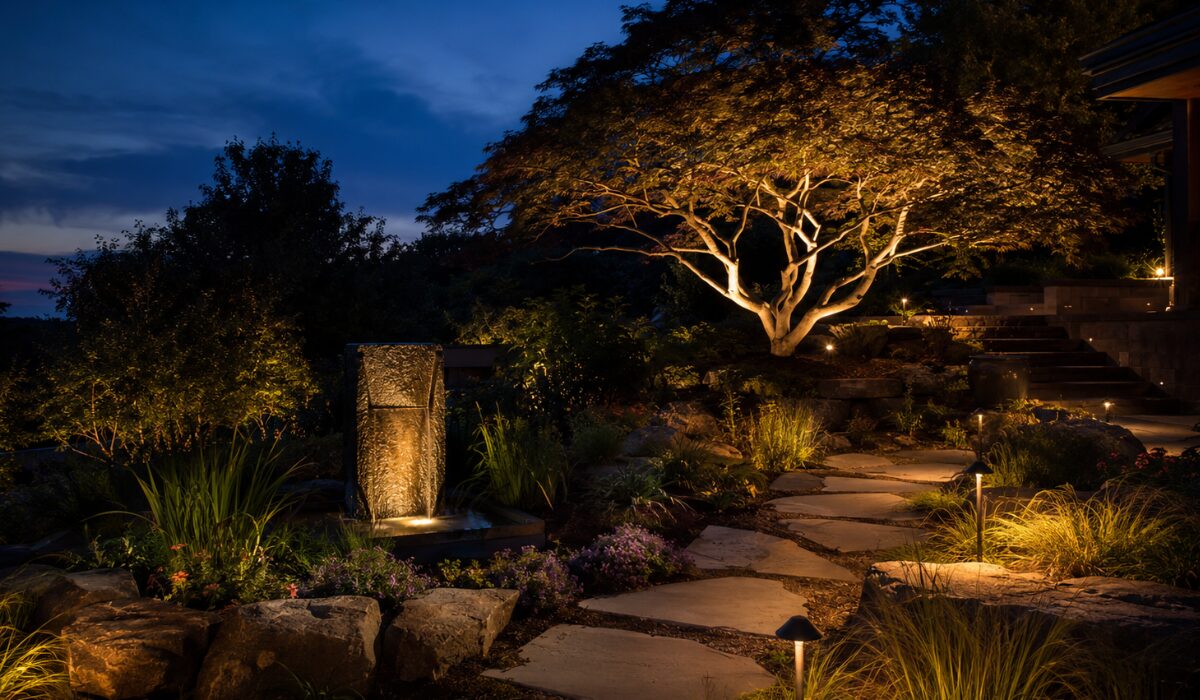
A well-designed landscape lighting system does more than illuminate your property after dark.
It creates visual hierarchy by directing attention toward the features you want guests to notice most.
When landscape lighting is placed strategically, trees, water features, architectural elements, and outdoor living spaces can become attractive focal points after sunset.
The key is to avoid lighting every feature with the same intensity. Instead, combine different lighting techniques to create contrast, depth, and balance throughout your yard.
A professional landscape lighting design can help determine which features deserve attention and how to illuminate them without making the space look overly bright.
5 Landscape Focal Points to Highlight with Outdoor Lighting
 1. Trees and Large Plants
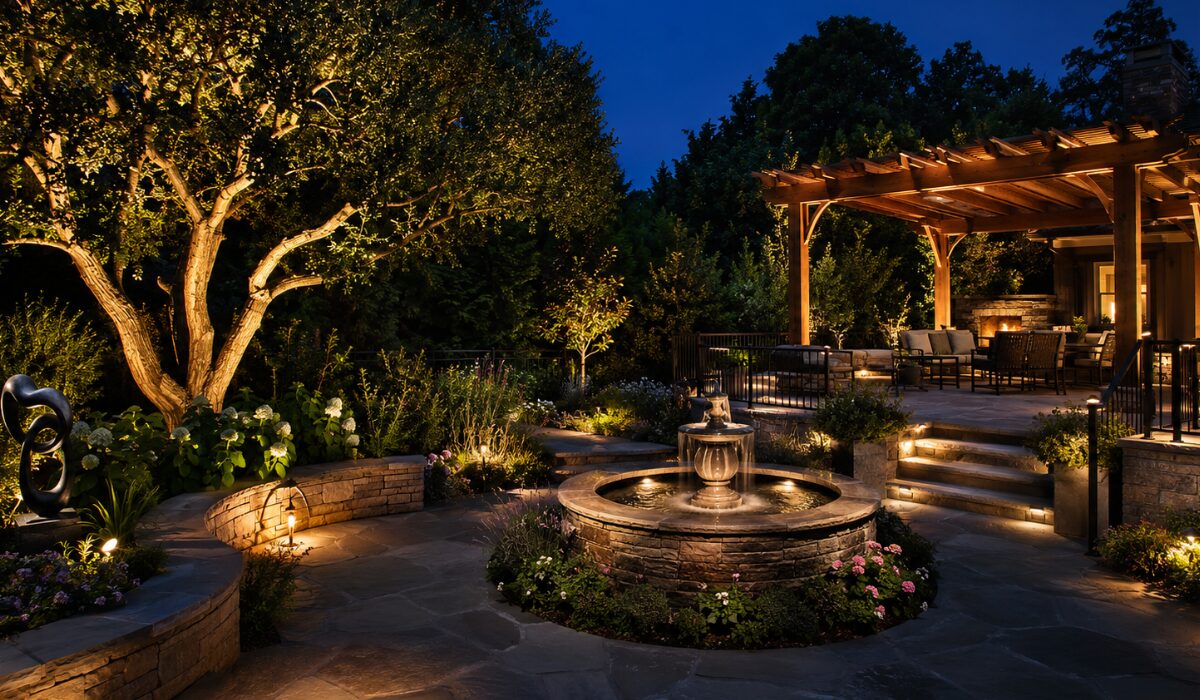
Large trees can become dramatic focal points when illuminated at night. Uplighting placed near the base of a tree can draw attention to its trunk and branches while creating interesting shadows across the canopy.
For trees with distinctive bark, multiple trunks, or interesting shapes, carefully positioned accent lights can emphasize their natural texture and structure. The goal is to highlight the tree without creating excessive glare or making the lighting appear harsh.
2. Water Features and Fountains
Ponds, fountains, waterfalls, and other water features are natural focal points for landscape lighting. Light reflecting across moving water can add depth and visual interest to your yard.
Depending on the design, lighting can be positioned around the feature or used to highlight specific details. A professional lighting designer can help determine the appropriate placement and intensity to showcase the water feature while maintaining a balanced appearance.
3. Gazebos, Pergolas, and Outdoor Structures
Outdoor structures such as gazebos and pergolas can serve as architectural focal points during the evening. Accent lighting can highlight their shape and construction, while softer lighting can make the space feel more inviting.
If the structure is also used for entertaining, consider combining accent lighting with functional lighting. This approach allows the feature to stand out while making the area more comfortable and usable after dark.
4. Patios, Decks, and Outdoor Living Areas
Your patio or deck can become a natural focal point when paired with a thoughtful outdoor lighting plan. Lighting around seating areas, steps, railings, and architectural details can help define the space without overwhelming it.
Layered lighting is often effective in outdoor living areas. Combining ambient illumination with accent and functional lighting can create a comfortable atmosphere while improving visibility and helping guests move safely through the space.
5. Garden Features and Landscape Details
Sculptures, ornamental plants, retaining walls, flower beds, and other unique landscape features can add personality to your yard. Rather than illuminating everything equally, select a few standout features to emphasize.
Using accent lighting to highlight specific details creates a stronger visual hierarchy and helps guide the eye through the landscape. This approach can make a smaller yard feel more intentional and can give larger properties a sense of depth.
How to Choose Landscape Lighting for Different Focal Points
Different landscape features require different lighting approaches. Choosing the right technique can make the difference between a polished lighting design and a yard that simply looks over-illuminated.
Uplighting
Best suited for trees, architectural features, columns, and textured walls. Fixtures are positioned below the feature and directed upward.
Downlighting
Creates a natural-looking effect by casting light downward from elevated locations. It can be useful for patios, outdoor gathering spaces, and areas where soft illumination is needed.
Accent lighting
Helps draw attention to specific focal points, such as sculptures, plants, fountains, and architectural details.
Path lighting
Defines walkways, garden paths, and transitions between outdoor spaces while also supporting safe movement through the property.
In-ground lighting
These lights can provide a subtle lighting effect while keeping fixtures less visible during the day. It may be useful for highlighting architectural elements or specific landscape features.
A successful landscape lighting design often combines several techniques rather than relying on a single type of fixture.
The right combination depends on your property’s layout, existing landscaping, and the features you want to emphasize.
How to Avoid Overlighting Your Yard
One of the most common mistakes in outdoor landscape lighting is trying to illuminate every feature at once.
Too much light can eliminate contrast and make the yard feel flat instead of creating the layered appearance homeowners want.
Start by identifying one or two primary focal points. These should receive the most visual attention. Secondary features can then be illuminated more subtly to support the overall design.
It is also important to consider glare and fixture placement. Lights should be positioned carefully so that the source of the light does not distract from the feature being highlighted.
A professional landscape lighting installer can help position fixtures and adjust beam angles to create a more natural nighttime appearance.
Create a Balanced Landscape Lighting Design
The best landscape lighting designs create a visual connection between different areas of the property.
Instead of treating each focal point as a separate project, consider how the entire yard will look when viewed from your home’s windows, patio, driveway, or street.
For example, a large tree may serve as the primary focal point, while softer lighting along a pathway guides attention toward it.
A fountain or garden feature can act as a secondary focal point, creating additional interest without competing with the main feature.
This balance helps create depth and makes the outdoor space feel cohesive after dark.
Why Professional Landscape Lighting Design Matters
Choosing the right fixtures is only one part of creating effective outdoor lighting.
Fixture placement, beam angles, brightness, wiring, spacing, and the relationship between light and shadow all influence the final result.
A professional landscape lighting company can evaluate your property during the planning process and identify the features that will have the greatest visual impact.
The design can then be customized around your home’s architecture, landscaping, outdoor living areas, and personal preferences.
Professional installation can also help ensure that the lighting system is properly positioned and integrated into the landscape.
This is particularly valuable when you want to highlight multiple focal points while maintaining a balanced and cohesive appearance.
Transform Your Yard With Strategic Landscape Lighting
Your landscape should not disappear when the sun goes down.
With the right landscape lighting design, the trees, gardens, water features, architectural details, and outdoor living spaces that make your property unique can remain visible and inviting throughout the evening.
The key is to focus on the features that deserve attention and use the appropriate lighting techniques to create depth, contrast, and visual balance.
Whether you want to highlight a dramatic tree, illuminate a fountain, or create an inviting patio atmosphere, strategic outdoor landscape lighting can transform how your property looks and feels at night.
If you’re planning a landscape lighting project in Atlanta or the surrounding area, working with an experienced outdoor lighting professional at NightVision Outdoor Lighting can help you create a customized design that brings your yard’s best features to life.
FAQs
What are the best focal points for landscape lighting?
The best focal points for landscape lighting include large trees, fountains, water features, sculptures, garden beds, architectural details, patios, pergolas, and other distinctive features. Choose elements that add visual interest to your yard and use lighting to draw attention to them after dark.
How do you highlight focal points with landscape lighting?
You can highlight focal points by choosing the right lighting technique for each feature. Uplighting works well for trees and architectural elements, while accent lighting can showcase sculptures, plants, and water features. Proper fixture placement and beam angles help create depth without excessive glare.
What type of lighting is best for trees and landscaping?
Uplighting is often effective for highlighting trees and larger landscape features. Fixtures placed near the base of a tree can direct light upward to emphasize its trunk, branches, and canopy. The ideal approach depends on the tree’s size, shape, and location.
How do I choose where to place landscape lights?
Start by identifying the features you want to highlight and consider how they appear from different viewing points around your property. Landscape lights should be positioned to enhance focal points, create balanced illumination, and minimize glare. A professional landscape lighting design can help determine the best fixture locations.
How can landscape lighting improve curb appeal?
Strategic landscape lighting can highlight your home’s architecture, trees, gardens, walkways, and other outdoor features after sunset. A well-planned lighting design adds depth and visual interest while creating a more welcoming appearance for your property.
How can I avoid overlighting my yard?
Avoid installing too many bright fixtures or illuminating every feature equally. Instead, choose one or two primary focal points and use softer lighting for secondary areas. Combining light and shadow can create a more natural and visually appealing landscape lighting design.
Should landscape lighting be professionally installed?
Professional installation can be beneficial when you want a customized lighting design, precise fixture placement, and a cohesive look throughout your property. An experienced landscape lighting professional can also help select appropriate fixtures and techniques based on your yard’s layout and focal points.
What is the best landscape lighting for outdoor entertaining areas?
Downlighting, subtle accent lighting, and carefully placed pathway lights can work well around patios, decks, pergolas, and other outdoor entertaining spaces. The goal is to provide enough illumination for comfort and visibility while maintaining a warm, inviting atmosphere.
How do I use landscape lighting to create focal points in my yard?
Start by selecting the most visually interesting features of your landscape, such as a mature tree, fountain, sculpture, or architectural detail. Then use techniques such as uplighting, downlighting, or accent lighting to draw attention to those features while keeping the overall lighting design balanced.