
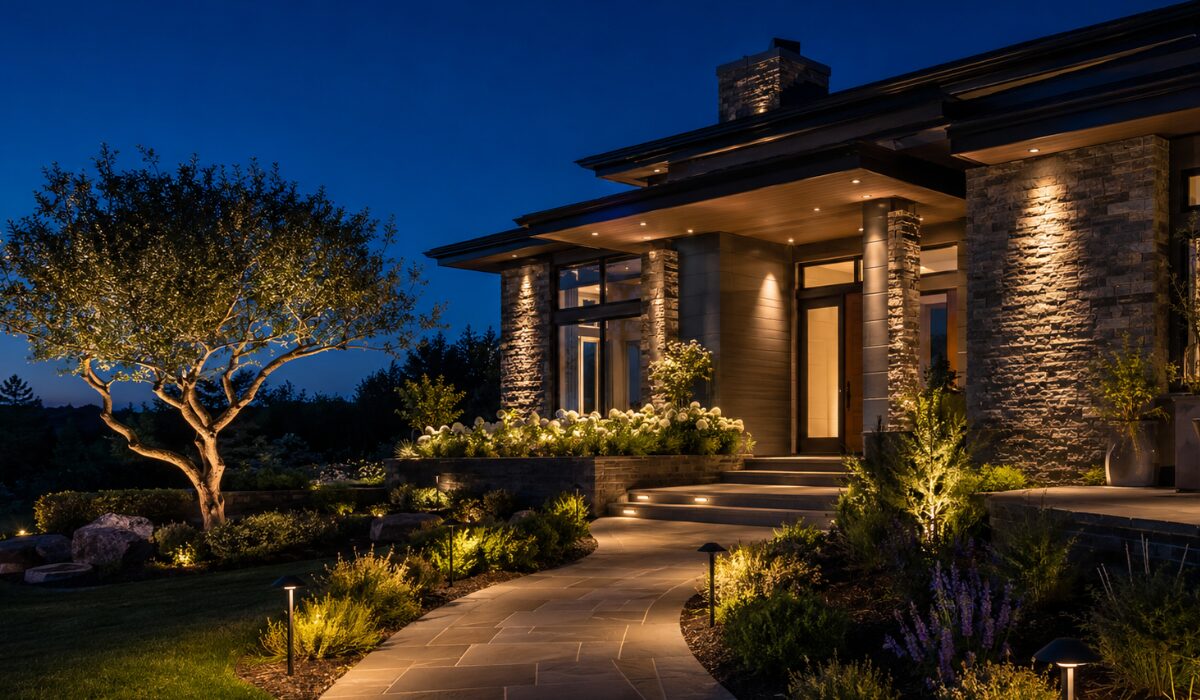
Outdoor lighting can transform the way your home and landscape look and function after sunset.
The right lighting design does more than brighten your property, it can highlight architectural details, showcase landscaping, improve visibility, and create a warm, inviting atmosphere for outdoor living and entertaining.
From illuminating pathways and driveways to accenting trees, gardens, patios, and other focal points, professionally designed outdoor lighting can bring your property’s best features to life at night.
With the right combination of fixtures and strategic placement, you can create an exterior that is both beautiful and functional while complementing the unique character of your Atlanta home.
What Is Effective Outdoor Lighting?
Basically, it is lighting that properly illuminates the home and properly in a complimentary fashion. Plus, it also provides illumination for areas that need extra security such as entrances and windows on the first floor.
Of course, just putting lights outside your home does not necessarily make it look better or improve the overall security. You will need to follow a proper guideline to maximize the effectiveness of the lighting that you will install.
The first step is checking with your local city building codes and ordinances to see what type of lighting is allowed for outdoor use.
This is important because many communities have restrictions on the type and number of lights that can be used outdoors to illuminate the property. Once you have a list of the restrictions, you can then take the following steps to create the perfect nighttime appearance for your home.
Entrance
Your front entrance should receive special attention so you can greet guests and properly identify those who are visiting your home.
You can augment your current porch lighting system with an overhang or recessed fixture that will highlight the area in front of the door.
Plus, you can use a couple of wall lanterns on either side of the door that provides a warm, welcoming feeling for those at the front door. Plus, the illumination will help you identify who is at your door.
Garage
For better safety and security, you can place a lantern or light on each side for maximum illumination.
This will not only make the garage door and the area in front easier to see at night, but it will also enhance the beauty of your home as well.
Of course, if you want to save energy you can have the lights come on only when the garage door is opening or closing or you can install motion sensors to turn on the lights when your car is moving on the driveway.
Property
The driveway, sidewalk, pathways, and steps should also be illuminated for your personal protection. This will help reduce the number of slips, trips, and falls because of objects that otherwise would not be seen.
The good news is that low-level amounts of illumination are perfectly fine for highlighting the areas where people walk on your property which means that the energy consumption level is kept at a minimum.
By using the right outdoor lighting techniques, you can enhance the beauty of your property while providing additional security and safety.
You should start off by consulting with the right professionals who can provide excellent insight into installing outdoor lighting for your home. Remember, you can start with just a few lights and add to them when necessary to achieve the right look for your home.
We hope you’re enjoying our blog! We invite you to visit our testimonials page to see what some of our satisfied customers are saying about NightVision Outdoor Lighting.
How to Create a Balanced Outdoor Lighting Design
A successful outdoor lighting design is about more than simply adding lights to your property. The goal is to create a balanced combination of illumination, shadows, and focal points that feels natural after dark.
Start by identifying the areas that deserve attention, such as an architectural feature, mature tree, garden bed, or outdoor seating area. Instead of lighting everything at the same brightness, vary the intensity and direction of the light to create depth.
The placement of each fixture also matters. Lights should enhance the feature they illuminate without becoming distracting focal points themselves. Thoughtful spacing and positioning can create a cohesive appearance across the entire property.
How to Choose the Right Outdoor Lighting Fixtures
Outdoor lighting fixtures come in different sizes, materials, finishes, beam spreads, and brightness levels. The right fixture depends on where it will be installed and the effect you want to create.
For example, a narrow beam may work well for highlighting a specific architectural detail, while a wider beam can illuminate a larger tree or landscape area. Pathway fixtures are designed differently from accent lights because they serve a more functional purpose.
When selecting fixtures, consider durability, weather resistance, light output, finish, and compatibility with the overall design of your property. Choosing fixtures that suit both the application, and the surrounding landscape can help create a more polished result.
Understanding Light Temperature in Outdoor Lighting
The color temperature of outdoor lighting can influence the mood and appearance of your property. Warmer light is often used around residential landscapes because it creates a comfortable and welcoming atmosphere.
The best choice depends on the materials and colors already present on your property. Brick, stone, wood, plants, and other surfaces can appear different depending on the light source used to illuminate them.
Maintaining a consistent color temperature throughout connected areas can also help create a more unified nighttime appearance.
How Outdoor Lighting Can Reduce Glare
Glare can make an outdoor lighting system uncomfortable and reduce visibility rather than improve it. This can happen when fixtures are positioned incorrectly or when bright light shines directly toward the eyes.
Professional lighting design focuses on directing light toward the intended surface while limiting unwanted exposure. Shielding, beam angles, fixture placement, and appropriate light levels can all help control glare.
The goal is to notice the effect of the lighting rather than being distracted by the light source itself.
Smart Controls for Modern Outdoor Lighting
Modern outdoor lighting systems can incorporate controls that make it easier to manage when and how lights operate. Depending on the system, homeowners may use timers, photocells, motion sensors, or smart controls.
Automated schedules can turn lights on around sunset and switch them off at a predetermined time. Smart controls may also allow homeowners to adjust lighting remotely or create different schedules for various areas of the property.
These options can provide greater convenience while helping homeowners manage how long their outdoor lights remain in operation.
Common Outdoor Lighting Design Mistakes to Avoid
Even a high-quality fixture may not produce the desired results if the overall design is poorly planned. Some common mistakes include installing too many lights, using excessive brightness, creating uneven illumination, and placing fixtures where they produce unwanted glare.
Another common issue is failing to account for landscape growth. Trees and plants can change significantly over time and may eventually block or alter the effect of existing fixtures.
A thoughtful lighting plan should consider both the property’s current appearance and how the landscape may change in the future.
Why Outdoor Lighting Design Should Complement Your Landscape
Outdoor lighting should work with your existing landscaping rather than compete with it. The best designs use light to reveal the natural structure and character of a property after sunset.
A mature tree, textured stone wall, garden feature, or water element may become a focal point when carefully illuminated. Meanwhile, less important areas can remain more subtly lit.
This selective approach creates contrast and allows the eye to move naturally through the landscape. The result is often more visually appealing than simply illuminating every part of the property.
When to Consider a Professional Outdoor Lighting Consultation
A professional consultation can be useful if you’re unsure where to place fixtures, want to update an existing system, or are planning a larger landscape project.
A lighting professional can evaluate your property’s layout, identify potential focal points, assess existing fixtures, and recommend a design that fits your goals. They can also help determine whether your current system needs minor adjustments or a more extensive redesign.
Planning the lighting before installation can help prevent unnecessary fixtures and ensure that the finished system works as intended.
Maintaining Your Outdoor Lighting Design as Your Landscape Changes
Your landscape doesn’t stay the same throughout the year. Trees grow, plants spread, and garden layouts change. These changes can affect how light reaches the areas you originally intended to highlight.
Periodic adjustments can help keep your lighting system effective. Fixtures may need to be repositioned, vegetation may need to be trimmed, and damaged components may need attention.
Regularly reviewing your lighting system ensures that it continues to complement the property’s current landscape rather than the way it looked when the system was first installed.
Outdoor Lighting for Entertaining After Dark
Outdoor lighting can help create a more enjoyable atmosphere when hosting guests in the evening. Rather than relying on a single bright source, layered lighting can provide illumination throughout seating, dining, and entertainment areas.
Subtle lighting around patios, decks, pathways, and landscape features can help define different areas while maintaining a comfortable ambiance. The lighting design should provide enough visibility for guests without overpowering the atmosphere.
With thoughtful planning, outdoor lighting can help make your exterior spaces feel like an extension of your home’s living areas after sunset.
Final Thoughts
A successful outdoor lighting system combines thoughtful design, appropriate fixtures, strategic placement, and reliable controls. The goal isn’t simply to make a property brighter but to create a nighttime environment that enhances its architecture, landscape, and outdoor living areas.
Whether you’re planning a new installation or improving an existing system, focusing on the way light interacts with your property can help you achieve a more natural and cohesive result.
FAQs
What areas of a property can outdoor lighting illuminate?
Outdoor lighting can be used to illuminate a variety of areas, including walkways, driveways, patios, decks, gardens, trees, entryways, architectural features, and outdoor entertainment spaces. A professional lighting plan can help determine the best locations based on your property’s layout and your goals.
How do I choose the right outdoor lighting for my property?
The right outdoor lighting depends on the areas you want to illuminate, your home’s architecture, landscaping, desired ambiance, and practical needs. A combination of pathway, accent, uplighting, and architectural lighting can create a balanced design tailored to your property.
What is the best color temperature for outdoor landscape lighting?
Warm white lighting is commonly used for residential landscape lighting because it creates a soft and inviting appearance. The ideal color temperature can vary based on the home’s exterior materials, landscaping, and the desired lighting effect.
Can outdoor lighting be customized to my property?
Yes, outdoor lighting systems can be customized based on the size, layout, architecture, landscaping, and outdoor living areas of your property. Custom designs allow lighting to be positioned strategically to highlight specific features and provide illumination where it is most useful.
Is professional outdoor lighting installation worth it?
Professional installation can help ensure that fixtures are properly positioned, wiring is installed correctly, and the overall system creates a cohesive appearance. A professional can also help select appropriate fixtures and lighting techniques for your property’s specific needs.
Can outdoor lighting be used to highlight landscaping?
Yes, Outdoor lighting can showcase trees, flower beds, shrubs, water features, retaining walls, and other landscape elements after sunset. Techniques such as uplighting, spotlighting, and accent lighting can help create depth and draw attention to focal points.
How can outdoor lighting improve the appearance of my home at night?
Strategically placed lighting can highlight architectural details, illuminate pathways, accent landscaping, and create a welcoming atmosphere. Layering different lighting techniques can add depth and visual interest without making the property appear overly bright.