
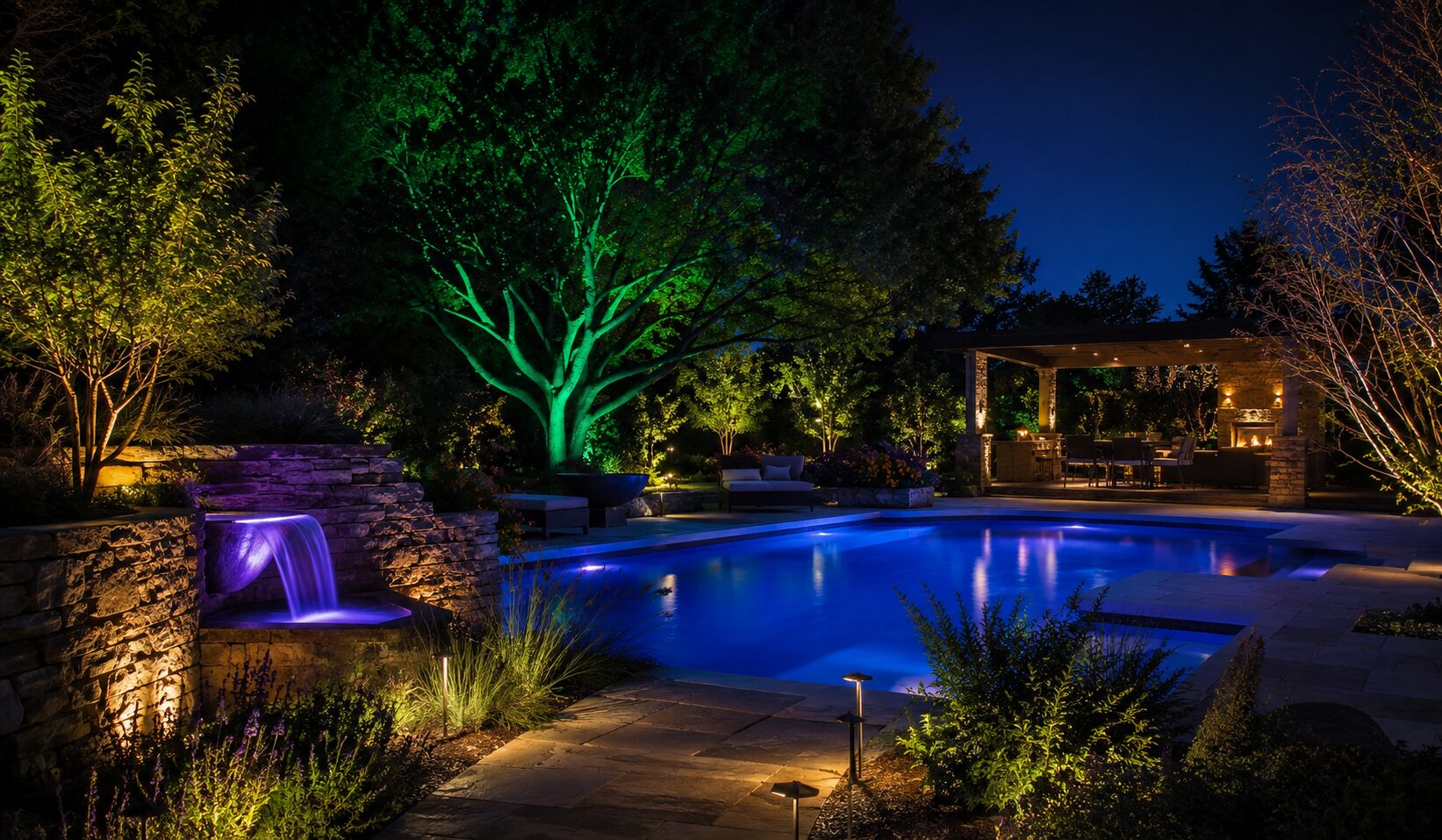
Outdoor colored lighting is becoming increasingly popular. It can be used in many different ways in your grounds, yard, and garden and even by motels, hotels, and restaurants. Outdoor lighting is extremely useful if you do not live on a well-lit road.
Many countries or out of town properties need extra lighting to show visitors the entrance to their homes. Hotels and motels may be the same – bright lights on the roadside sign, but what about the entrance and parking areas?
The examples above are the more common uses of outdoor lighting, but there are others. Even a small home in Atlanta can make good use of outdoor colored lighting.
Even if you have one tree in your yard or one fish pond you can make it look amazing when night falls. Why do people refer to night as ‘falling?’ No need to answer that!
That’s another question – for now we will focus on using nightfall or even daylight to highlight the best aspects of your property and the ground surrounding it. You do not need a huge yard or garden to make the best use of outdoor landscape or accent lighting. All you need is the lighting itself!
Examples Of Outdoor Colored Lighting
We are discussing outdoor lighting colors. What does that mean? Fundamentally it means using color in your landscape or accent lighting. Here are some examples:
Pool: Blue or green? Do you want your pool to look blue or green when you highlight it with appropriate lighting?
If you have a pool, then blue or green accent lighting can display it perfectly. You can have colored lights playing over the surface of the pool to make it look irresistible – just like magazine pools look.
You can achieve an even more spectacular look by installing lights at the bottom of your pool. That can be done when the pool is being built or afterward. Sealed lighting units can be installed in any color you wish. Want a red pool? It’s yours. Want a blue pool? It’s yours.
Garden: Use colored light to enhance flowers: You can light up your shrubbery with a green light to make it look awesome.
You can use soft red lighting with your anthurium flowers or red maple to enhance their beauty and then the intensity of colour from the wonderful red maple leaves in the fall. Sprinkle some copper sulphate in the soil around your hydrangeas and then add soft blue lighting.
This will give you an astonishing display when they flower, and are sure to blow the minds of all your visitors.
Garden Ponds: if you have a garden pond or fountain, you can use soft blue accent lighting to make them look at their best. The fountain will look good with blue light, but the pond would also show up well with green light.
Trees: If you have a stand of trees, then you can use green light to highlight them. If you prefer a completely natural colour, then illuminate them with white light to accent them.
A lot depends on the foliage. Dense foliage looks great with small lights scattered through, it emitting a soft green light. Nothing garish, just a warm greenish glow. Conifers look great with green spotlights playing up through them from below.
Outdoor Colored Lighting: Conclusion
These are just a few ideas of you can use outdoor lighting colors to enhance your yard and garden.
Many people go for the simple white light option, but when they see the results that can be achieved using colored lights they wish that had done that instead.
Before you use any form of outdoor lighting, make sure you check with Night Vision for the best type of lighting for you.
It may be that outdoor colored lighting does not appeal to you, or even perhaps you feel it doesn’t suit your garden or your yard.
However, if you use outdoor lighting colors, then you have a lot of options open to you. You can reach out to us for guidance.