
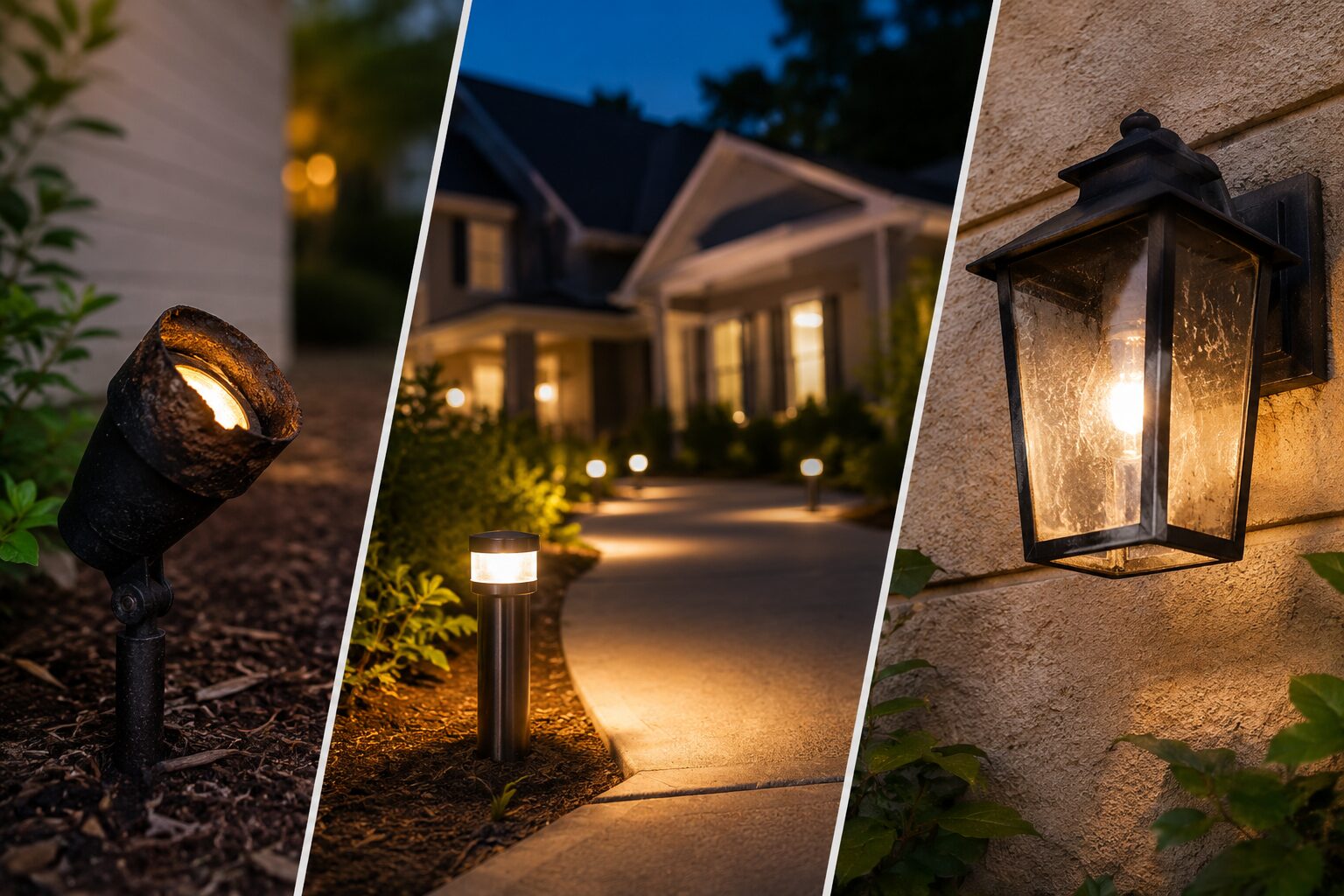
Outdoor lighting problems often begin with a flickering fixture, a dim path light, or lights that stop working after rain.
A new bulb may solve an isolated problem, but repeated failures can point to damaged wiring, wet connections, worn controls, or transformer issues.
Atlanta’s rain, humidity, irrigation, pollen, and plant growth can also affect system performance.
Understanding the cause of the problem will help determine whether your lighting needs a small repair, a partial update, or complete replacement.
Signs It May Be Time to Replace Your Outdoor Lighting
A single burned-out bulb or loose connection does not usually mean the entire lighting system needs replacement. In many cases, a small repair can restore the affected fixture.
Replacement becomes worth considering when problems affect several lights, return soon after repairs, or involve major parts such as the wiring, transformer, or controls.
You may also need an update when the fixtures are badly damaged or the original design no longer fits your yard.
The following signs can help you determine when another repair may not be enough.
Several Parts of the System Have Problems
An outdoor lighting system includes fixtures, underground cables, wire connections, bulbs or built-in LEDs, a transformer, timers, sensors, and smart controls.
A problem with one shared component can affect several lights. For example, installing a new fixture will not help if a damaged underground cable prevents power from reaching it.
Before replacing anything, check how many lights are affected, when they fail, whether repairs last, and whether the problem appears in one area or across the property.
Exposed wires, water inside fixtures, and failures affecting several lights should be inspected by a qualified outdoor lighting professional.
Your Lights Keep Flickering or Turning Off
A bulb that fails once may need only a simple replacement. Lights that frequently flicker, turn off unexpectedly, or work only occasionally may point to loose connections, moisture, damaged cables, worn fixtures, incorrect voltage, or transformer trouble.
Fixtures Are Broken or Badly Worn
Outdoor fixtures are exposed to rain, sprinklers, soil, falling branches, lawn equipment, and landscaping work.
Over time, lenses may crack, covers may break, fixtures may lean, and wires may become exposed.
Minor changes in a fixture’s color or finish do not always affect how it works.
Replacement may be necessary when the housing is broken, internal parts are exposed, or the fixture can no longer keep out water, insects, and soil.
One damaged fixture can often be replaced separately. If many fixtures show similar damage, it may be more practical to evaluate the condition of the entire system.
Problems Return After Rain
Outdoor lights that repeatedly stop working after rain or irrigation may have a moisture problem.
Water may enter through a cracked fixture, loose seal, damaged wire connection, or underground cable.
Other warning signs include fog inside the lens, corrosion around connections, or fixtures sitting in areas where water collects.
Replacing the visible fixture may not solve the problem if the damage is in the wiring or connection below the ground.
A professional inspection can locate where the water is entering. The solution may involve repairing a connection, replacing damaged cable, moving a fixture, or improving drainage around the area.
The Lighting No Longer Fits Your Yard
Your landscape may look very different from when the lighting was first installed. Trees grow taller, shrubs spread, and garden beds change.
You may also add a deck, patio, walkway, pool, or outdoor kitchen. Existing fixtures may still work but no longer illuminate the right areas.
Plants may block path lights, tree lights may be aimed too low, and newer outdoor areas may have little or no illumination.
Moving or adding a few lights may solve a problem in one section. If changes affect most of the property, redesigning or partially replacing the system may provide better coverage.
The Yard Has Uneven or Uncomfortable Lighting
A lighting system can turn on correctly and still produce poor results. Some areas may be overly bright while paths, steps, or entrances remain difficult to see.
Visible bulbs may create glare, fixtures may shine into windows, and beams may reach neighboring properties.
Bulbs replaced at different times may also produce mismatched warm and cool light colors.
Adding brighter bulbs is not always the answer. Moving, shielding, or replacing selected fixtures may create a more balanced appearance.
A wider redesign may be useful when glare and dark areas appear throughout the property.
Repairs Are Becoming More Frequent
Cleaning lenses, trimming plants, replacing an occasional bulb, and adjusting fixture angles are normal maintenance tasks. These issues alone do not mean the system needs replacement.
Frequent bulb failures, recurring wire problems, and repeated service visits are more concerning.
Keep a record of which parts were repaired and how soon each problem returned. This can help show whether one fixture is faulty or several parts are wearing out.
Another repair may be reasonable when most of the system remains in good condition.
Partial or complete replacement may make more sense when repair costs continue to increase without providing reliable results.
The Transformer or Controls Are Unreliable
Many landscape lighting systems use a transformer to supply the lower voltage needed by the fixtures.
If it develops a problem, several lights may become dim, flicker, or stop working at the same time.
Unusual sounds, overheating, visible damage, or repeated shutdowns may indicate that the transformer needs attention.
Timers, light sensors, and smart controls can also fail, causing lights to turn on during the day or remain off after sunset.
Replacing a damaged transformer, timer, or sensor may restore the system without requiring new fixtures.
However, a complete review may be appropriate when the transformer, wiring, controls, and fixtures are all showing signs of wear.
When Repairs Are No Longer Enough
A small repair may solve an isolated problem, such as one burned-out bulb, loose connection, or faulty timer.
Replacement becomes a better option when problems spread across the system or return soon after repairs.
You may need to replace part or all of the system when:
- Several fixtures fail repeatedly
- Underground wires or connections are badly damaged
- Water continues to enter fixtures
- The transformer cannot support the system
- Timers and controls no longer work reliably
- Fixtures are badly worn or broken
- The current design no longer suits the property
- Repair costs continue without providing a lasting solution
Not every replacement project requires removing the complete system. If some fixtures, cables, or controls remain in good condition, they may be reused.
An inspection can determine whether replacing one section or the entire system is more suitable.
What Should You Check Before Installing Replacement Lights?
Replacement is an opportunity to correct the problems with the old lighting system. Installing new fixtures in the same locations may recreate issues such as glare, dark walkways, poor drainage, or blocked light.
Walk through the property after sunset and look for:
- Paths, steps, gates, and entrances that need clearer lighting
- Fixtures that shine into windows or people’s eyes
- Areas that are too bright or too dark
- Locations where rain or irrigation water collects
- Lights hidden by shrubs and groundcover
- New decks, patios, and walkways that need lighting
- Existing parts that may still be usable
- Areas that need easy access for cleaning and adjustment
Also consider future landscape growth. A small shrub may eventually cover a path light, while new tree branches can block a beam.
Planning for these changes can reduce the need to move fixtures later.
How Does Atlanta’s Weather Affect Outdoor Lighting?
Atlanta’s heat, humidity, heavy rain, pollen, red clay, irrigation, and fast-growing plants can affect an outdoor lighting system.
Fixtures near the ground may collect soil and leaves, while water can gather around lights installed in low areas.
New fixture locations should account for sprinklers, drainage, lawn equipment, foot traffic, and plant growth.
Underground cables and connections also need protection from moisture, digging, animals, and landscaping work.
Fixtures should remain easy to reach for cleaning, aiming, and other maintenance.
Although no outdoor system is maintenance-free, suitable materials and proper placement can make it easier to care for as the landscape changes.
Need a Better Outdoor Lighting Plan?
Repeated failures can make an old lighting system difficult and costly to maintain.
NightVision Outdoor Lighting has an experienced team that understands how fixture condition, wiring, controls, drainage, and landscape changes affect system performance.
We take the time to review each property, explain the available options clearly, and recommend a solution based on the homeowner’s needs.
From the initial inspection through installation, we focus on providing a smooth customer experience and a lighting plan suited to the property. Schedule an outdoor lighting evaluation for your Atlanta home.
Frequently Asked Questions
How long does an outdoor lighting system last?
There is no fixed lifespan for every system. Fixture quality, installation, electrical components, weather exposure, maintenance, and landscape conditions all affect how long it works. Its current condition matters more than age alone.
Can existing outdoor lighting wires be reused?
Existing wires may sometimes be reused if they are undamaged, correctly sized, properly installed, and compatible with updated equipment. Underground cables should be inspected because damage may not be visible from the surface.
Why do my outdoor lights stop working after rain?
Water may be entering a fixture, wire connection, or damaged cable. Poor drainage and direct sprinkler spray may also contribute. Repeated rain-related failures should be inspected to locate the moisture source.
Is it better to repair or replace landscape lighting?
Repair may be suitable when one fixture or connection has failed. Replacement may be more practical when several components have problems, repairs keep repeating, or the current design no longer fits the property.
Can an older outdoor lighting system be changed to LED?
Some older systems can be updated with LED bulbs or fixtures. The transformer, voltage, wiring, controls, and existing fixtures should be checked for compatibility before making the change.
Do all outdoor lights need to be replaced at once?
Not necessarily. Partial replacement may be possible when the remaining fixtures and electrical components are in good condition. Existing and replacement parts must also work properly together.