
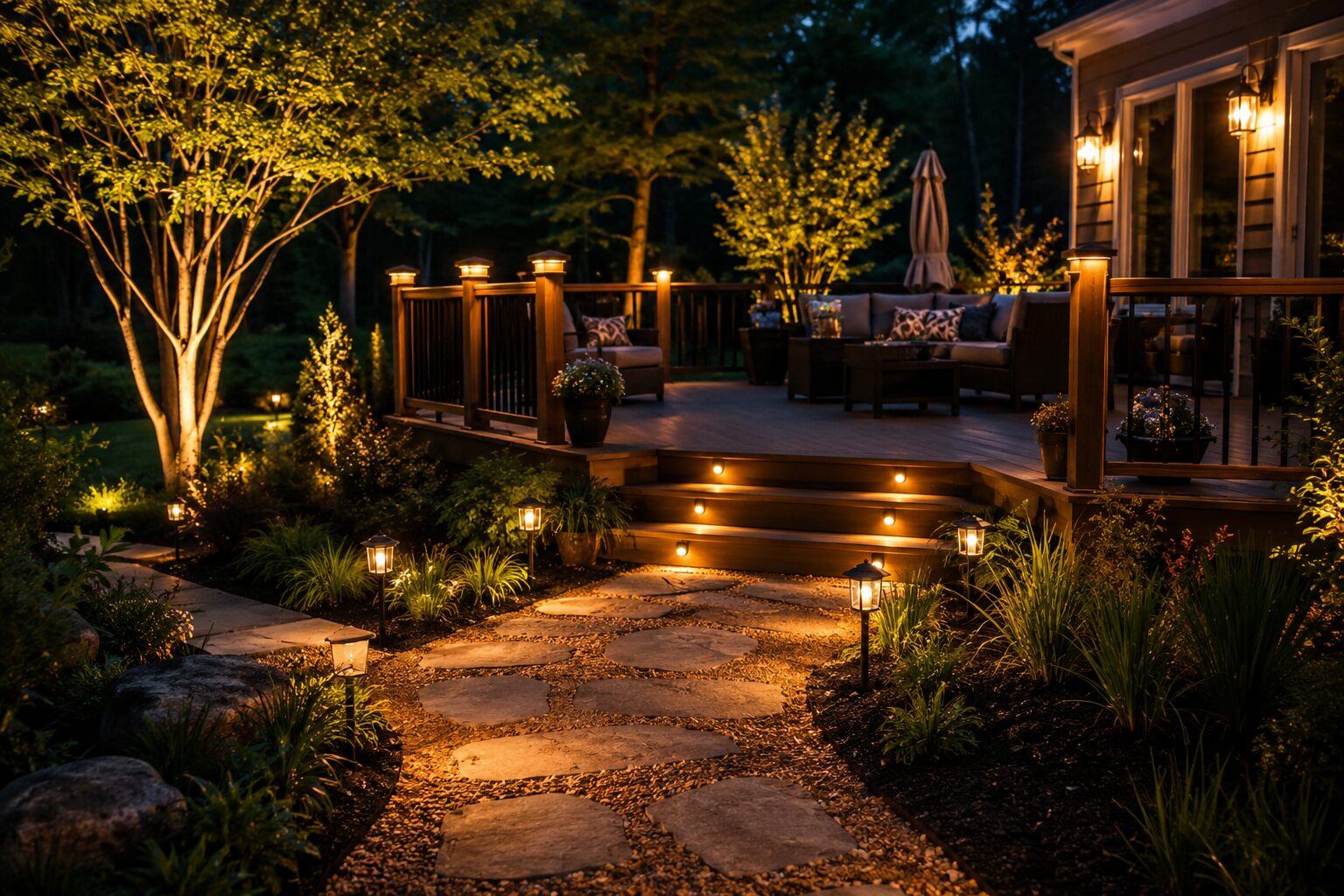
Your deck may look inviting from inside your home, but reaching it after sunset can be difficult when steps, turns, or walkways are hidden in shadow.
A good Deck & Path Lighting plan connects the deck with the rest of the yard.
It helps people follow the walkway, notice changes in height, and use outdoor areas without covering the property in harsh light.
For Atlanta homeowners, the design should also account for rain, humidity, pollen, falling leaves, and fast-growing plants.
The goal is not to install as many lights as possible. It is to place the right amount of light where people need it.
Plan the Deck and Path Lights Together
Deck and path lights should be planned as one system. A brightly lit deck may still be difficult to reach if the walkway leading to it remains dark.
Before choosing fixtures, walk through your yard around sunset. Follow the route from the driveway, back door, or side gate to the deck.
Note dark gates, turns, steps, slopes, entrances, nearby plants, and changes between grass, concrete, stone, and wood.
Every area does not need the same brightness. A softly lit path can lead toward a slightly brighter deck, creating a smooth connection between the house, yard, and outdoor living area.
Consider How You Use the Outdoor Space
The right lighting depends on what happens outside. A deck used for quiet conversations needs different lighting from one used for grilling, dining, and entertaining.
Think about carrying food, walking a pet, using the stairs, or entering through a side gate. A grill needs clear light, while seating usually feels better with softer light.
Check fixtures while standing, walking, and sitting because a light that looks fine from the house may create glare on the deck.
Make Steps and Level Changes Easy to Notice
Steps need special attention because even one change in height can be difficult to see at night. Deck stair lighting should show the edge of each step without creating glare.
Small lights can shine down from the vertical face of a step, beneath its edge, or from nearby posts. A light on a suitable roof or pergola may cover several steps.
Pay attention to landings where people move between surfaces. Lighting can make maintained stairs easier to see, but it cannot fix loose boards, uneven steps, or damaged handrails.
Add Soft, Useful Light Around the Deck
You do not need a bright light on every post or railing. Too many fixtures can make the deck look busy and feel uncomfortable.
Place lights on selected posts, beneath railings, beside stairs, near doors, or around built-in seating.
Under-rail lights can illuminate the floor while hiding the bulb, and post lights can mark an entrance or turn.
Match the number of lights to the deck’s size, railings, benches, doors, and stairs. Show important edges and activity areas without making the whole surface equally bright.
Avoid the Runway Look Along Walkways
Placing matching path lights directly across from each other can make a walkway look like an airport runway. A staggered layout often creates a softer, more natural appearance.
Place one fixture on one side of the path and the next farther ahead on the other. This can illuminate the walking surface while also showing nearby plants, borders, and curves.
Spacing depends on fixture height, light spread, path width, plants, slopes, and nearby light. Pale concrete reflects more light than dark pavers, while shrubs may block a beam.
Walkway lighting does not need to cover every inch. It should help people follow the route and recognize its main edges, turns, and height changes.
Use Downlighting Where It Makes Sense
Not every fixture needs to sit near the ground. Lights can sometimes be mounted in suitable trees, under rooflines, or on pergolas and aimed downward.
One downlight may softly cover part of the deck, several steps, or a section of path while reducing visible ground fixtures.
Aim it carefully to avoid windows, neighboring properties, and seated guests.
Allow for tree growth because new branches can block the beam. Smaller lights may still be needed near gates and steps.
Light Grills, Tables, and Seating Areas Properly
Grills, counters, and food-preparation areas need clear light, but one very bright fixture can create glare and unwanted shadows.
The grill light should reach the cooking surface and remain away from direct heat, smoke, and grease. Dining tables need softer light without a harsh bulb overhead.
Check seating areas from a seated position. If a bulb is clearly visible or the beam shines into your eyes, move, cover, or redirect the fixture.
Lighting should help people use the area without becoming the main thing they notice.
Use a Few Landscape Features as Guides
Deck and path lights can also draw attention to selected landscape features. A tree near a turn, a planting bed beside the deck entrance, or a stone wall along the walkway can act as a visual guide.
These features can show where the path continues. Avoid lighting every plant and wall because equal brightness can look flat.
Choose a few features, leave darker spaces between them, and check the view from inside the home.
Balance Brightness and Light Color
Brighter is not always better. When one fixture is much brighter than everything around it, nearby areas may appear darker.
Use stronger light only where it is needed, such as near a grill or main entrance. Paths, planting beds, and seating areas can usually use softer illumination.
Some white lights look warm and golden, while others appear cooler and bluer. Warm white often works well with wood, brick, stone, and plants.
Keeping the color similar across the deck and path creates a more connected appearance.
Choose Fixtures for Atlanta Conditions
Atlanta’s rain, heat, humidity, pollen, and plant growth can affect outdoor fixtures. Choose lights made for outdoor use and suitable for each installation location.
Ground fixtures can collect red clay, pollen, leaves, and grass. Check for sprinklers, standing water, growing plants, lawn equipment, and foot traffic.
Protect wires from moisture, digging, animals, and yard tools. Keep fixtures accessible and leave room for plants to grow without covering them.
Consider Low-Voltage LEDs and Controls
Low-voltage LED fixtures come in different brightness levels, colors, shapes, and beam widths for decks, paths, steps, and gardens.
The system still requires planning. The transformer must support all connected fixtures, and the wiring should be arranged so every light works properly.
Timers, light sensors, smart controls, and dimmers can simplify use. Separate controls let path lights run every evening while grill and dining lights operate only when needed.
When Professional Planning Can Help
Professional installation may help with several deck levels, long paths, mature trees, drainage concerns, or limited wiring routes.
An outdoor lighting professional can plan fixture spacing, wiring, drainage, controls, viewing angles, and future plant growth.
The aim is to place lights where they help and avoid glare or uneven brightness. A nighttime review allows final aiming and adjustments.
Conclusion
A successful design brings the different parts of your backyard together instead of treating the deck and walkway as separate areas. Careful planning can also prevent glare, uneven brightness, blocked fixtures, and difficult maintenance.
NightVision Outdoor Lighting provides professional deck and pathway lighting services for Atlanta homeowners. Contact our team to schedule a consultation for installing, repairing, or updating your outdoor lighting.
Frequently Asked Questions
How far apart should path lights be placed?
There is no single spacing rule for every walkway. The right distance depends on fixture height, beam spread, path width, nearby plants, surface color, and other light sources. Place fixtures according to the area each one covers instead of following one fixed measurement.
What light color works best for a deck?
Warm white is a common choice because it works well with wood, brick, stone, and plants. The best option also depends on the home’s exterior and existing lights. Keeping the color consistent usually produces a more natural appearance.
Can lights be added to an existing deck?
Yes. Lights can often be added to existing stairs, railings, posts, nearby structures, or surrounding landscaping. The available options depend on the deck’s construction and condition, suitable fixture locations, and access for wiring.
Should deck lights stay on all night?
Deck lights do not always need to operate throughout the night. Timers and smart controls can turn off dining, grilling, and seating lights when the area is not in use. Path and step lights can follow a different schedule if needed.
Are low-voltage lights suitable for steps and paths?
Low-voltage fixtures are commonly used for residential steps and walkways. They should be rated for outdoor conditions and installed with the correct power supply, wiring, and placement. The light should reach the walking surface without shining into people’s eyes.
How many lights does a deck or path need?
There is no standard number because every property is different. The total depends on the area’s size and shape, fixture coverage, plants, nearby structures, and existing light. A balanced plan uses enough fixtures to show important areas without overcrowding the space.