
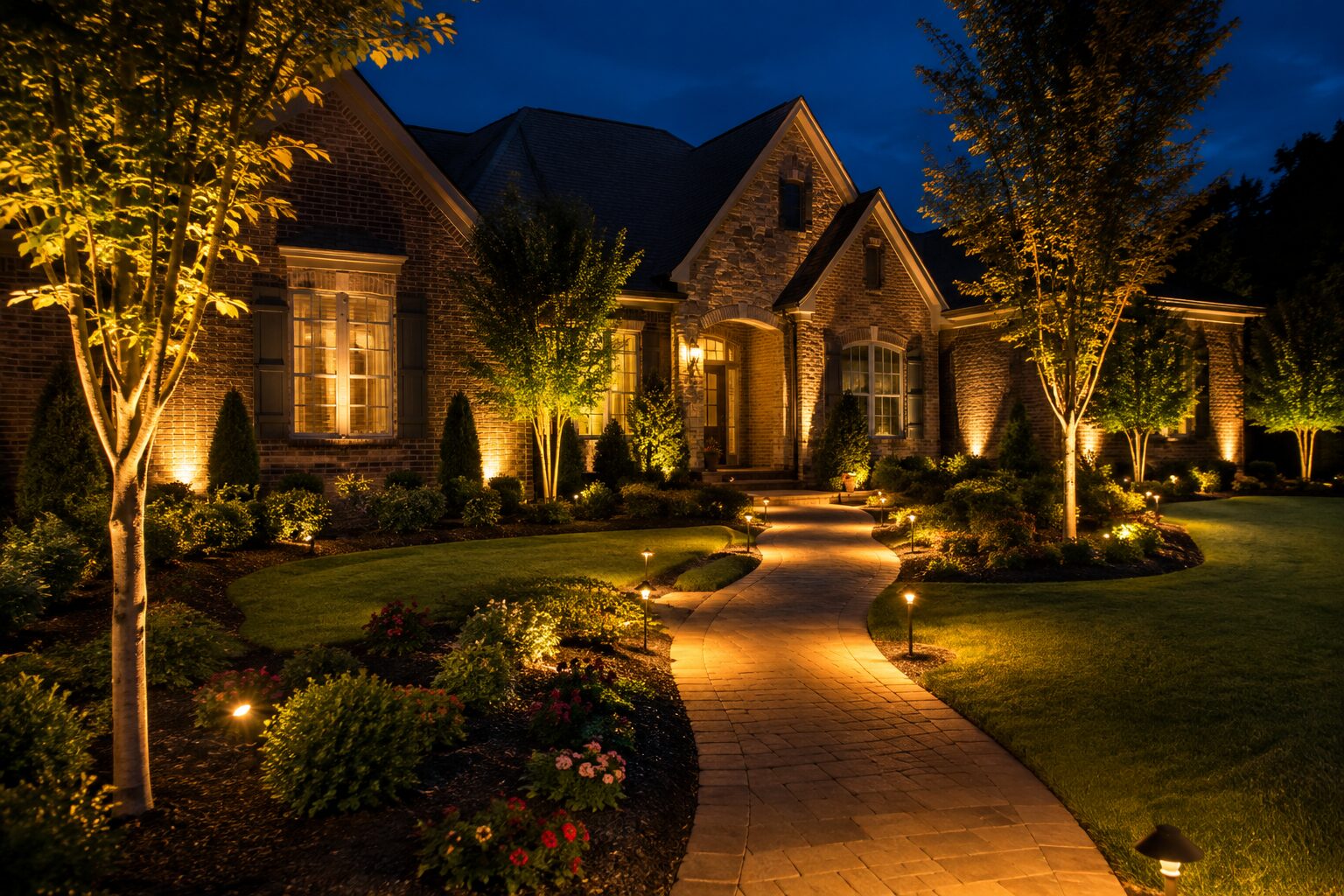
Picking the right outdoor lighting company isn’t just about finding someone who can hang a few fixtures. The right partner will improve how your property looks and functions after dark.
That means safer walkways and entrances, trees and architecture that actually stand out, and a patio or backyard you can use well past sunset.
Pretty fixtures alone won’t get you there, though. Design quality, fixture placement, installation, and ongoing care all shape the final result.
With so many outdoor lighting companies in Atlanta, it helps to know what separates a good one from an average one before you sign anything.
Know What You Want the Lighting to Do
Before you request an estimate, get clear on your own goals. Outdoor lighting can do a lot of different jobs, and what you want will shape the whole design.
Maybe you’re trying to:
- Make your driveway, steps, or walkway safer to navigate at night
- Show off a favorite tree, garden bed, or architectural feature
- Extend your patio, deck, pool, or outdoor kitchen into the evening
- Improve how a commercial property looks after hours
Share these priorities during your first conversation with any outdoor lighting company.
A designer worth hiring will build the plan around how you actually use the space instead of dropping the same fixture layout on every job.
Mention any future plans too, like a pool or new landscaping, so the system can grow with the property instead of needing a redo later.
Choose a Lighting Specialist
Plenty of landscapers, electricians, and general contractors offer outdoor lighting as a side service.
Fewer companies build their whole business around it, and that distinction matters more than people expect.
Specialists tend to have deeper experience with the details that make or break a design: fixture spacing, beam angles, color temperature, glare control, transformer sizing, low-voltage wiring, and smart controls.
None of that guarantees quality on its own, but it’s a solid filter. Ask how often the company does this type of work and whether they’ve handled properties similar to yours.
A good installer should also explain why they’re recommending a specific fixture in a specific spot. If they can’t, you’re probably getting a pile of lights instead of a real design.
Ask for a Custom Design
A proper lighting plan takes into account your property’s layout, landscaping, architecture, and how you’ll use it.
That means someone needs to walk the site before writing a proposal, not make a decision based on a photo.
During that walkthrough, a good designer will look at your walkways and elevation changes, entrances and driveways, trees and garden beds, patios and gathering areas, and even nearby windows or neighboring properties that light could spill into.
Ask directly how they’ll control glare and keep light from spilling onto roads or a neighbor’s windows.
More light isn’t automatically better. Properly aimed, shielded fixtures give you the visibility you need without turning your yard into a stadium.
Some companies do a nighttime walkthrough after installation to fine tune the aim, which is a good sign, since a design often needs small adjustments once you actually see it lit up.
Review Their Completed Projects
A portfolio tells you a lot about a company’s design sense and installation skill, as long as it’s real project photos and not stock images from a fixture manufacturer’s catalog.
In good nighttime photos, you should see balanced light levels, clearly defined paths, architectural features that stand out without being blown out, and minimal glare.
Pay attention to whether every project looks basically identical. That usually means the company is repeating a standard layout instead of designing for each property.
Ask to see examples similar to your own project. That could mean decks, gardens, pools, or home facades for residential work, or entrances, walkways, and parking areas for commercial properties.
Confirm They Offer the Services You Need
Outdoor lighting covers a lot of ground, and not every company does all of it well.
Residential lighting work might include landscape lighting, path and step lighting, patio or pool area lighting, architectural uplighting, or fountain and water feature lighting.
Commercial work often centers on building exteriors, entrances, signage, and parking areas.
If you also need holiday lighting, permanent color changing systems, repairs, or an upgrade to something already installed, ask about that specifically.
Also find out whether they’re willing to work with an existing system rather than ripping it all out.
Ask About Fixtures and Installation
Not every fixture on the market holds up the same way, especially in Atlanta’s heat, humidity, and rain.
Before signing anything, ask what specific fixtures, transformers, cables, connectors, and controls are included in your quote.
It’s worth asking about fixture material and finish, LED output and color temperature, beam angle, whether components are replaceable or sealed permanently, and weather or wet location ratings where relevant.
Also ask how cables will be routed and protected, how the transformer is sized for your system, and whether there’s room to expand later without starting over. If smart controls or timers are part of the package, get a live demo so you know how to use them.
Check Insurance and Warranty Terms
Confirm the company carries proper liability insurance before work begins.
If any part of the job goes beyond standard low voltage installation, ask who’s doing that work and whether it requires additional licensing or permits.
Get all warranty details in writing. Fixtures, LEDs, transformers, controls, and labor are often covered separately.
Ask how long each warranty lasts and who handles a claim if something fails.
A manufacturer’s warranty might replace a defective part without covering the labor to swap it out, so it’s worth understanding that distinction before something breaks, not after.
Ask About Maintenance and Repairs
Even a well installed system needs occasional attention. Plants grow over fixtures, lenses collect dirt and pollen, connections loosen, and timer schedules drift out of sync with the seasons.
Ask whether the company offers ongoing maintenance, such as cleaning, realignment, cable inspection, replacing failed parts, and adjusting controls, and how quickly they respond to service calls.
It’s also worth asking whether they’ll service a system someone else installed. A company that sticks around after the install is generally a safer bet than one that disappears once the check clears.
Read Reviews for Patterns
Reviews are useful, but don’t lean too heavily on any single comment.
Look for recurring themes across many reviews: how the company communicates, shows up on time, handles design suggestions, cleans up after itself, and follows through on warranty claims.
How a company responds to a negative review can tell you almost as much as the review itself.
A thoughtful, professional response suggests they take feedback seriously. Still, treat reviews as one data point among several. They shouldn’t replace an actual portfolio review or a detailed written proposal.
Compare the Full Proposal
Estimates vary widely because companies recommend different fixtures, installation methods, controls, and warranty terms. The cheapest quote often covers less scope than it appears to.
A solid proposal should spell out the number and type of fixtures, which areas of the property are included, materials, transformer and control specs, the installation work itself, warranty coverage, maintenance options, payment terms, and a rough timeline.
If a quote is just one lump sum with no breakdown, ask for more detail before comparing it against anything else.
The Bottom Line
A good outdoor lighting company does more than install fixtures. It evaluates your property, listens to what you actually want, designs around that, explains its choices, and sticks around for support afterward.
When comparing outdoor lighting companies in Atlanta, weigh their portfolios, specialization, materials, warranties, and maintenance offerings together, not just the price on the page.
NightVision Outdoor Lighting works with homeowners and commercial property owners across Atlanta to design lighting around how each property is actually used, evaluating the site, discussing your goals, and building a plan that delivers balanced light without unwanted glare.
Schedule a consultation to talk through the right approach for your property.
Frequently Asked Questions
What should an outdoor lighting estimate include?
There are several factors that determine the estimate for an outdoor lighting project, such as the number and type of fixtures, transformer and control specifications, the scope of installation work, warranty coverage, payment terms, and which areas of the property are included in the design.
Does outdoor lighting need regular maintenance?
Yes, and a few things affect how often, including the age of the system, the surrounding landscape, and local weather conditions. In general, fixtures need occasional cleaning, realignment, connection checks, and timer adjustments to keep performing the way they did on day one.
Can an existing system be upgraded instead of replaced?
In most cases, yes. Whether an upgrade makes sense depends on the condition of the wiring, the age of the transformer, and how well the existing fixtures are holding up. A company should inspect all three before recommending an LED upgrade or expansion rather than a full replacement.
Should I expect a warranty?
Yes, and a good warranty should account for a few different components, since fixtures, transformers, LEDs, controls, and labor are often covered under separate terms. Get everything in writing, along with a clear explanation of who handles repairs if something fails.