
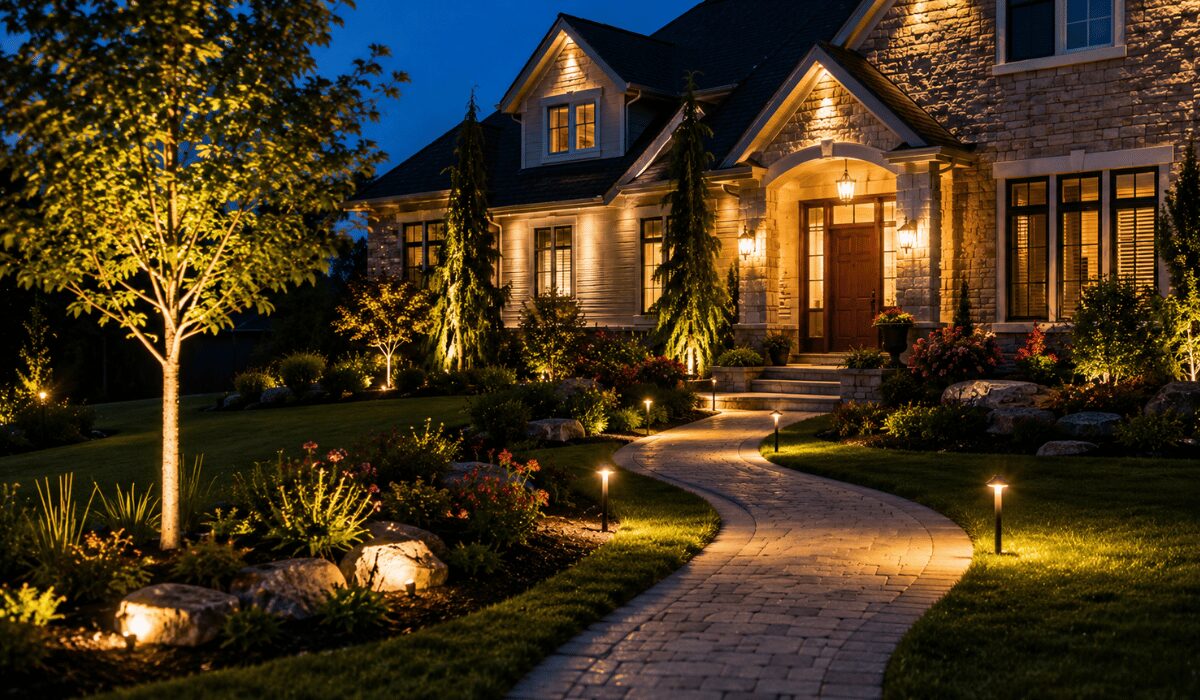
When someone plans to get an outdoor lighting service, they expect the lights to look unique, provide proper illumination, consume less energy, improve the aesthetics of their home or business, and perform better than traditional fixtures.
However, achieving all these benefits is possible when you hire experts who offer professional outdoor lighting installation services in Milton, GA.
They pay attention to every detail and provide a lighting system tailored to the property’s appearance, purpose, and specific needs.
What Is an Outdoor Lighting Service?
An outdoor lighting service involves planning, designing, installing, repairing, upgrading, and maintaining exterior lighting systems.
Professionals use different fixtures and lighting techniques to illuminate walkways, landscaping, architectural features, patios, entrances, and other outdoor areas.
The service can be customized for residential and commercial properties according to their layouts, purposes, and nighttime lighting requirements.
What Does an Outdoor Lighting Service Include?
An outdoor lighting installation service includes much more than placing a few fixtures around a property.
Professionals evaluate the area, create a suitable design, install the system, test its performance, and provide the maintenance required to keep it working properly.
Property and Lighting Assessment
Experts begin by examining the property during the day and, when necessary, after dark.
They identify dark areas, walkways, steps, entrances, landscaping, architectural details, and outdoor spaces that need better illumination.
They may also inspect the existing electrical setup to determine whether it can support the planned lighting system.
Custom Outdoor Lighting Design
Every property has a different layout, so the lighting design should match its specific features and purpose.
Professionals determine fixture placement, brightness, beam direction, and the number of lighting layers required.
They also consider the customer’s preferences and position fixtures carefully to reduce glare and avoid creating excessively bright or dark areas.
Selection of Outdoor Lighting Fixtures
Outdoor lighting fixtures must be able to handle rain, moisture, temperature changes, and regular outdoor exposure.
Professionals recommend suitable fixtures according to the area, intended purpose, lighting effect, and property design.
For example, pathway lights may be used along walkways, while uplights can highlight trees or architectural features.
Low-Voltage Outdoor Lighting Installation
Many external lighting systems use low-voltage power because it is practical for outdoor areas and compatible with energy-efficient LED fixtures.
Installation may include a transformer, underground cables, waterproof connectors, and properly positioned fixtures.
Professional installation helps protect the wiring, maintain reliable connections, and reduce unnecessary disturbance to the existing landscaping.
Outdoor Lighting Controls and Timers
Lighting controls make the system easier to operate and help prevent the lights from remaining on when they are not needed.
Depending on the system, professionals may install timers, photocells, smart controls, or separate lighting zones.
Photocells can activate lights when it becomes dark, while timers and smart controls can follow customized operating schedules.
System Testing and Final Adjustments
Once the fixtures are installed, the system should be tested after dark.
Professionals check fixture alignment, brightness, beam direction, connections, and voltage levels.
They can then reposition fixtures, adjust brightness, and redirect light to reduce glare and create a more balanced appearance.
Outdoor Lighting Maintenance and Repair
Outdoor fixtures can collect dirt, become covered by plants, shift position, or develop wiring and control problems over time.
Maintenance may include cleaning fixtures, trimming nearby growth, repairing damaged wires, replacing failed LEDs, correcting timer settings, and repositioning lights.
Regular system inspections can also help identify small problems before they affect several fixtures.
Outdoor Lighting Replacement and Upgrades
Older outdoor lighting systems may use outdated fixtures, inefficient bulbs, worn connectors, or basic controls.
Professionals can replace these components with LED fixtures, updated transformers, stronger connections, and improved control options.
An upgrade can improve illumination and system performance without requiring every part of the existing system to be replaced.
What Types of Outdoor Lighting Can Be Installed?
 Outdoor lighting can be installed in different areas to improve visibility, highlight property features, and make exterior spaces more useful after dark.
Pathway and Walkway Lighting
Pathway lights illuminate sidewalks, garden paths, and routes between different parts of the property.
They help people see changes in direction and potential obstacles while walking at night.
Architectural and Accent Lighting
Architectural lighting highlights columns, walls, rooflines, textures, and other attractive features.
Accent lighting can also create focal points and add depth to the property after dark.
Garden and Landscape Lighting
Landscape lighting can illuminate trees, flower beds, shrubs, decorative plants, and retaining walls.
Fixtures should be positioned carefully so the light supports the landscape instead of overpowering it.
Deck and Patio Lighting
Deck and patio lighting makes outdoor seating, dining, and entertainment areas more comfortable to use at night.
Lights can be installed around railings, posts, steps, pergolas, and nearby landscaping.
Step Lighting
Step lights provide focused illumination around stairs and changes in elevation.
They can be installed in stair risers, walls, or nearby surfaces to improve visibility without creating excessive brightness.
Driveway and Entrance Lighting
Driveway and entrance lighting helps visitors identify the property, locate parking areas, and approach the entrance more easily.
It can also improve visibility around gates, garage doors, and front walkways.
Pool and Water Feature Lighting
Lighting can highlight pools, fountains, ponds, and other water features.
Fixtures installed near water must be suitable for the environment and selected according to the intended placement.
Commercial Outdoor Lighting
Commercial outdoor lighting may be used around offices, restaurants, retail centers, walkways, signs, entrances, and outdoor customer areas.
The design should consider traffic levels, operating hours, branding, visibility, and ongoing maintenance needs.
What Are the Benefits of Professional Outdoor Lighting Services?
A professionally planned system can provide several practical and visual benefits.
Improve the Appearance of the Property
Outdoor lighting can highlight landscaping, architecture, and other features that may not be visible after sunset.
A balanced design adds depth and creates a more polished nighttime appearance.
Provide Better Visibility at Night
Properly positioned fixtures improve visibility around entrances, driveways, walkways, and dark areas.
This makes it easier for residents, customers, employees, and visitors to move around the property.
Make Walkways and Steps Safer
Lighting helps people notice steps, uneven surfaces, pathway edges, and changes in elevation.
It is especially useful around frequently used walking areas.
Extend the Use of Outdoor Spaces
Decks, patios, gardens, and outdoor dining areas can remain useful after daylight hours when they have suitable lighting.
Different lighting zones can also provide the required illumination for relaxing, dining, or entertaining.
Reduce Energy Consumption With LED Lighting
LED fixtures typically use less electricity and last longer than many traditional outdoor bulbs.
Timers, photocells, and smart controls can further reduce unnecessary energy use by operating the lights only when required.
What Is the Difference Between Residential and Commercial Outdoor Lighting Services?
Residential outdoor lighting usually focuses on appearance, personal comfort, walkways, landscaping, patios, and home entrances.
Commercial lighting may cover larger properties with higher traffic levels, longer operating schedules, signs, customer areas, and multiple access points.
Commercial systems may also require more fixtures, larger transformers, separate lighting zones, and more frequent maintenance.
In both cases, the design should reflect the property’s purpose and actual lighting needs.
How Long Does an Outdoor Lighting Installation Take?
The time required depends on the property size, number of fixtures, wiring requirements, site accessibility, and system complexity.
A smaller project may be completed relatively quickly, while a large residential or commercial system can take longer.
Existing landscaping, hard surfaces, electrical upgrades, and weather conditions may also affect the project schedule.
How Much Does an Outdoor Lighting Service Cost?
The cost of an outdoor lighting service depends on the scope and requirements of the project.
Important pricing factors include:
- Property size
- Number and type of fixtures
- Wiring requirements
- Transformer size
- Lighting controls
- Installation complexity
- Repair or maintenance requirements
A detailed property assessment helps the provider prepare an estimate based on the actual work instead of using a general price that may not fit the project.
Conclusion
An outdoor lighting service may include everything from the initial property assessment and custom design to installation, testing, repairs, upgrades, and maintenance.
Professional planning helps ensure that every fixture serves a purpose and complements the property.
With proper installation and regular care, an exterior lighting system can provide better visibility, improved appearance, and reliable long-term performance.
Why Choose Professional Outdoor Lighting Services in Milton, GA?
Properties in Milton may have large yards, long driveways, mature landscaping, patios, walkways, and distinctive architectural features.
A locally planned lighting system can account for these details while providing the appropriate illumination for each area.
NightVision Outdoor Lighting provides customized outdoor lighting installation services based on the property’s layout, appearance, landscaping, and nighttime lighting needs.
Frequently Asked Questions
Are LED lights suitable for outdoor lighting?
LED lights are suitable when the fixtures and components are designed for outdoor use.
They consume less power, have a long operating life, and are available in different brightness levels and color temperatures.
Can outdoor lighting be installed around existing landscaping?
Yes, professionals can plan fixture and cable placement around existing trees, plants, flower beds, and hardscapes.
Careful installation helps limit disturbance to the landscape.
How often should an outdoor lighting system be inspected?
The inspection schedule depends on the system, property conditions, and surrounding plant growth.
An inspection at least once a year and after major landscaping or storm-related changes can help identify fixtures that need cleaning, repair, or repositioning.