
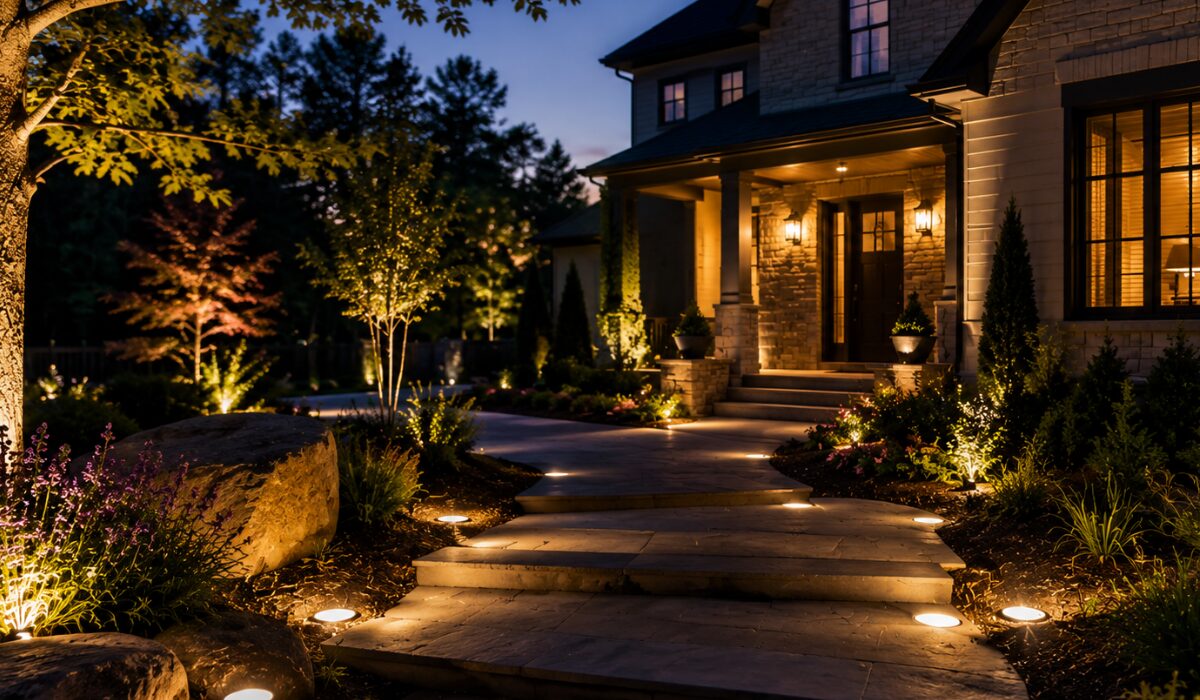
Landscape lighting can completely change how your Atlanta home looks and feels after dark.
The right lighting system can enhance your home’s exterior, highlight landscaping, improve visibility, and make outdoor spaces more welcoming.
However, choosing landscape lighting is not simply about selecting attractive fixtures. Different homes require different lighting solutions based on their architecture, landscape, outdoor spaces, and personal preferences.
With so many options available, understanding what each type offers can help you create a balanced and cohesive lighting design that complements your property rather than overwhelming it.
What Does Landscape Lighting Look Like?
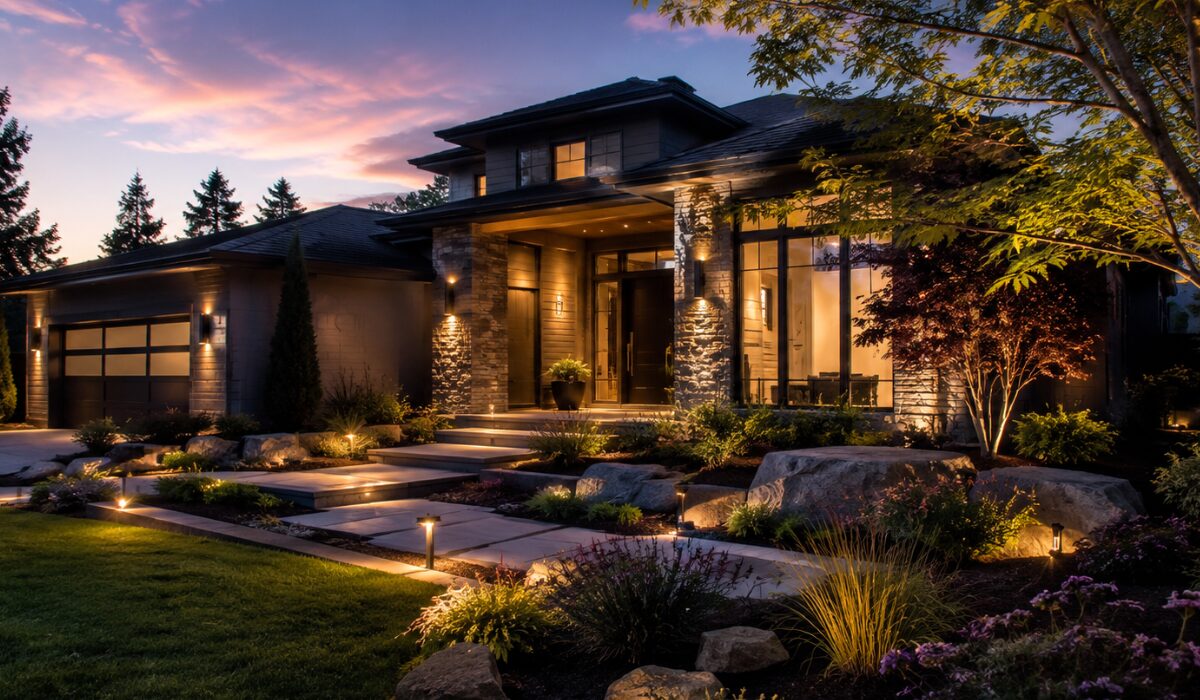 Landscape lighting can give a home a soft, warm, and inviting appearance after dark.
Depending on the design, the light may create a subtle glow across the landscape, add gentle illumination around outdoor areas, or make certain parts of the property stand out.
A well-designed landscape lighting system typically creates a balanced look rather than making the entire property equally bright.
Some areas may appear softly illuminated, while others remain naturally darker, creating contrast and depth.
During the day, landscape lighting fixtures can either blend quietly into the surroundings or complement the property’s exterior design.
At night, the focus shifts to the light itself and the way it enhances the overall appearance of the home and landscape.
What Types of Landscape Lighting Can You Choose From?
Landscape lighting comes in many styles, and each type is suited to a different purpose. Understanding these options is the first step toward identifying what your home actually needs.
Spotlights and Uplights
Spotlights create focused illumination and are commonly used to draw attention to specific features.
They can be positioned to illuminate mature trees, columns, stonework, sculptures, or distinctive architectural details.
The beam width matters because a narrow beam can create a concentrated effect, while a wider beam can cover a larger feature.
Path and Area Lights
Path lights are commonly used along outdoor routes, garden borders, and entry areas. They provide practical illumination while also helping define the landscape.
Area lights offer broader coverage and may be suitable when you need more general illumination. Since these fixtures are often visible, their style should complement your home’s exterior.
In-Ground and Well Lights
In-ground lighting is designed to sit flush with or below the ground surface. It is a popular choice for homeowners who prefer a clean appearance with minimal visible fixtures.
These lights can be used to illuminate trees from below, highlight architectural features, or add subtle light around hardscaping.
They are particularly useful when the fixture itself should not become a prominent part of the design.
Wall-Wash Lighting
Wall-wash fixtures spread light across a broader surface rather than concentrating it in one narrow beam. They can be used to highlight exterior walls, fences, stonework, or other large features.
This approach can emphasize texture and create a more even appearance across a surface.
Hardscape Lighting
Hardscape lights are designed to integrate with built elements such as retaining walls, patios, outdoor kitchens, and other structures.
Because they can often be concealed beneath edges or ledges, they provide illumination without adding prominent fixtures to the landscape.
Deck and Step Lighting
Deck and step lights are designed for areas where people move between different levels or spend time outdoors.
They can provide practical visibility while contributing to the overall atmosphere of the space.
Floodlights
Floodlights provide broad illumination and are useful when a larger area needs to be covered.
However, they need to be positioned carefully because excessive brightness can create glare and overpower more subtle landscape lighting.
Decorative Lighting
Decorative fixtures, such as lantern-style lights or string lighting, can become part of the visual design.
They may be suitable for patios, entertaining areas, and outdoor spaces where creating a particular atmosphere is a priority.
How Do You Choose the Right Landscape Lighting for Your Atlanta Home?
The best place to start is not with the fixture. Start with the reason you want landscape lighting.
Ask yourself what you want to achieve. Do you want to highlight your home’s architecture? Make an outdoor space more comfortable? Bring attention to landscaping? Improve visibility? Create a more welcoming appearance?
Your answer will help determine which type of lighting makes sense.
For example, a homeowner with mature trees may benefit from uplighting, while someone with a large stone wall may prefer wall-wash or carefully positioned accent lighting.
If outdoor entertaining is the priority, the design may focus more on comfortable illumination around patios and seating areas.
The right lighting should solve a specific need rather than simply add more fixtures to the property.
How Can You Differentiate Between Landscape Lighting Options?
With so many products available, it can be difficult to know which option is actually right for your property. Consider these factors before making a decision.
Consider the Purpose
Every fixture should have a reason for being there.
Some lights are intended to highlight a feature, while others provide general or functional illumination. If you know the purpose first, it becomes easier to select the appropriate fixture.
Look at Beam Spread
Beam spread determines how widely light travels from a fixture.
A narrow beam may be suitable for highlighting a particular tree or architectural detail. A wider beam may work better for a wall or larger landscape feature.
Choosing the wrong beam can result in uneven lighting or unwanted spill.
Think About Brightness
More brightness does not necessarily mean a better design.
If every area is brightly illuminated, the landscape can lose the contrast that gives it depth. A combination of brighter accents and softer illumination often creates a more balanced appearance.
Check the Color Temperature
Color temperature affects whether the light appears warm or cool.
Warm white is commonly used in residential landscape lighting because it creates a comfortable, welcoming appearance.
The right temperature should also work with your home’s exterior materials and the overall style of your property.
Consistency is important. Using noticeably different light colors in the same area can make the design appear disconnected.
Decide How Visible You Want the Fixtures to Be
Some homeowners want lighting fixtures to complement the landscape, while others prefer them to remain almost invisible.
If you prefer a discreet appearance, in-ground, well, and concealed hardscape fixtures may be appropriate.
If you want fixtures to contribute to the design, decorative path or lantern-style options may be a better fit.
Consider the Overall Design
Individual fixtures should not be selected in isolation. Think about how the entire property will look when the system is turned on.
The lighting should create a natural flow between the home, landscape, and outdoor living areas rather than making each feature look separately illuminated.
Should You Choose LED Landscape Lighting?
LED landscape lighting is widely used in residential applications because it offers energy-efficient operation and long service life.
However, choosing LED does not automatically guarantee a good lighting design. Fixture quality, brightness, color temperature, beam spread, and placement still influence the final appearance.
If you are upgrading an existing system, an experienced professional can evaluate whether replacing fixtures, improving placement, or updating controls would make sense for your property.
What About Low-Voltage Landscape Lighting?
Low-voltage lighting is commonly used in residential landscape applications. These systems typically use a transformer to reduce standard electrical voltage for the lighting system.
For homeowners, the important consideration is not simply choosing a system based on voltage. The right setup depends on the size of the property, the number of fixtures, the desired design, and installation requirements.
A professional can determine what approach is appropriate for your home’s landscape and lighting goals.
Illuminate Your Atlanta Home With the Right Landscape Lighting
The right landscape lighting balances appearance, function, and your property’s character.
From subtle in-ground fixtures and architectural accents to path and outdoor living lights, each option can enhance your home’s exterior in a unique way.
At NightVision Outdoor Lighting, we can create a landscape lighting plan tailored to your Atlanta home’s architecture, landscape, and outdoor spaces. Contact us today to explore the right lighting options for your property.
FAQs
What type of landscape lighting is best for highlighting trees?
Uplighting is commonly used to highlight trees because it directs illumination upward from the ground. The right fixture and beam spread depend on the tree’s size, shape, and distance from the fixture.
How can I make my landscape lighting look natural?
Avoid using the same brightness everywhere. Combining focused accents with softer illumination and positioning fixtures carefully can create a more natural appearance.
Is warm or cool lighting better for a home’s landscape?
Warm white lighting is often preferred for residential landscapes because it creates a softer and more welcoming appearance. The best option should also complement your home’s exterior materials.
Can landscape lighting be installed without changing my landscaping?
In many cases, lighting can be added to an established landscape. However, existing plants, irrigation, hardscaping, and underground conditions may affect fixture placement and installation.
How do I stop landscape lighting from creating glare?
Proper fixture placement, aiming, shielding, and beam selection can help reduce glare. A professional can also evaluate the lighting from different viewing angles before finalizing the design.
Can I combine different types of landscape lighting?
Yes, combining fixture types can help address different needs across the property. For example, accent lighting may highlight architecture while other fixtures provide softer illumination in outdoor living areas.
How long does landscape lighting typically last?
The lifespan depends on the fixture quality, lighting technology, installation, and maintenance. LED systems generally offer long operating life, while regular inspections can help identify problems before they affect the entire system.