
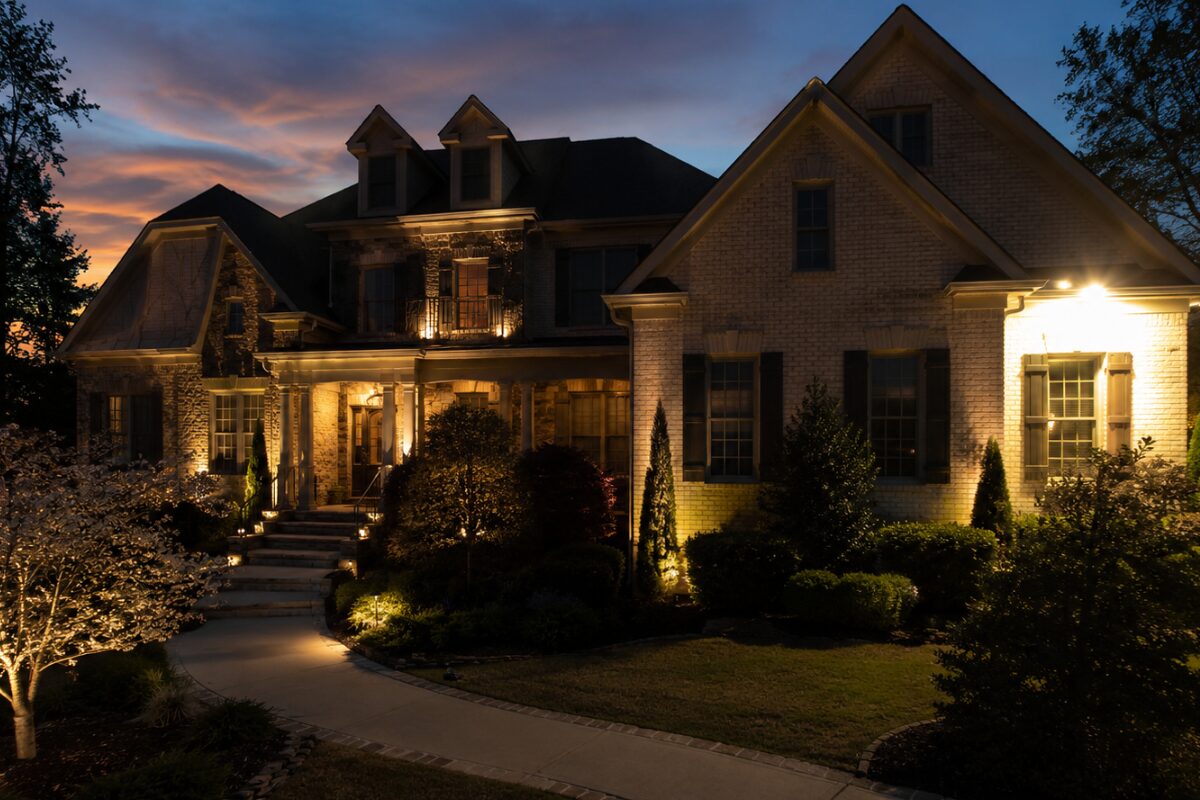
Residential outdoor lighting companies often hear the same concern from Atlanta homeowners: “We added lights outside, but the home still does not look the way we expected.”
The fixtures may be working. The bulbs may be bright. The walkway may be visible. But the overall look can still feel uneven, harsh, flat, or incomplete.
That is because the biggest outdoor lighting mistake is not always choosing the wrong fixture or installing too few lights.
The real mistake is treating outdoor lighting as separate pieces instead of one complete design system.
Many homeowners add lights only when they notice a problem. A porch looks too dark, so they replace the porch light. A walkway feels unsafe, so they add path lights.
A backyard feels unused after sunset, so they add a few fixtures near the patio. A tree or garden bed disappears at night, so they add accent lights.
Each decision makes sense on its own, but the final result can feel disconnected when there is no full plan behind it.
Good outdoor lighting should do more than make a property brighter. It should guide the eye, improve comfort, highlight the right architectural features, support safety, and make the home feel warm and welcoming after dark.
For Atlanta homeowners, this matters because outdoor spaces are often part of daily living. Front porches, patios, decks, walkways, driveways, gardens, and backyards all deserve lighting that feels intentional.
When outdoor lighting is planned correctly, the home does not simply become brighter. It becomes more beautiful, more usable, and more inviting.
Why Outdoor Lighting Goes Wrong Even When Homeowners Mean Well
Most outdoor lighting problems begin with good intentions. Homeowners want their property to look better at night.
They want guests to find the front door easily. They want steps and pathways to feel safer. They want the backyard to be more enjoyable in the evening.
These are all valid reasons to invest in outdoor lighting. The problem starts when lighting is added without considering the full property.
A single bright light may solve one dark area while creating glare in another. A row of path lights may make the walkway visible, but it may not improve curb appeal.
A floodlight may make the driveway brighter, but it can make the exterior feel harsh and uncomfortable.
Outdoor lighting works best when every fixture has a clear purpose. Each light should support the way the homeowner uses the property and the way the home should look at night. Without that design approach, the result can feel random.
This is why experienced residential outdoor lighting companies focus on more than installation.
They look at the home’s architecture, landscape, outdoor living areas, walking paths, driveway, entry points, fixture placement, beam angles, brightness levels, and long-term maintenance needs.
The goal is not to add as many lights as possible. The goal is to create the right effect with the right design.
The Main Mistake Is Ignoring the Full Lighting Plan
The most common outdoor lighting mistake is installing fixtures before creating a plan. Many homeowners start with the product first.
They choose lights they like, place them where space is available, and hope the final look comes together.
A better approach begins with the property itself. The design should answer several important questions before fixtures are selected. Which areas need better visibility?
Which features should be highlighted? Where do people walk at night? Which parts of the home should stand out from the street?
Which areas need a softer glow for comfort? Which lights may create glare if placed incorrectly?
When these questions are skipped, even expensive fixtures can produce disappointing results. The home may look too bright in one area and too dark in another. The front elevation may lose depth. The landscape may look flat.
The backyard may still feel uncomfortable. In some cases, the lighting may draw attention to the wrong features while leaving the best parts of the property hidden.
A complete lighting plan helps prevent these issues. It creates balance between beauty, safety, function, and comfort. It also helps homeowners avoid wasting money on fixtures that do not solve the real problem.
Why More Lights Do Not Always Mean Better Lighting
 One of the biggest misunderstandings about outdoor lighting is the idea that more lights automatically create a better result. In reality, too many lights can make a home look worse.
Outdoor lighting depends on contrast. The eye needs a balance of light and shadow to understand depth, shape, and texture.
If every surface is lit with the same brightness, the home can look flat. Brick, stone, siding, columns, trees, shrubs, and garden beds may lose their natural detail.
Overlighting can also make outdoor spaces less comfortable. A patio that is too bright may feel exposed instead of relaxing.
A walkway with overly bright path lights may create glare. A backyard filled with competing fixtures may feel busy instead of peaceful.
The best outdoor lighting design uses control. A carefully placed uplight can make a tree look elegant. A soft wash of light can bring warmth to a wall.
A subtle path light can guide guests without overpowering the landscape. The right design often uses fewer fixtures than homeowners expect, but places them with much more purpose.
This is where working with residential outdoor lighting companies can make a major difference.
A professional design helps determine how much light is actually needed, where it should go, and how it should interact with the rest of the property.
What Outdoor Lighting Should Atlanta Homeowners Avoid?
Many homeowners search for what outdoor lighting to avoid because they know something about their exterior does not feel right.
The answer usually comes down to harsh brightness, poor placement, wrong color temperature, or fixtures that do not fit the home.
Atlanta homeowners should avoid lights that shine directly into the eyes.
Outdoor lighting should create a visible effect on a walkway, wall, tree, garden, step, or architectural feature. Guests should notice the glow and improved visibility, not the bare bulb.
Homeowners should also avoid using one bright floodlight as the main lighting solution.
Floodlights can be useful in specific areas, but they should not replace a thoughtful outdoor lighting plan. When a floodlight does all the work, the home can feel harsh, flat, and uninviting.
Another common mistake is using lighting that is too cool in color. Cool blue-white lighting can make a residential property feel cold or commercial if it is not used carefully.
Warmer tones often create a softer, more welcoming appearance for homes, landscapes, patios, porches, and garden areas.
Homeowners should also avoid placing path lights too close together in a straight line.
This creates a runway effect that can look unnatural. Walkway lighting should guide movement while blending into the landscape.
The most important thing to avoid is choosing fixtures without a design purpose. A fixture may look attractive during the day, but the real test is how it performs at night.
How to Plan Landscape Lighting the Right Way
Planning landscape lighting starts with understanding how the home looks and functions after sunset.
Daytime decisions are not enough because shadows, angles, and visibility change completely at night.
The first step is to walk around the property in the evening. Look at where the home feels too dark, where guests may have trouble walking, where the architecture disappears, and where outdoor living areas feel underused.
This helps identify the real problems that lighting needs to solve. Next, decide which features deserve attention. Not everything should be lit.
Strong outdoor lighting design is selective. A beautiful tree, stone column, front entry, garden bed, textured wall, or pathway curve may become a focal point. Other areas may need to stay softer so the design has depth.
Then, the lighting type should be matched to the purpose. Path lights help guide movement. Uplights can highlight trees and architectural features.
Downlights can create a natural moonlight effect. Step lights improve visibility on stairs. Accent lights add detail and depth. Deck and patio lights help outdoor spaces feel more usable.
This is also where home accent lighting becomes important. Home accent lighting is not just decoration. It helps create the mood and character of the exterior. It can make a home feel elegant, warm, and finished after dark.
A local home exterior lighting company can help design this plan around Atlanta homes, local landscapes, seasonal growth, outdoor living habits, and long-term system performance.
The Color Temperature Mistake That Changes the Whole Look
Color temperature is one of the most overlooked parts of outdoor lighting.
Many homeowners focus on fixture style and brightness, but the color of the light can change the entire mood of the home.
Warm white lighting usually works well for residential exteriors because it feels comfortable and natural. It brings out the texture of brick, stone, wood, plants, and architectural details.
It also helps the exterior feel connected to the warm light coming from inside the home.
Cooler lighting can sometimes work in modern settings, but it must be used carefully. If the light is too cool, the home may feel harsh or commercial.
When different color temperatures are mixed across the property, the result can feel uneven. One side of the home may look warm while another feels cold or blue.
Consistency matters. Porch lights, path lights, accent lights, deck lights, and garden lights should feel like they belong together. Even if each fixture looks good individually, the full exterior can look unplanned if the color temperatures do not match.
A professional outdoor lighting plan considers color from the beginning.
This helps create a cohesive look across the front yard, backyard, driveway, walkways, and outdoor living spaces.
Poor Fixture Placement Can Ruin Good Outdoor Lights
Even high-quality fixtures can look bad if they are placed incorrectly. Placement affects glare, shadows, brightness, safety, and overall curb appeal.
A light placed too close to a wall may create a bright hot spot instead of a smooth glow. An uplight placed too close to a tree may light only the trunk and leave the canopy dark.
A path light placed at the wrong angle may shine into someone’s eyes instead of onto the walkway. A deck light installed without considering seating areas may create glare where people are trying to relax.
Good placement requires experience and nighttime adjustment. Outdoor lighting is not just about where a fixture fits in the ground.
It is about how the beam spreads, what surface it touches, how bright it feels, and whether it supports the full design.
This is one reason homeowners should be careful when comparing residential outdoor lighting companies.
The right company should understand both the technical and visual side of lighting. Installation quality matters, but design judgment matters just as much.
Outdoor Lighting Should Support Safety Without Looking Harsh
Safety is one of the main reasons homeowners invest in outdoor lighting.
Dark steps, uneven walkways, side yards, driveways, and entry points can make a property feel uncomfortable at night. However, safety lighting does not need to be harsh.
A common mistake is assuming that brighter lighting automatically means safer lighting. In reality, glare can make it harder to see.
When a light shines directly into the eyes, it can reduce visibility and create strong shadows nearby.
Better safety lighting is controlled and well placed. Steps should be visible without being overpowered. Walkways should have enough light to guide movement comfortably.
Entry areas should feel welcoming, not exposed. Driveways and side yards should have visibility without flooding the entire property.
The best outdoor lighting improves safety while preserving the beauty of the home. It helps people move confidently without making the property feel like a commercial space.
Why Outdoor Lighting Maintenance Matters
Another mistake homeowners make is thinking outdoor lighting is a one-time project.
Even the best system needs occasional maintenance to keep performing well.
Outdoor fixtures are exposed to heat, rain, soil, mulch, irrigation, lawn equipment, insects, pollen, and plant growth.
Over time, fixtures can shift, lenses can become dirty, wires can loosen, and plants can block beams.
A system that looked balanced when it was installed may begin to look dim, uneven, or incomplete.
Maintenance is especially important for home accent lighting because small changes can affect the entire look.
If a fixture aimed at a tree is blocked by new growth, the focal point disappears. If a path light gets knocked out of position, it may create glare or leave part of the walkway dark.
A dependable local home exterior lighting company should be able to help with repairs, adjustments, upgrades, and routine service. This protects the homeowner’s investment and keeps the system looking the way it was designed to look.
Why Atlanta Homeowners Choose NightVision Outdoor Lighting
NightVision Outdoor Lighting helps Atlanta homeowners create outdoor lighting systems that are beautiful, practical, and built around the way they use their homes. Our team looks beyond individual fixtures and focuses on the complete nighttime experience.
We design lighting for curb appeal, walkways, entryways, patios, decks, gardens, driveways, architectural features, and outdoor living areas.
Whether your current system feels too dark, too bright, outdated, damaged, or disconnected, we can help create a better solution.
As a local home exterior lighting company, NightVision Outdoor Lighting understands how Atlanta homeowners use their outdoor spaces.
We also understand the importance of reliable fixtures, careful placement, proper brightness, warm visual appeal, and long-term maintenance.
Our services include outdoor lighting design, installation, repair, replacement, upgrades, maintenance, and home accent lighting solutions.
The goal is not just to add light. The goal is to create a system that makes your home look better, feel safer, and function more comfortably after dark.
Conclusion
The outdoor lighting mistake most Atlanta homeowners do not realize they are making is treating lighting as separate fixtures instead of one complete design.
This mistake can lead to glare, dark gaps, uneven color, poor curb appeal, and outdoor spaces that still feel uncomfortable at night.
Better outdoor lighting starts with a plan. Every fixture should have a purpose.
Every beam should support the overall look. Every area should feel connected, from the front walkway to the backyard patio.
When outdoor lighting is designed correctly, your home does not need to be the brightest property on the street. It needs to feel warm, balanced, welcoming, and intentional.
Create a Better Nighttime Look With NightVision Outdoor Lighting
If your outdoor lighting feels uneven, outdated, harsh, dim, or unfinished, NightVision Outdoor Lighting can help.
Our team provides professional outdoor lighting design, installation, repair, replacement, upgrades, maintenance, and home accent lighting for Atlanta homeowners.
Contact NightVision Outdoor Lighting today to arrange your meeting and see how a thoughtful lighting design can transform your home after dark.
Frequently Asked Questions
What is the most common outdoor lighting mistake homeowners make?
The most common mistake is installing lights without a complete design plan. Many homeowners add fixtures one area at a time, which can create glare, dark gaps, and uneven brightness. A full lighting plan helps every fixture work together.
What outdoor lighting should I avoid?
Avoid lights that are too bright, aimed directly into the eyes, or placed without a clear purpose. Homeowners should also avoid mixing too many color temperatures. Outdoor lighting should feel warm, balanced, and comfortable.
How do I plan landscape lighting for my home?
Start by walking around your property at night and identifying dark areas, safety concerns, and features worth highlighting. Then match each area with the right type of lighting. A professional design helps create a balanced look across the full property.
Why does my outdoor lighting look harsh?
Outdoor lighting often looks harsh when fixtures are too bright, poorly aimed, or placed too close to the surface they are lighting. Harsh lighting can also happen when one floodlight is used instead of layered lighting. Better placement and softer brightness usually improve the result.
Is home accent lighting only for curb appeal?
Home accent lighting improves curb appeal, but it also makes outdoor spaces feel more complete and enjoyable. It can highlight trees, stonework, columns, gardens, and architectural details. When designed well, it adds warmth, depth, and character.
Can too many outdoor lights make my home look worse?
Yes, too many lights can wash out the home and remove the contrast that makes outdoor lighting attractive. Overlighting can make a property look flat or uncomfortable. A better design uses the right fixtures in the right places.
Why should I hire a local home exterior lighting company?
A local home exterior lighting company understands Atlanta homes, landscapes, weather, and outdoor living needs. Local experience helps with design, placement, repairs, and maintenance. It also makes future service easier and more reliable.
How often should outdoor lighting be maintained?
Outdoor lighting should be checked regularly, especially after storms, landscaping changes, or seasonal growth. Fixtures may shift, lenses may get dirty, and plants may block the light. Routine maintenance keeps the system balanced and reliable.
What makes NightVision Outdoor Lighting different from other residential outdoor lighting companies?
NightVision Outdoor Lighting focuses on complete lighting solutions instead of simply adding fixtures. Our team considers design, safety, curb appeal, placement, repairs, upgrades, and maintenance. The result is outdoor lighting that fits your Atlanta home and performs beautifully over time.