
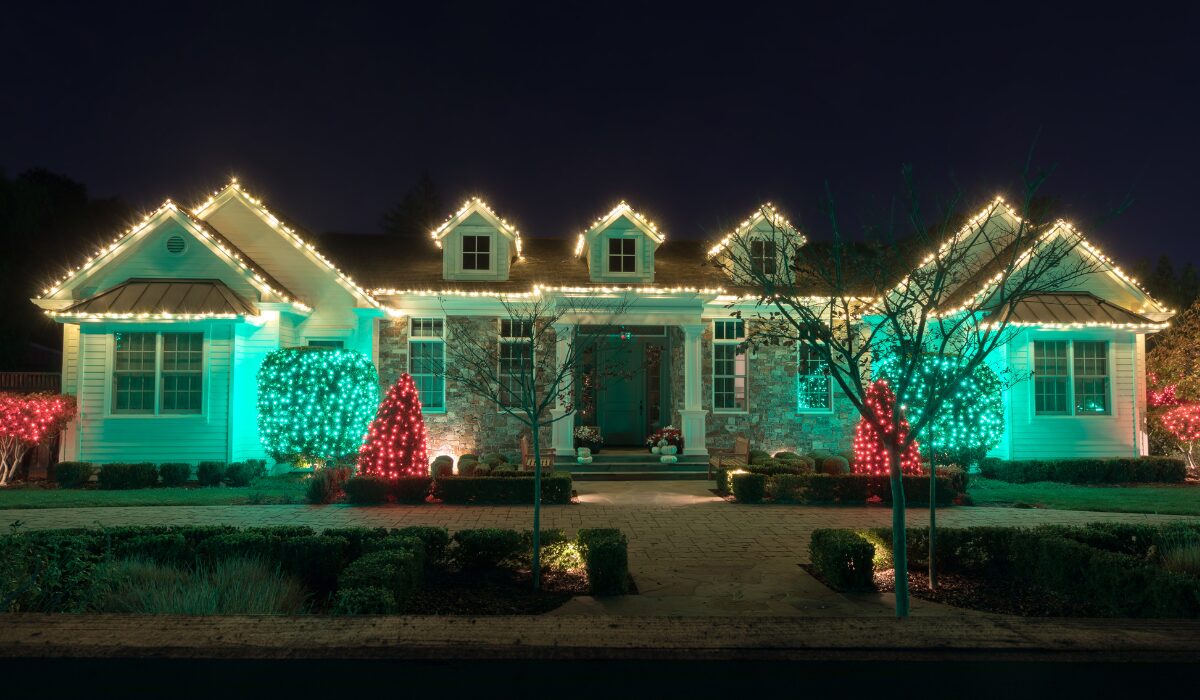
Recessed driveway lighting with core drilling creates a clean, durable, and visually refined way to illuminate driveways without disrupting the structure or surface flow.
Instead of surface-mounted fixtures that sit above grade, recessed systems become part of the driveway itself.
These systems focus on delivering guidance lighting that is subtle, functional, and built to perform under real-world conditions like vehicle traffic, weather exposure, and long-term use.
Recessed Driveway Lighting as a Structural Design Element
Recessed driveway lighting is more than an exterior lighting upgrade.
It functions as an architectural component integrated directly into concrete, pavers, or asphalt.
By sitting flush with the surface, recessed driveway lights avoid visual clutter while providing consistent illumination along edges, transitions, and drive paths.
Because the fixture housing is embedded rather than attached, the lighting system behaves differently under pressure, moisture, and temperature changes.
This is where core drilled lighting for driveways plays a defining role in overall performance.
Why Core Drilling Is Central to Recessed Driveway Lighting
Core drilling is a precision technique that removes a cylindrical section of material without cracking or weakening the surrounding surface.
For recessed driveway lights, this process ensures an exact opening that matches the fixture housing diameter and depth.
Compared to rough drilling or surface cutting, driveway lighting with core drilling maintains the driveway’s load distribution while allowing the light to sit perfectly flush.
This accuracy minimizes movement, prevents edge fractures, and creates a tight seal that supports long-term durability.
Core drilling offers broader advantages beyond driveway applications, which is why many homeowners consider core drilled lighting a perfect outdoor upgrade for long-term performance and clean integration.
Many homeowners researching how to install recessed driveway lights focus on fixture placement first, but long-term results depend heavily on the quality of the opening and fit.
This is why landscape lighting core drilling is often used when the goal is stability, clean alignment, and consistent performance in hardscape surfaces.
How Driveway Materials Respond to Core Drilling
Different driveway materials require different considerations, and recessed driveway lighting adapts well across surfaces when installed with precision.
Concrete Driveways
Concrete benefits from core drilling because it avoids stress fractures that can form from impact drilling.
A clean core preserves structural integrity and keeps the surrounding slab stable under repeated vehicle use, which supports long-term recessed lighting for pavement applications.
Paver Driveways
With pavers, core drilling allows recessed lights to align cleanly with the layout while maintaining the bedding layers beneath.
This prevents uneven settling and keeps the lighting pattern visually consistent across the driveway surface.
Asphalt Driveways
Asphalt requires careful depth control due to its flexibility.
Core drilling allows recessed fixtures to be anchored securely without deforming the surrounding surface during temperature changes.
Load Performance and Flush-Mount Stability
Flush mount driveway lighting is engineered to function as an extension of the driveway surface rather than a surface attachment.
By sitting level with the finished grade, these fixtures distribute weight evenly across the housing and into the surrounding material instead of concentrating pressure on raised edges.

This structural integration is essential for driveways that experience frequent vehicle traffic.
Key performance advantages of flush-mounted recessed driveway lighting include:
- Even load distribution across the entire fixture housing rather than isolated stress points
- Reduced surface fatigue caused by repeated rolling vehicle loads
- Improved resistance to cracking in surrounding concrete or paver materials
- Stable alignment over time, even under daily use
Drive-over rated recessed lights are specifically engineered to handle both static and dynamic forces.
Static loads occur when vehicles are parked directly over fixtures, while rolling loads are created as tires move across the surface.
Flush-mounted designs allow these forces to disperse laterally through the fixture body and into the driveway base, reducing long-term strain on internal components.
From a structural perspective, recessed driveway fixtures are designed with:
- Reinforced housings that maintain shape under compression
- Impact-resistant lenses capable of withstanding repeated contact
- Low-profile geometries that prevent edge lifting or surface displacement
Precision core drilling directly supports these load-bearing characteristics.
A properly sized and perfectly round core creates full contact between the fixture housing and the surrounding material.
This eliminates voids that could otherwise allow movement, vibration, or uneven settling.
Additional stability benefits provided by precision core drilling include:
- Uniform support around the entire housing circumference
- Minimized vibration transfer from passing vehicles
- Reduced risk of housing deformation under pressure
- Consistent surface flushness throughout seasonal expansion and contraction
Flush-mounted recessed lighting also avoids shear forces that commonly affect surface-mounted fixtures.
Because there is no protrusion above the driveway plane, tires pass smoothly over the light without catching edges or applying lateral stress.
This seamless transition significantly improves long-term durability while preserving the integrity of both the lighting system and the driveway surface.
Water Management and Long-Term Protection
Moisture is one of the most common challenges for outdoor recessed lighting installation.
Precision core drilling allows for controlled sealing around the fixture housing, limiting water intrusion.
Proper depth and fit also support drainage pathways beneath the light, preventing standing water from collecting around electrical components.
This is especially important in climates with frequent rain or freeze-thaw cycles.
Driveway Lighting Design Patterns That Enhance Function
Recessed driveway lights are most effective when design logic guides placement rather than decoration alone.
The right pattern improves visibility and reinforces the benefits of recessed driveway lighting, especially on long driveways or properties with elevation changes.
To see how recessed driveway lighting patterns translate into real-world installations, explore our recessed lighting gallery showcasing flush-mounted designs integrated into a variety of driveway surfaces.
Edge Guidance Lighting
Installing recessed lights along driveway edges improves nighttime navigation without overwhelming the space.
This approach subtly defines boundaries while preserving a clean look and strengthens outdoor lighting for driveways where vehicles and pedestrians share the same route.
Transition and Threshold Lighting
Recessed fixtures near garage entrances or driveway-to-street transitions help drivers visually adjust to changing surfaces and elevations.
Rhythm-Based Layouts
Instead of rigid spacing, rhythm-based patterns use visual flow to guide movement.
This technique works well for curved or extended driveways, creating balance without repetition.
Light Output, Beam Control, and Visual Comfort
Outdoor recessed LED driveway lights are designed to cast controlled light across pavement rather than upward into the eye line.
Beam angle selection plays a key role in reducing glare while maintaining visibility.
Lower-profile illumination improves safety without distracting drivers or drawing unnecessary attention.
When balanced correctly, recessed lighting enhances awareness while remaining visually calm.
Color Temperature and Surface Reflection
Driveway surfaces reflect light differently depending on material and finish.
Neutral and warm tones often work best for recessed driveway lighting, as they soften contrast and reduce harsh reflections.
Concrete surfaces benefit from warmer light to avoid glare, while darker pavers may require slightly higher output to maintain clarity without brightness spikes.
Electrical Configuration and System Reliability
Low-voltage recessed driveway lights are commonly used for safety and efficiency.
Wiring is routed beneath the surface with stress relief at entry points to prevent wear over time.
Because recessed fixtures are exposed to constant pressure, cable management and housing protection are essential for maintaining consistent performance throughout the system’s lifespan.
This approach supports stable, long-term outdoor recessed lighting installation without frequent adjustments.
Longevity Factors That Influence Performance
Several elements determine how well recessed driveway lighting holds up over time:
- Housing materials that resist corrosion and compression
- Lens thickness designed for drive-over conditions
- Thermal expansion allowances that prevent cracking
- Precision drilling that maintains alignment year after year
When these factors work together, recessed lighting becomes a long-term feature rather than a recurring maintenance concern.
Maintenance Expectations for Recessed Driveway Lighting
Recessed systems generally require minimal upkeep because the fixtures are protected within the driveway surface.
Periodic lens cleaning helps maintain light clarity, especially in areas exposed to dirt or debris.
Seasonal inspections can confirm that seals remain intact and drainage paths are clear, ensuring consistent performance without frequent intervention.
Common Misunderstandings About Recessed Driveway Lighting
Some assume recessed fixtures are decorative only, but they serve a clear functional role in guiding vehicles and pedestrians.
Others worry about durability, despite modern load-rated designs engineered for constant use.
Concerns about cracking are often linked to improper installation methods rather than recessed lighting itself.
Core drilling driveway lighting addresses these issues by protecting the surrounding surface and supporting true flush performance.
Conclusion
Recessed driveway lighting with core drilling offers a refined balance between structural integrity, visual simplicity, and long-term reliability.
By embedding lighting directly into the driveway surface, this approach delivers subtle guidance, enhanced safety, and a clean architectural finish.
Precision installation ensures the system performs consistently under traffic, weather, and time, making recessed driveway lighting a smart and lasting exterior solution.
Ready to Light Your Driveway with Recessed and Core Drilled Lighting?
If you are exploring ways to elevate your driveway with lighting that is both functional and seamlessly integrated, consider how recessed systems can redefine nighttime visibility.
Connect with our team at NightVision Outdoor Lighting to explore design options, layout strategies, and lighting solutions tailored to your outdoor space.
For projects requiring precision and consistency, our professional driveway lighting installation ensures recessed fixtures remain stable, sealed, and visually aligned over the long term.
FAQs
Can recessed driveway lights handle daily vehicle traffic?
Yes, properly designed recessed driveway lights are built with load-rated housings that withstand regular vehicle use. When installed flush with precision drilling, pressure is distributed evenly across the fixture. This prevents movement and surface damage over time.
Does core drilling weaken the driveway structure?
Precision core drilling removes material cleanly without creating cracks or stress fractures. When done correctly, it preserves the surrounding surface and maintains overall structural strength. This method is far less invasive than rough cutting or impact drilling.
How deep are recessed driveway lights typically installed?
Depth depends on fixture design and driveway material, but recessed lights are installed deep enough to sit flush while allowing space for housing and wiring. Accurate depth control is essential for stability and sealing.
Do recessed driveway lights trap water?
No, recessed fixtures are designed with sealing and drainage considerations in mind. Proper installation allows moisture to move away from the housing, reducing the risk of water buildup around electrical components.
Are recessed driveway lights visible during the day?
Because they sit flush with the surface, recessed lights remain visually discreet in daylight. They do not interrupt the driveway’s appearance or draw attention when not illuminated.
What type of lighting works best for recessed driveway applications?
LED technology is commonly used due to its energy efficiency, durability, and consistent output. LEDs also perform well in low-profile fixtures designed for drive-over conditions.
Can recessed driveway lighting be used on curved driveways?
Yes, recessed lighting works well on curved layouts when spacing follows the natural flow of the driveway. Rhythm-based placement helps guide movement without rigid symmetry.
Does recessed lighting increase glare for drivers?
When beam angles and output are selected correctly, recessed driveway lighting minimizes glare. The light is directed across the surface rather than upward, improving visibility without discomfort.
How long does recessed driveway lighting typically last?
With quality components and proper installation, recessed driveway lighting systems can perform reliably for many years. LED light sources, durable housings, and sealed installations all contribute to extended lifespan.